Managing Director of BMA Business Solutions GmbH and Founder of Mamytova Consulting. With over a decade of hands-on experience in Swiss and Singaporean financial solutions, Asel specializes in international banking, corporate structuring, and cross-border wealth management for high-net-worth individuals and global entrepreneurs.
Last fact-checked: 10 July 2026. The first mistake in non-resident banking is asking, “Which bank has the lowest minimum?” The better question is, “Which type of institution can approve my profile and still solve the problem I actually have?”
A CHF 500 Swissquote account, a USD 100 Dukascopy trading account, a USD 20,000 CIM-style relationship, and a CHF 500k private-banking file are not four prices for the same service. They are four different routes. One is built for accessible Swiss market access. One is digital and trading-led. One is a boutique relationship. One is a serious custody and wealth-management conversation.
Use this guide as a routing map before you compare names. First choose the lane: accessible Swiss banking, trading and investing, fintech payments, relationship-led banking, or premium Swiss and Singapore private banking. Then the country table becomes much easier to read.
Start With the Banking Lane, Not the Bank Name
The same person can be a good fit for Swissquote and a poor fit for Julius Baer, or a good fit for Singapore private banking and a poor fit for a fintech wallet. The deciding factor is not prestige. It is whether the institution’s compliance model, revenue model, and onboarding process match your profile.
| Use case | Most logical route | Why this lane fits | When it becomes the wrong lane |
|---|---|---|---|
| Low-balance Swiss-regulated access | Swissquote, Dukascopy | Digital or remote Swiss onboarding, low official entry points, and useful multi-currency or investment functionality. | When you need a relationship manager, credit, complex custody, or family wealth planning. |
| Online trading and investing | Saxo Bank Switzerland, Swissquote, IG Bank | Market access, platform quality, multi-currency investing, and digital account flow. | When you need a normal savings account, private-banking mandate, or complex corporate account. |
| Traditional Swiss relationship below classic private-bank size | CIM Bank and selected boutique banks | More human relationship, cards, transfers, FX, e-banking, and investment access. | When the file has weak source-of-funds evidence or the balance is too small for the compliance workload. |
| Premium wealth custody | Swiss or Singapore private bank | Best for custody, mandate, Lombard credit, succession planning, family wealth, and multi-jurisdictional structuring. | When the assets are too small or the banking purpose is simple payments only. |
| Fast international payments | Fintech or EMI account | Useful for transfers, cards, and small operating balances. | When you need deposit protection, durable correspondent access, or bank-level wealth services. |
The Accessible Swiss Lane: Swissquote, Dukascopy, CIM, Saxo and IG
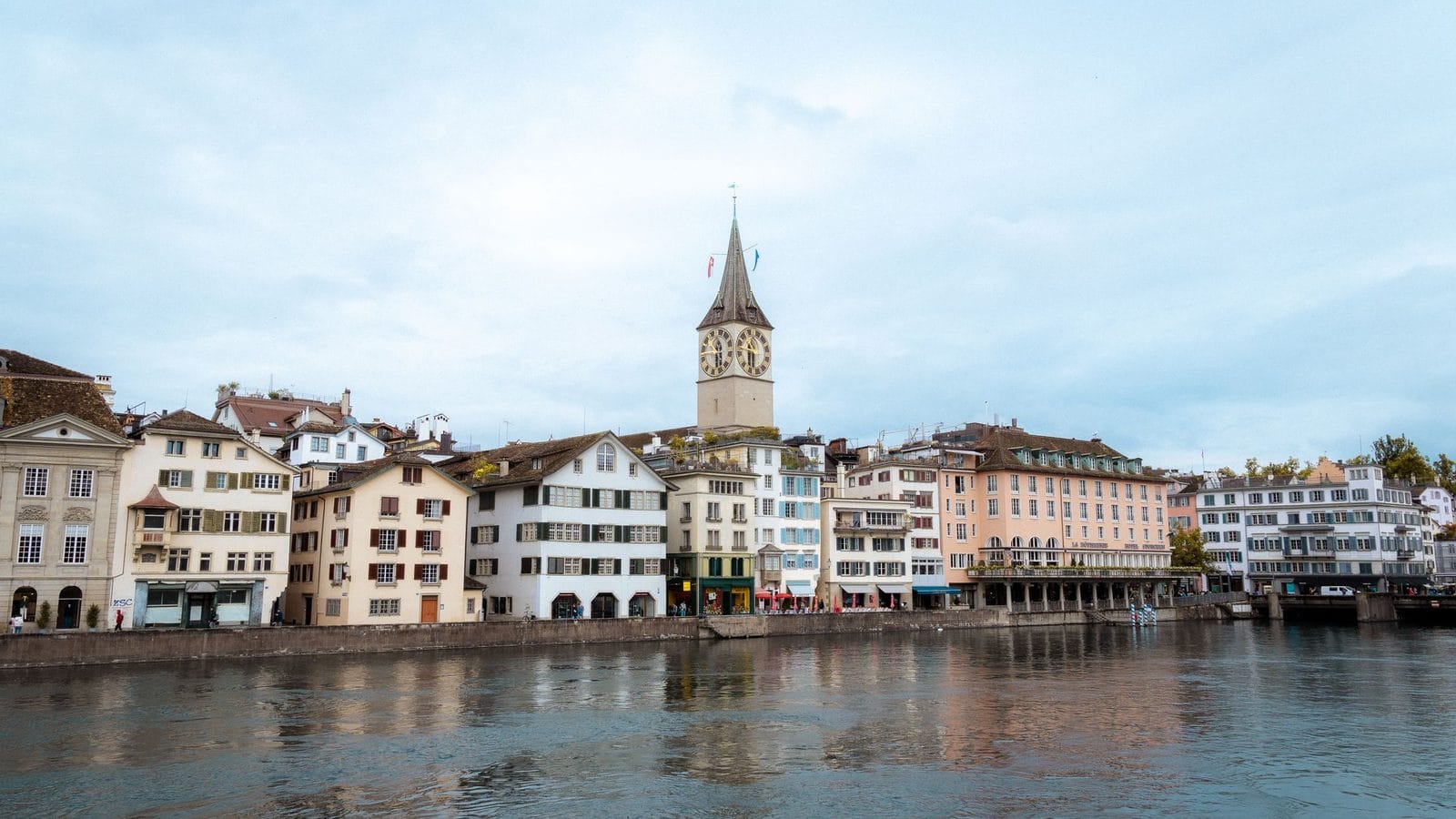
This is where Swissquote belongs. It should not sit in the same table as UBS or Julius Baer because the buyer, product and compliance logic are different. Accessible Swiss options are useful when the client wants regulated Swiss access without pretending to be a private-banking client.
| Institution | Best understood as | Verified minimum or practical threshold | Remote onboarding evidence | Best fit | Important limitation |
|---|---|---|---|---|---|
| Swissquote Bank Ltd | Swiss bank, trading, investing and cash account | Official page states non-residents must deposit EUR 500 if based in selected euro-area countries or CHF 500 equivalent for other listed countries. | Digital account opening for listed countries; other eligible clients may complete video ID. | Low-entry Swiss-regulated investing and cash access. | First deposit must come from a licensed bank account in the client name; country eligibility matters. |
| Dukascopy Bank SA | Swiss multi-currency account plus trading ecosystem | Official trading-account page states USD 100 minimum. Treat USD 5,000+ as a practical working balance, not an official published minimum. Private Banking (Savings) is positioned above USD 100,000. | Official pages describe fully online worldwide account opening and video identification. | Remote-first Swiss access, multi-currency use, cards, FX and trading. | More digital and trading-led than traditional private banking. |
| CIM Banque | Swiss private and corporate bank with e-banking, cards, FX and online trading | Official e-banking page states 10,000 EUR/USD/CHF initial deposit for online trading. For non-resident account planning, USD 20,000+ is a more realistic comfort threshold. Saving deposit starts from 50,000 USD/EUR. | CIM publishes e-banking and online-trading terms; confirm the exact remote ID process before applying. | Clients wanting a more traditional Swiss relationship at a lower level than classic private banks. | Approval still depends on nationality, residence, source of funds and account purpose. |
| Saxo Bank Switzerland | Swiss-regulated online investment and trading account | Official account page states no minimum funding requirement for Classic individual accounts. Platinum begins at CHF 250,000; VIP at CHF 1,000,000 or trading-volume equivalent. | Official page describes digital approval, ID and selfie checks. | Investors who want Swiss-regulated market access and multi-currency sub-accounts. | Better viewed as an investment platform than a full-service bank account. |
| IG Bank SA | Swiss CFD and trading account | Official page states IG will never ask for a deposit to open an account; funding is needed before trading. | Online form, verification and several identity-verification methods. | Experienced traders seeking Swiss-regulated CFD and market access. | CFDs are high-risk and suitability-tested; this is not a savings or private banking account. |
What Is a Non-Resident Bank Account?
A non-resident bank account is an account opened in a country where you do not live as a local resident. The bank is not only asking whether you can upload a passport. It is asking whether your tax residence, TIN, address, first transfer, expected activity, nationality and source of funds create a file it can defend to its compliance team.
Approval Reality Score: Ease Versus Banking Depth
Editorial score based on product type, remote onboarding, typical compliance load and relationship depth. It is not a bank guarantee.
Do Not Search for a No-CRS Account. Search for a Defensible Account.
Search Console shows readers asking about non-CRS bank accounts. That is the wrong question if the goal is durable banking. Banks do not reject clients because they are tax-compliant; they reject clients whose story looks designed to avoid reporting. A defensible account has a tax residence, a declared TIN, documented source of funds, and a bank country that makes commercial sense.
Use our CRS reporting-country tool to understand reporting exposure. Then use the Global Offshore Banking Index to compare jurisdiction quality, not secrecy myths.
Before You Apply: Six Checks That Prevent Rejection
Sources checked for this update: official pages from Swissquote, Dukascopy trading, Dukascopy savings/private banking, CIM Banque e-banking, CIM deposits, Saxo Bank Switzerland, and IG Bank Switzerland.
Asia’s Financial Powerhouses: Capitalizing on the Eastern Wealth Shift
Singapore and Hong Kong stand as indispensable nodes for international capital. Both jurisdictions offer formidable regulatory stability, multi-currency supremacy, and direct access to the Asian growth narrative. Therefore, they serve as ideal locations for non-residents seeking exposure to emerging market yields. One dimension most rankings skip is correspondent access — an entire country lost its correspondent banking in 2025, and the smaller the jurisdiction, the more that risk deserves weight.
Singapore: The Premier Asian Wealth Hub
Singapore remains the apex destination for international wealth management in Asia. The city-state offers political stability, MAS supervision, deep USD liquidity, multi-currency custody, and a private-banking ecosystem built for internationally mobile entrepreneurs and families.
The mistake is to compare a Singapore private bank with a retail app or a priority account. DBS Treasures, OCBC retail banking, Wise and similar routes may solve payment or entry-level account needs, but they are not the same product as private banking. For non-residents seeking a serious Singapore private banking relationship, the practical thresholds are materially higher.
| Singapore private bank | Best-fit client | Practical non-resident minimum | Onboarding reality | Source / reference |
| DBS Private Bank | Large non-resident families, entrepreneurs, Middle East / Asia liquidity, complex multi-currency custody | USD 20m+ practical threshold for harder non-resident files. DBS publishes USD 5m as the formal Private Bank AUM level from 1 January 2026. | Relationship-led; nationality, residence, source of wealth and expected relationship value drive the real answer. | DBS Private Bank fee schedule |
| Bank of Singapore | OCBC-backed pure-play private banking for HNW families, entrepreneurs and Asian/global portfolios | USD 5m+ practical private-banking threshold. | Relationship-led private bank; stronger files have clear source of wealth, investable assets and long-term portfolio purpose. | Bank of Singapore official site |
| Bordier & Cie Singapore | Boutique Swiss private-banking style in Singapore for families, EAM/IAM relationships and clients wanting independent custody | USD 3m+ practical positioning threshold for a Singapore private-banking conversation. | Relationship-led; Bordier Singapore is licensed as a merchant bank and regulated by MAS, with a full Singapore booking centre. | Bordier Singapore official page |
Important distinction: lower Singapore wealth tiers still exist. DBS publishes S$1.5m for Treasures Private Client and US$5m for Private Bank, while retail or EMI options may be much lower. This guide uses the higher practical minimums above for non-resident private banking because a bankable cross-border file is judged by more than a headline deposit figure.
For a deeper Singapore-specific analysis, see our Singapore private banking for non-residents service page and the Singapore bank account for non-residents guide.
Hong Kong: The Financial Gateway to Mainland China
Despite geopolitical complexities, Hong Kong’s banking infrastructure remains world-class. It features no capital controls, no capital gains tax, and seamless integration with the renminbi (RMB) clearing system. Moreover, top-tier banks have aggressively expanded remote account opening capabilities for non-residents holding passports from specific countries.
| Bank Name | Account Type | 2026 Non-Resident Minimum | Remote Opening | Official Link |
| HSBC Hong Kong | Premier Account | HKD 1,000,000 (TRB) | Yes (15 countries) | (https://www.hsbc.com.hk/international/banking-in-hong-kong/) |
| Standard Chartered | Standard / Preferred | HKD 10,000 – 100,000 | No (Branch Visit) | (https://statrys.com/hk/guides/banking/open-bank-account) |
The European Banking Landscape: Quality, Accessibility, and Fintech
Europe presents a highly bifurcated banking environment. On one extreme lies Switzerland, offering uncompromising private banking excellence. Conversely, jurisdictions like Portugal and Germany offer accessible cross-border finance solutions tailored to the modern global citizen.
Switzerland: Premium Private Banking Is a Separate Lane
Switzerland remains one of the strongest jurisdictions for cross-border wealth custody, but the market now splits into two very different lanes. The accessible Swiss lane belongs to Swissquote, Dukascopy, Saxo, IG and selected boutique banks. The premium lane belongs to banker-led private banking, where the bank reviews the client as a long-term wealth relationship rather than a small remote account.
This is why Swissquote should not be compared in the same row-set as UBS, Julius Baer, Pictet, Lombard Odier, Vontobel or BIL Suisse. Swissquote is useful precisely because it is accessible. Those premium Swiss brands are useful when the client has serious investable assets, a documented source-of-wealth story, and a reason to pay for advice, custody, credit, investment management or cross-border wealth planning.
For non-residents, the premium Swiss question is not only “minimum deposit.” It is whether the bank can justify the relationship after reviewing residence, nationality, tax position, source of wealth, expected inflows, corporate structures, PEP exposure and the cost of ongoing monitoring. Our Swiss private banking service page explains this route in more detail, and our Swiss banks by deposit size guide compares the wider market.
Premium Swiss Bank Brands to Benchmark
If the file belongs in the premium lane, the benchmark set changes. These names are not “easy online accounts.” They are relationship-led private banking or investment-management brands. A non-resident client should approach them only with a complete source-of-wealth file, a credible investment purpose, and enough liquid assets to make the relationship commercially sensible. The thresholds below are Easy Global Banking practical positioning levels for non-resident files, not universal published minimums.
| Premium Swiss brand | Where it fits | Strongest profile match | Practical non-resident threshold | Official reference |
| Pictet | Independent Swiss wealth-management partnership with deep family, entrepreneur, business-sale and succession capability. | UHNW families, entrepreneurs after a liquidity event, intergenerational wealth and complex portfolio governance. | CHF 5m+ practical positioning threshold for a non-resident Pictet conversation. Stronger for entrepreneurs, family wealth and complex succession files. | Pictet individuals and families |
| Lombard Odier | Geneva private bank with discretionary/advisory mandates, wealth planning, international offices and UHNWI expertise. | Entrepreneurs, internationally mobile families, relocation planning, succession, philanthropy and total-wealth structuring. | CHF 5m+ practical positioning threshold for non-residents in this guide. Lombard Odier publishes CHF 1m+ as a typical liquid-asset level, but stronger files usually justify the premium route better. | Lombard Odier private clients |
| Vontobel | Zurich-rooted investment-management and wealth-management house with discretionary mandates, advisory solutions and structured-product expertise. | Clients who want active investment solutions, portfolio advice, mandates and long-term wealth planning rather than simple payments. | CHF 3m+ practical positioning threshold for a non-resident Vontobel wealth-management conversation, especially where the need is active investment advice or mandates. | Vontobel wealth management |
| BIL Suisse | Boutique Swiss private bank connected to the BIL group, with private banking, lending, investment solutions and entrepreneur advisory. | International entrepreneurs, family-owned companies, family offices and clients who value boutique access with group backing. | CHF 1m+ practical positioning threshold for BIL Suisse, subject to residence, documentation quality, banking purpose and expected relationship value. | BIL Suisse wealth management |
The practical lesson is simple: use accessible Swiss options when the need is entry-level Swiss access; use premium Swiss brands when the client needs a banker, an investment process, cross-border planning and institutional staying power. For the wrong client, a famous Swiss name can slow the process down. For the right client, it can be exactly the level of bank that makes the file credible.
| Swiss route | Typical profile | Practical capital level | Onboarding style | Best use |
| Accessible Swiss banking | Non-resident needing regulated Swiss access, investing, FX or multi-currency functionality | From CHF/EUR 500 for Swissquote, USD 100 for Dukascopy trading; practical balances are higher | Digital or remote where eligible | Low-entry Swiss access without private-banking expectations |
| Swiss boutique relationship | Client wanting a more traditional bank relationship with e-banking, cards, transfers and investment access | Often USD/CHF 20k-250k+ depending on institution, product and risk profile | Remote coordination may be possible, but compliance is still banker-led | Relationship banking below classic private-bank size |
| Swiss private banking | HNW or UHNW client with serious custody, portfolio, credit or family wealth needs | Usually CHF 500k+ for a serious review; CHF 1m-5m+ improves bank choice | Banker-led review, source-of-wealth file, tax-residence checks and relationship approval | Investment-grade custody, mandates, Lombard credit and cross-border wealth structuring |
Portugal: The Accessible European Foothold
Portugal serves as the most reliable gateway into the Single Euro Payments Area (SEPA) for non-EU residents. To open an account, you must first secure a Número de Identificação Fiscal (NIF) via a fiscal representative. Once obtained, traditional Portuguese banks exhibit a high approval rate for non-residents pursuing expat banking.
| Bank Name | Account Type | 2026 Non-Resident Minimum | Remote Opening | Official Link |
| Caixa Geral de Depósitos | Standard Current Account | € 250 | No (Branch Visit) | (https://www.globalcitizensolutions.com/banks-in-portugal/) |
| Millennium BCP | Millennium Account + | € 250 | No (Branch Visit) | (https://www.millenniumbcp.pt/en/open-account-online) |
Germany & Lithuania: The Neobank Alternatives
Germany’s traditional retail banking sector remains structurally hostile to non-residents lacking an Anmeldung (registered address). Fortunately, Germany’s fintech sector, alongside Lithuania’s progressive EMI licensing scheme, bypasses these antiquated requirements. Therefore, they offer fully digital onboarding for seamless foreign bank accounts.
| Bank Name | Jurisdiction | 2026 Non-Resident Minimum | Remote Opening | Official Link |
| N26 | Germany | € 0 | Yes (VideoIdent) | N26 |
| DKB Bank | Germany | € 700 monthly flow | Yes (VideoIdent) | (https://www.dkb.de/privatkunden/girokonto) |
| Satchel | Lithuania | € 0 | Yes (Ondato KYC) | (https://satchel.eu/account/lithuania/) |
The Middle Eastern Capital Magnet: United Arab Emirates
The United Arab Emirates (UAE) leverages zero personal income tax and a sophisticated digital infrastructure to attract massive capital inflows. Entering 2026, enhanced Central Bank regulations have drastically tightened requirements. Standard zero-balance accounts are now exclusively restricted to residents holding a valid Emirates ID. Therefore, banks channel non-residents into “Priority” or “Elite” banking tiers, demanding substantial capital commitments.
| Bank Name | Account Type | 2026 Non-Resident Minimum | Remote Opening | Official Link |
| RAKBANK | Elite Banking | USD 100,000 | Conditional | (https://www.rakbank.ae/en/everyday-banking/rakbank-for-you/non-resident-bank-account) |
| Emirates NBD | Non-Resident Savings | AED 30,000 | No (Branch Visit) | (https://www.emiratesnbd.com/en/accounts) |
The Americas and the Caribbean: Dollarization and Specialized Frameworks
The Western Hemisphere offers fully dollarized commercial hubs and specialized institutional centers. These locations perfectly suit North and South American clients seeking asset diversification and global wealth management.
Puerto Rico: The U.S. Jurisdictional Hybrid
As a U.S. territory, Puerto Rico uses the U.S. dollar and operates under U.S.-style compliance expectations. Its International Financial Entities (IFEs) can be attractive for non-residents who want USD banking outside the ordinary U.S. mainland bank-account process, but this is not a secrecy shortcut. Puerto Rico IFEs still sit under serious AML, customer-identification and Bank Secrecy Act expectations.
The best Puerto Rico route depends on the client type. FV Bank is more digital and fintech-oriented. Banco Popular is a mainstream local institution with a traditional International Banking Center process. Fairwinds International Bank belongs in a different lane: boutique private banking and custody for HNW individuals, family offices, external asset managers, funds, trusts, foundations and corporate clients.
| Bank Name | Account Type | 2026 Non-Resident Minimum | Remote Opening | Proof / Official Link |
| FV Bank (IFE) | Digital / Traditional Hybrid | USD 15,000 | Yes | (https://flagtheory.com/product/open-a-bank-account-in-puerto-rico/) |
| Fairwinds International Bank (IFE) | Boutique private banking / custody | Not publicly published; practical fit is HNW or institutional-style private banking | Relationship-led; confirm onboarding process directly | Official site / OCIF active IFE registry |
| Medici Bank (IFE) | Corporate / Personal | USD 50,000 | Yes | (https://astra-trust.com/banking/puerto-rico-offshore-banking/) |
| Banco Popular | IBC Non-Resident Account | Varies (High Verification) | No (In-person) | (https://resourcecenter.popular.com/en/help/international-banking/what-do-i-need-to-open-an-account-at-the-international-banking-center/) |
Fairwinds data check: Fairwinds International Bank states that it is an independent, manager-owned firm in Old San Juan offering boutique financial services with an international focus. Its client list includes high-net-worth individuals, external asset managers, investment funds, family offices, trust companies, corporate clients, foundations and endowments. The Puerto Rico OCIF concessionaires registry lists FAIRWINDS INTERNATIONAL BANK, LLC as an active International Financial Entity with license IFE-035, address 259 Recinto Sur St, Suite 3A, San Juan PR 00901. Fairwinds also states that Puerto Rico is subject to U.S. federal AML, CIP, BSA and USA Patriot Act requirements.
Panama: The Dollarized Commercial Hub
Panama’s fully dollarized economy eliminates currency exchange friction. Following its removal from the FATF grey-list, Panama enforces exhaustive documentation requirements, including two years of tax returns and professional reference letters. Furthermore, top-tier institutions strictly prohibit remote account opening for non-residents.
| Bank Name | Account Type | 2026 Non-Resident Minimum | Remote Opening | Official Link |
| Banco General | Personal Account | USD 5,000 | No (In-person) | (https://studiopanamaitalia.com/en/panama/corporativo/aprire-conto-a-panama/) |
| Multibank | Personal Account | USD 1,500 | No (In-person) | Multibank |
Belize: High Yields and Accessibility
Belize stands out for offering remarkably high Annual Percentage Yields (APY) on USD deposits compared to onshore U.S. counterparts. Additionally, the jurisdiction presents minimal operational friction for non-residents and actively promotes offshore banking access.
| Bank Name | Account Type | 2026 Non-Resident Minimum | Remote Opening | Official Link |
| Caye International Bank | Demand Deposit | USD 2,000 | Yes | (https://www.cayebank.bz/accounts/) |
| Belize Bank | Signature Savings | BZ$ 1,000 (to earn yield) | Conditional | (https://www.belizebank.com/deposits/signature-savings-account/) |
| Atlantic Bank | Personal Checking | USD 150 | Conditional | (https://www.atlabank.com/personal_checking.php) |
Cayman Islands: The Apex Institutional Jurisdiction
The Cayman Islands ranks among the most prestigious tax-neutral jurisdictions globally, levying zero income or capital gains taxes. The jurisdiction primarily targets institutional investors, hedge funds, and ultra-high-net-worth individuals seeking sophisticated international accounts.
| Bank Name | Account Type | 2026 Non-Resident Minimum | Remote Opening | Official Link |
| Cayman National | Chequing / EZ Banking | USD 1,000 | Conditional | Cayman National |
| Butterfield Bank | Checking / Savings | USD 5,000 (ADB) | Yes | (https://www.butterfieldgroup.com/insights-news/news/butterfield-launches-digital-account-opening-0) |
The Crown Dependencies: The Isle of Man’s Regulatory Shift
The Isle of Man provides a highly regulated alternative to traditional Caribbean offshore centers. However, a seismic regulatory disruption occurs in 2026. Driven by the impending EU CRD VI enforcement, institutions will formally cease accepting new savings or mortgage applications from EU-resident customers after March 31, 2026. For non-EU non-residents, the jurisdiction remains highly viable for GBP stability.
| Bank Name | Account Type | 2026 Non-Resident Minimum | Remote Opening | Official Link |
| Standard Bank | Optimum Current Account | £ 5,000 | Yes | (https://international.standardbank.com/international/personal/products-and-services/bank/international-bank-accounts) |
| Lloyds Bank Int. | International Current Account | £ 10,000 (to waive fee) | Yes | Lloyds Int. |
| Skipton Int. | Offshore Savings | £ 10,000 (Non-EU Only) | Yes | (https://www.skiptoninternational.com/offshore-savings-accounts/) |
2026 Minimum Deposit Requirements (USD Equivalent)
Estimated Account Opening Timelines (Days)
A Practitioner’s Reality Check: What Banks Say vs. What Actually Happens
The following perspective is contributed by a senior international banking intermediary with 15 years of experience introducing high-net-worth individuals to private banking institutions across Singapore, Switzerland, Liechtenstein, the UAE, and beyond.
Every figure published in a guide like this — including this one — represents a bank’s marketing threshold, not its operational reality. The gap between the two is where most prospective clients get frustrated, and where informed intermediaries earn their place.
The Singapore Case: DBS and the Moving Goalpost
When geopolitical instability intensified in the Middle East, a significant number of foreign clients holding accounts in Dubai began repositioning capital toward Singapore. DBS Bank’s website states, in essence: approach us with USD 5 million in bankable assets. Clients completed the contact forms, received calls from private bankers — and then discovered the truth.
That USD 5 million threshold applies to clients whose nationality and residency profile matches a specific, unadvertised target list: Malaysia, Thailand, Hong Kong, South Korea, Saudi Arabia, Qatar, and UAE. For clients who had been banking in Dubai but held non-UAE passports — the vast majority of foreign wealth holders in the Emirates — the effective minimum was USD 20 million. The website never mentions this. The contact form doesn’t ask. The private banker reveals it on the third call.
The Swiss and Liechtenstein Illusion: “From CHF 50,000”
Several Swiss and Liechtenstein banks advertise account minimums beginning at CHF 50,000. This is technically accurate — but only for a very narrow slice of the global population. In practice, those thresholds apply primarily to clients from Austria, Germany, Italy, and in some cases France. These institutions are, in effect, serving their geographic neighborhood under the branding of international private banking. A client from Brazil, Nigeria, or the Philippines approaching the same bank directly will face an entirely different — and often undisclosed — set of requirements, or a polite rejection.
What This Means for Any Reader of This Guide
This article provides an excellent starting map. But a map is not the territory.
Published minimums are real — for someone. The question is whether that someone is you, based on your nationality, residency, source of funds, and the political relationship between your home country and the banking jurisdiction at the moment you apply.
Before committing time, paperwork, and expectations to any institution listed here, the prudent approach is to work with an intermediary who has direct, current relationships with the relevant private banking desks — not to rely solely on what is published online. Bank policies shift after geopolitical events, regulatory updates, and internal portfolio reviews, often without any change to their public-facing websites.
The bottom line: Healthy skepticism is not pessimism — it is due diligence. Use this guide to orient yourself, then verify through channels that have access to the operational reality, not just the marketing copy.
Strategic Conclusion
The best non-resident account is the one that matches the real job. If you need low-balance Swiss-regulated access, the practical list starts with Swissquote and Dukascopy, then expands into Saxo or IG if the need is investment or trading. If you need a more traditional Swiss banking relationship, CIM-style institutions may fit at a higher working balance, but the file must still make commercial and compliance sense.
For premium custody, investment mandates, Lombard credit, family wealth, or long-term cross-border structuring, the conversation changes completely. At that level, the issue is no longer “which bank has the lowest minimum?” It is which Swiss or Singapore bank has the right desk for your residence, nationality, source of wealth, asset size, and future transaction pattern.
Need a premium banking match? If you are interested in premium banking solutions with investment-grade Swiss banks or banks in Singapore, Easy Global Banking can help identify the best-matching financial institution, prepare your onboarding file, and support the introduction process.
We do not promise approval. We help you approach the right bank with the right documentation, the right source-of-wealth narrative, and a realistic understanding of the bank’s appetite before you spend months on the wrong route.
FAQ: Non-Resident Bank Accounts in 2026
What is a non-resident bank account?
A non-resident bank account is an account opened in a country where you do not live or pay domestic tax as a local resident. Banks will usually ask for your passport, proof of address, tax residence, TIN, source of funds, and a clear reason for needing the account.
Can I open a Swiss bank account online as a non-resident?
Yes, but the product matters. Swissquote, Dukascopy, Saxo Bank Switzerland, and IG Bank Switzerland publish digital or remote application paths for eligible clients. A full Swiss banking guide relationship is different and normally requires deeper document review, bank matching, and relationship approval.
Which Swiss banks are accessible to non-residents with smaller balances?
Swissquote and Dukascopy are among the most accessible Swiss-regulated options. CIM Banque may be relevant for clients who want a more traditional relationship and can support a stronger balance and documentation file. Saxo and IG can work for investment or trading access, but they should not be treated as general savings accounts.
Is Dukascopy a real Swiss bank?
Yes. Dukascopy Bank SA is a Swiss bank based in Geneva. Its digital account and trading ecosystem can be useful for non-residents, but applicants should choose the product carefully because retail multi-currency use, trading, and private savings are different services.
Is Saxo Bank Switzerland a bank account or a trading account?
Saxo Bank Switzerland is best understood as a Swiss-regulated investing and trading relationship with multi-currency features. It can be excellent for market access, but it is not the same as a full private banking mandate or a daily current account for ordinary payments.
Does IG Bank Switzerland work as a normal bank account?
No. IG Bank Switzerland is primarily for trading, especially CFDs and related market products. It may be suitable for experienced traders who pass suitability checks, but it is not a normal savings, salary, or wealth-custody account.
Are non-CRS bank accounts legal?
The legal issue is not whether a country participates in CRS; it is whether you correctly report foreign accounts and income under your own tax rules. A bank account designed to hide assets creates serious legal and banking risk. A properly disclosed cross-border account can be legitimate when there is a real commercial, investment, or diversification reason.
What is the easiest account without a local address?
The easiest route is usually a fintech or digital-first Swiss account, but easiest is not always strongest. If you need serious asset custody, multi-jurisdictional wealth planning, or a bank that understands non-resident private clients, the better route may be a Swiss or Singapore private banking introduction with a properly prepared file.
Related reading:
- Panama Friendly Nations Visa Banking 2026: The Insider Guide Banks Won't Send You
- Best Offshore Banks for E-Gaming Startups 2026: The Unfiltered Fee Reality
- Offshore Bank Accounts With Low Minimum Deposits for Individuals (2026)