Fintech freezes are the symptom. A properly banked base is the cure, and our guide to non-resident banking covers building one.
Digital Nomad Banking Risks: The 2026 Reality Check
Digital nomad banking risks in 2026 primarily involve abrupt, AI-driven account freezes due to overlapping tax residencies, the use of virtual mailboxes for compliance, and the strict new EU Perpetual KYC regulations. Consequently, relying solely on fintech Electronic Money Institutions (EMIs) instead of traditional, FDIC-insured banks exposes location-independent workers to severe financial lockouts abroad.
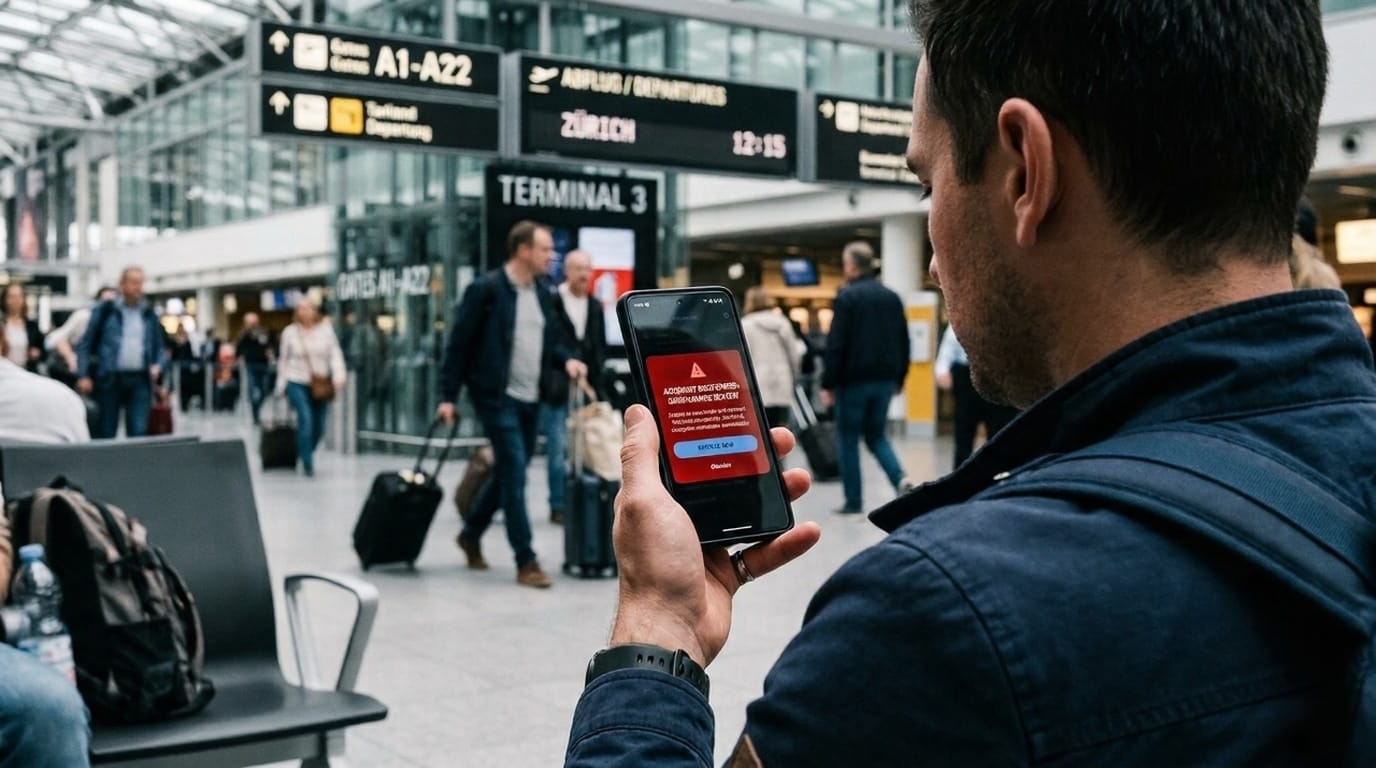
Frozen. That is the only word you see on your banking app while standing at a checkout terminal in Bangkok. Your card declines. Next, an automated email arrives requesting certified proof of a residential address you haven’t lived at in three years. Therefore, your entire net worth is suddenly trapped in a compliance algorithm.
If you live a location-independent lifestyle, you are currently operating in a high-risk financial environment. Specifically, the regulatory landscape has violently shifted. Banks are no longer merely looking for fraud; they are hunting for unverified tax residencies. In my experience auditing cross-border wealth setups, the strategies that worked in 2022 are now actively triggering account closures in 2026.
The Era of Perpetual KYC
Traditional compliance models relied on periodic refreshes. Banks would verify your details every three to five years. However, this is no longer the case. As of the EU’s recent Anti-Money Laundering Regulation (AMLR) and the rollout of the Anti-Money Laundering Authority (AMLA), institutions have shifted to “Perpetual KYC.”
Consequently, customer risk is evaluated continuously. Every time you log in from a new IP address in Bali, transfer funds to an obscure crypto exchange, or receive money from a new international client, an AI algorithm dynamically recalculates your risk score. If that score breaches a hidden threshold, the system triggers an automatic account freeze. Human compliance officers rarely intervene until you initiate a formal appeal.
A workflow diagram illustrating the automated process of an account freeze. Step 1: AI detects an anomaly like a virtual mailbox. Step 2: Immediate algorithmic freeze. Step 3: Automated request for certified documents. Step 4: A 30 to 90-day manual review process.
The Core Problem: Overlapping Tax Residencies
The root of these digital nomad banking risks lies in international tax law. Banks act as unpaid data collectors for global tax authorities under the Common Reporting Standard (CRS) and the US Foreign Account Tax Compliance Act (FATCA). Therefore, they are legally terrified of misreporting your location.
When you hop between borders without establishing a clear, documented tax base, you become an anomaly. Financial institutions abhor anomalies. Specifically, if your passport is British, your phone number is Thai, your IP address is Mexican, and your banking address is a registered agent in Texas, the AML software categorizes you as a severe money laundering risk.
How “Virtual Mailboxes” Trigger AI AML Flags
Previously, nomads relied heavily on services like Earth Class Mail, PostScan Mail, or Anytime Mailbox. You rented a street address, digitized your letters, and used it to open checking accounts. Today, this is a massive red flag.
Financial institutions now utilize advanced Commercial Mail Receiving Agency (CMRA) databases. Furthermore, their APIs cross-reference your submitted address in milliseconds. If the system detects a virtual mailbox, your application triggers immediate bank account denied red flags and is either instantly rejected, or worse, accepted and subsequently frozen once funds are deposited. The Patriot Act explicitly mandates a physical, residential address where the account holder actually sleeps.
The “Algorithm Freeze” Timeline
When an algorithmic freeze occurs, the timeline is brutal. First, the app locks you out of outbound transfers. Next, inbound transfers bounce back to the sender. Consequently, you cannot pay rent, buy flights, or purchase food.
Because the freeze is triggered by suspicious activity protocols, customer support representatives are legally prohibited from telling you exactly why your account is locked. This anti-tipping off legislation means you will receive vague emails citing “internal policy reviews.” Resolving this requires providing a certified utility bill. If you are a nomad living in Airbnbs, producing a certified, translated utility bill in your name is nearly impossible.
Fintechs vs. Traditional Banks: The Structural Divide
Many remote workers flock to fintech apps like Wise, Revolut, or N26. Indeed, their user interfaces are beautiful, and their foreign exchange rates are unbeatable. However, treating a travel card like a primary wealth vault is a catastrophic error in financial planning.
To understand the danger, we must examine the underlying legal structures of these platforms. You are not actually dealing with a bank in many of these instances. Instead, you are dealing with a software company wrapped around an EMI license.
Electronic Money Institutions (EMIs) Are Not Banks
When weighing digital vs traditional offshore banking, you must realize that an EMI is authorized to issue e-money and facilitate payments. However, in many jurisdictions, they do not hold a full banking license. Therefore, they do not offer government-backed deposit insurance, such as FDIC in the United States or FSCS in the United Kingdom.
If a traditional bank collapses, the government guarantees your deposits up to a specific limit ($250,000 in the US). Conversely, if an EMI goes bankrupt, your funds are pooled in “safeguarding accounts.” While theoretically protected from the company’s creditors, the legal process of recovering your money could take years. Devastating.
A doughnut chart showing that 65% of nomads store primary wealth in EMIs, 25% in Traditional Banks, and 10% in Crypto. This represents a dangerous misalignment of risk.
The Hidden Danger of Cross-Border Data Sharing (CRS)
The Common Reporting Standard (CRS) tax residency privacy guidelines ensure that your financial data is automatically shared with your country of tax residence. If an EMI flags your account for a discrepancy, they don’t just freeze your money. Furthermore, they often report the discrepancy to the tax authorities of your passport country.
This automated data sharing creates a cascading effect. A locked Wise account can trigger an audit from the IRS or HMRC. As a result, what began as a minor KYC (Know Your Customer) issue balloons into a comprehensive tax investigation. You must control your geographic footprint meticulously.
The Impact of eIDAS 2.0 on Expat Banking
By late 2026, the European Union is fully implementing eIDAS 2.0. This framework introduces mandatory European Digital Identity Wallets. While designed to streamline digital onboarding, it creates a severe barrier for non-EU nomads trying to maintain European banking relationships.
If you cannot produce an eIDAS-compliant digital identity, your risk profile automatically elevates. Consequently, legacy accounts opened years ago using paper passports are facing aggressive closure sweeps. You are forced into a digital identity matrix that requires a permanent address.
Navigating EU AMLA Directives from Abroad
The new EU Anti-Money Laundering Authority (AMLA) directly supervises high-risk financial entities. Consequently, European banks are shedding non-resident clients to lower their institutional risk profiles.
If you hold a Spanish or German bank account but spend 10 months a year in Southeast Asia, the bank’s internal compliance software will flag the geographical mismatch. Therefore, they will simply mail a 60-day closure notice. They prefer to lose a small retail customer rather than face millions in AML fines.
The Solution: The “Anchor & Agile” Banking Blueprint
To survive the 2026 compliance landscape, you must abandon the idea of a single “perfect” bank. Instead, you need a robust, two-tiered financial architecture. We call this the “Anchor & Agile” strategy. It separates the storage of wealth from the transmission of daily funds.
This strategy minimizes your exposure to algorithmic freezes while maximizing your access to cheap foreign exchange rates. Furthermore, it ensures that your core net worth remains protected by sovereign deposit insurance.
A stacked bar chart comparing the rising risk of account closures at Fintechs versus the high transaction fees of Traditional Banks from 2024 to 2026.
Setting Up Your “Anchor” Vault
Your Anchor is a traditional, systemically important brick-and-mortar bank in your home country (e.g., Chase, Barclays, or HSBC). This institution holds 90% of your net worth, your emergency funds, and your business revenues. Alternatively, sophisticated expats increasingly rely on heavily regulated, pro-business hubs—such as exploring digital nomad banking in Singapore—to serve as their ultimate offshore fortress.
To maintain this account safely, you must use a legitimate residential address. Often, this means utilizing the physical address of a trusted family member. You must legally establish this as your permanent domicile. Never access this Anchor bank via a sketchy, free VPN. Always use a dedicated residential IP address matching your home country, or simply do not log in frequently while abroad.
Layering Your “Agile” Fintech Stack
Your Agile layer consists of platforms like Revolut, Wise, or Monzo. These are your spending vehicles. You transfer exactly enough money from your Anchor to your Agile accounts to cover two weeks of living expenses.
If your Agile fintech account gets frozen by a random AML algorithm in Colombia, you lose access to a tiny fraction of your money. More importantly, your Anchor vault remains untouched. You simply open your Anchor bank app, initiate an international wire transfer to a secondary fintech backup, and continue your life uninterrupted.
That backup only works when its beneficiary record is ready. Under the structured-address rule for SWIFT payments, a fully unstructured postal address can delay or stop an otherwise valid transfer after 14 November 2026.
Managing Geographic Risk Scoring
Institutions assign risk scores to specific countries. Moving money directly from a US bank to a Thai bank might trigger a review. However, moving money from a US bank, into a US-based Wise account, and then converting it to Thai Baht internally before withdrawing it locally bypasses many red flags.
This routing strategy obfuscates the international nature of the transaction from the Anchor bank’s perspective. Consequently, the Anchor bank only sees a domestic transfer to a regulated payment processor. You actively manage your risk score by acting locally.
A detailed table comparing traditional banks and fintech EMIs across Deposit Insurance, KYC Triggers, FX Rates, and Support access.
| Feature | Traditional “Anchor” Bank | Fintech EMI “Agile” App |
|---|---|---|
| Deposit Insurance | Yes (FDIC / FSCS guaranteed) | No (Uses safeguarding accounts) |
| KYC Triggers | Address changes, large wire transfers | IP address changes, VPNs, crypto buying |
| Foreign Exchange | Expensive (2-5% markup) | Excellent (Interbank rate) |
| Account Freezes | Rare, usually preceded by warnings | Instant, algorithmic, no warning |
| Support Access | In-branch meetings, direct phone lines | In-app chat bots, slow email queues |
Emergency Protocols: What to Do When Funds Freeze
Despite perfect planning, digital nomad banking risks dictate that an account freeze is inevitable over a long enough timeline. When the screen turns red, panic is the enemy. You must execute a precise, clinical recovery protocol.
First, do not barrage customer support with angry messages. Automated systems often interpret excessive, aggressive messaging as erratic behavior, potentially escalating the risk score further. Instead, prepare your documentation dossier immediately.
The 3-Step Compliance Unlocking Process
Step one is understanding exactly what the compliance officer needs to see: proof of life, proof of address, and proof of funds. You must gather your passport, a tax return, and a bank statement from your Anchor bank proving the origin of the locked money.
Step two involves addressing the residential requirement. If you cannot provide a utility bill, provide a signed, long-term rental agreement (even if it’s an Airbnb contract spanning over 30 days), accompanied by an official letter explaining your digital nomad status. Step three is utilizing formal ombudsman complaints. If a UK fintech ignores you for over 8 weeks, immediately file a grievance with the Financial Ombudsman Service. This legally forces their hand.
Establishing Fallback Liquidity Networks
Never travel with a single Visa or Mastercard. You need network diversity. Specifically, carry one Visa, one Mastercard, and one American Express. Furthermore, maintain at least one self-custodial cryptocurrency wallet containing stablecoins (USDC/USDT).
If the fiat banking system locks you out entirely, stablecoins allow you to utilize local peer-to-peer exchanges and crypto banks or Bitcoin ATMs to access physical cash within minutes. This fallback liquidity is non-negotiable for serious travelers in 2026. It is your ultimate insurance policy against algorithmic overreach.
Frequently Asked Questions About Expat Finance
Legally, you must use a residential address where you can be reached and receive mail. While many nomads use a family member’s address, you must be careful. If the bank runs a background check and links that address exclusively to someone else’s name, or if you cannot produce a utility bill in your name at that location, you risk triggering an AML freeze for providing false information. It is best to remain officially registered at that address (e.g., voting registry, driver’s license).
No. Fintechs operating under Electronic Money Institution (EMI) licenses do not provide sovereign deposit insurance (like FDIC). If the fintech collapses, your money is tied up in safeguarding accounts. Furthermore, large, unexpected business deposits into retail fintech accounts are the number one trigger for algorithmic freezes. Always route large payments through a traditional, insured commercial bank account first.
In 2026, using commercial, shared IP VPNs (like ExpressVPN or NordVPN) to access banking apps is highly dangerous. Banks maintain databases of known VPN server IPs. Logging in from one masks your true location, which AI compliance systems interpret as evasive, high-risk behavior, often resulting in immediate account suspension. If you must use a VPN, use a dedicated residential IP address.
The Anti-Money Laundering Authority (AMLA) is a new European supervisory body. It enforces strict “Perpetual KYC” rules, meaning banks must continuously monitor and verify your residency and risk profile, rather than checking every few years. For nomads, this means European banks are aggressively closing accounts of non-residents or those who cannot prove a stable EU tax footprint.
Final Thoughts on Financial Sovereignty
The days of slipping under the radar with a tourist visa and a virtual mailbox are entirely over. The regulatory net has tightened, driven by advanced AI monitoring and aggressive international data-sharing treaties. Consequently, protecting your assets requires proactive, structural planning.
By adopting the Anchor and Agile methodology, you insulate your core wealth from algorithmic volatility. You must treat your geographic footprint not just as a travel itinerary, but as a heavily scrutinized compliance dossier. Ultimately, maintaining financial sovereignty abroad demands meticulous organization and a deep understanding of the invisible borders governing global finance.
References & Further Reading
- KYC360 (2026). 2026 KYC/AML Outlook: Key Trends and Takeaways.
- Avallone (2026). What’s Broken in KYC and AML? Fixes in 2026 for Compliance Teams.
- Ernst & Young (EY) (2026). EU AML readiness: CDD and onboarding for the overhaul.
- Namirial (2026). 2026-2027 AML & Digital Identity: A structural revolution in KYC.
- AML Intelligence (2026). INSIGHT: Expect a drop in the ‘check-the-box’ approach to AML.
Related reading:
- Foreign Accounts and Succession Planning: How to Protect Your International Wealth for the Next Generation
- How to Evaluate Bank Safety: Metrics That Actually Protect Your Money
- CRS Tax Residency Privacy: The Guide I Wish Every Client Read Before Calling Me