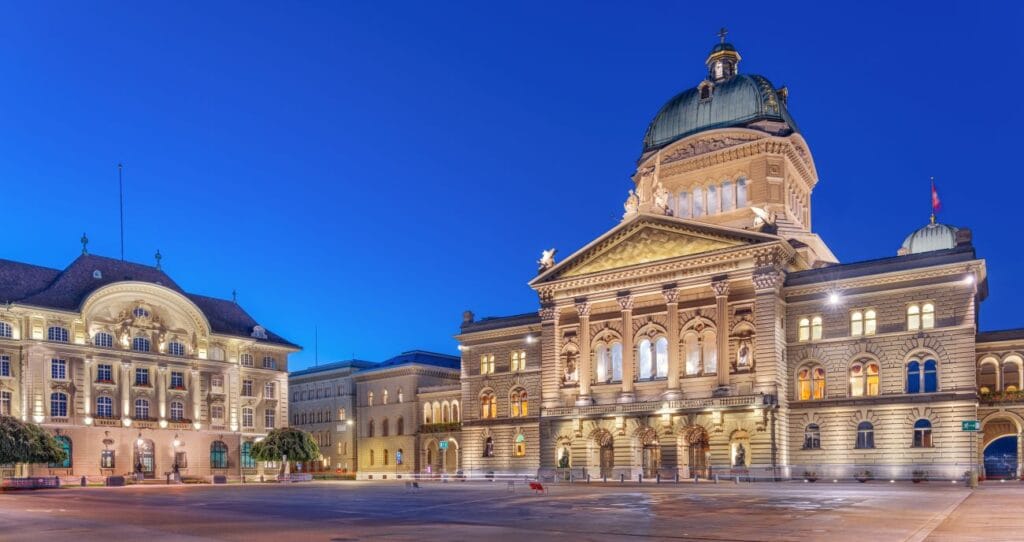
Published September 22, 2026. Research cut-off: 12:00 CEST.
Legend Holdings has reportedly put its roughly 90% stake in Banque Internationale a Luxembourg on the market, with initial bids expected around the end of September and the group valued at EUR 2.5 billion or more. That headline makes BIL sound like a private-bank auction. It is not. A buyer would acquire a systemically important Luxembourg universal bank, a Swiss wealth-management subsidiary, a EUR 19.2 billion deposit base, a lending franchise, a sovereign co-shareholder and a technology transformation already in motion.
The first question is therefore not who will bid. It is what the price represents. At EUR 2.5 billion, the reported valuation is about 0.91 times BIL’s June 2026 group equity and 11.9 times its 2025 net profit. Those multiples look ordinary. The institution underneath them is anything but simple.
What Is Confirmed, What Is Reported and What Nobody Knows Yet
Fast-moving bank-sale stories often blur three different levels of certainty. BIL’s public ownership and financial statements are documented. The sale process comes from credible reporting. The identity of a buyer, final perimeter and transaction price remain unknown. Keeping those categories separate matters, especially when clients may read a headline as evidence that their own account is moving.
Confirmed
Legend owns 89.9804% of BIL. Luxembourg owns 9.9978%. Finance Minister Gilles Roth said the state intends to retain its stake. BIL remains a regulated, systemically important Luxembourg bank.
Credibly Reported
Legend is working with Goldman Sachs on a sale process. Initial bids are expected around the end of September. European and Middle Eastern institutions have shown preliminary interest. The reported valuation is EUR 2.5 billion or more.
Still Unknown
No preferred bidder, signed agreement, final price, transaction perimeter or closing timetable has been announced. Some interest may concern only parts of the group, but a break-up is not a disclosed plan.
The Luxembourg state holding changes the character of the auction. A buyer can acquire control without acquiring every share. It also gains a sovereign minority partner that has already said BIL is important to the domestic system. That is reassuring for continuity, but it limits the freedom a purely financial owner might expect.
Regulatory approval is not a formality either. The ECB decides on qualifying holdings in Luxembourg credit institutions, working from the CSSF’s assessment. The standard assessment period is 60 working days after a complete filing, with possible suspensions for further information. Because BIL Suisse is a wholly owned Swiss bank, a change in its indirect control also enters FINMA’s qualified-participation process. In 2018, Legend said the acquisition required approvals from more than ten authorities. The next owner should expect another multi-regulator transaction.
BIL Has Been Sold Before, but Never as a Simple Private Bank

BIL opened on March 8, 1856. The bank financed railways, helped establish the steel company ARBED in 1911, issued banknotes during the First World War and participated in the creation of the Luxembourg Stock Exchange in 1929. In 1963 it underwrote the first eurobond. Seven years later it helped create CEDEL, the institution that became Clearstream.
That history is more than anniversary material. It explains why BIL is difficult to value against a pure wealth manager. The domestic franchise grew alongside Luxembourg’s economy, while the international business accumulated custody, capital-markets, corporate and private-banking capabilities. BIL entered Swiss private banking in 1985 and now operates there through a separately capitalised subsidiary in Zurich, Geneva and Lugano.
Ownership followed Luxembourg’s wider banking history. Credit Communal de Belgique became the controlling shareholder in 1991 and later formed part of Dexia. After the European sovereign-debt crisis destabilised Dexia, BIL was separated from the group. In 2012, Qatar-linked Precision Capital and the Luxembourg government acquired 99.906% of BIL from Dexia for EUR 730 million. The comparison with today’s valuation needs a warning: legacy securities and some participations were carved out, so EUR 730 million is not a clean like-for-like starting point.
BIL begins as Banque Internationale a Luxembourg and becomes closely tied to the country’s railway, industrial and financial-market development.
Precision Capital also owned KBL Switzerland. In 2015, that business was merged into BIL Suisse, adding Lugano to the Swiss footprint. Two years later, Legend Holdings agreed to buy Precision’s 89.936% stake. The announced base consideration was EUR 1.48 billion. Legend’s 2018 interim report records EUR 1.534 billion of cash paid at closing after an adjustment for BIL’s intervening profits.
Legend described BIL as a long-term strategic investment and a European bridge for international growth. Regulators approved the purchase in July 2018, leaving the Luxembourg state with about 10%. The central promise was sensible: preserve BIL’s local identity, apply Legend’s technology and business-building experience, and connect a European bank with Asian wealth. Eight years later, the result is mixed enough to be interesting.
Under Legend, Profit Grew Faster Than the Balance Sheet
The cleanest starting point is the end of 2018, the first reporting year after Legend became controlling shareholder in July. It is not a perfect base because half the year’s operations predate closing. Still, it avoids comparing BIL with the carved-out Dexia transaction and provides a documented set of group figures.
| Metric | 2018 | 2025 | Change | What the change says |
|---|---|---|---|---|
| Assets under management | EUR 39.5bn | EUR 50.1bn | +26.8% | The wealth platform expanded, but at a measured 3.5% compound annual pace. |
| Customer deposits | EUR 17.3bn | EUR 18.7bn | +8.1% | The domestic funding franchise remained stable rather than transforming. |
| Customer loans | EUR 13.4bn | EUR 16.2bn | +20.9% | Lending grew faster than deposits, while liquidity remained comfortable. |
| Net income | EUR 131m | EUR 210m | +60.3% | Earnings outpaced the main volume measures, although 2025 included disposal gains and lower credit costs. |
Sources: BIL Annual Report 2018 and BIL 2025 results. Compound rates use seven full year-end intervals. Profit comparisons are accounting outcomes, not recurring-earnings estimates.
BIL Under Legend: Growth Indexed to 2018 = 100
The same base makes four differently sized measures comparable. Profit grew fastest, but its quality needs a second look.
Methodology: each 2018 value is rebased to 100; 2025 values use BIL’s reported figures. Bar lengths use the 160.3 profit index as the display maximum.
There were strategic gains. BIL completed a new core-banking system in 2023, opened a Paris private-banking branch in 2025 and repositioned wealth management around Luxembourg and Switzerland. It also simplified the group: the Hong Kong wealth office closed, Belair House was wound down and fund-services subsidiary BIL Manage Invest was sold to Waystone. In 2026, BIL expanded its technology partnership with Kyndryl, a step intended to modernise infrastructure and delivery.
But the Asia bridge did not become the dominant growth engine once implied by the 2018 narrative. BIL retains a Beijing representative office, yet its main operating centres are now firmly European. That is not necessarily failure. It may mean the most valuable part of Legend’s ownership was patient capital during a core-system replacement, rather than a flood of Chinese clients.
Legend appears to be selling a more profitable and technologically renewed bank, not a dramatically larger one. That distinction will shape both the price and the buyer pool.
The AUM Headline Hides the Harder Client-Flow Story
BIL’s assets under management rose from EUR 46.8 billion at the end of 2024 to EUR 50.1 billion at the end of 2025. The 7% increase looks like commercial momentum. BIL’s own bridge shows that EUR 3.2 billion came from market performance and only EUR 0.2 billion from net new assets. In other words, roughly 94% of the two disclosed positive drivers came from markets rather than fresh client money.
The first half of 2026 went a step further. Markets and currencies contributed EUR 1.4 billion, while clients withdrew a net EUR 1.2 billion. AUM still edged up to EUR 50.3 billion. BIL says the outflows were expected and concentrated in lower-profit and non-strategic relationships. That explanation can be commercially rational. It also creates a test for a buyer: were these deliberate exits that improve margins, or a sign that the franchise must work harder to replace departing assets?
BIL AUM: The Line Goes Up, but the Drivers Change
Selected reported year-end and half-year points. The chart should be read with the flow bridge below.
Sources: BIL 2018 annual report, 2024 results, 2025 results and H1 2026 report. The intervals are not evenly spaced in calendar time and are labelled explicitly.
From EUR 46.8bn to EUR 50.3bn: The Two-Period AUM Bridge
A dynamic waterfall separates client decisions from market and currency effects.
Sources: BIL 2025 results and H1 2026 report. A EUR -0.1bn balancing item reflects rounding and other effects because the separately disclosed drivers do not reconcile exactly to rounded closing AUM.
The income statement is also more nuanced than the 2025 profit record suggests. Revenue was flat at EUR 708 million, while expenses fell 2% to EUR 485 million. Net income rose 24% to EUR 210 million because cost control, a lower cost of risk and the sale of BIL Manage Invest all helped. Legend’s own annual report explicitly identifies the capital gain from that disposal.
H1 2026 removed the disposal contribution. Revenue increased 4% to EUR 359 million and core gross operating income rose 8%, a useful sign that the underlying bank was improving. Expenses rose 4%, partly because BIL hired relationship managers in Switzerland and Paris and incurred costs related to Kyndryl. Net income slipped 3% to EUR 90 million as credit costs normalised from a favourable prior period. The cost-income ratio remained high at 68.8%, although the core measure improved to 67.6%.
At EUR 2.5 Billion, BIL Is Priced Like a Bank, Not a Trophy Asset
BIL reported EUR 2.743 billion of group equity at June 30, 2026. A EUR 2.5 billion equity valuation therefore equals about 0.91 times book value. It also equals 11.9 times 2025 net income, or about 13.8 times the annualised first-half 2026 result. These are rough reference multiples, not a deal model. A bidder would adjust for excess capital, the quality of earnings, credit risk, restructuring costs, technology commitments and the exact perimeter.
Interactive BIL Valuation Lens
Move the reported group valuation to see the implied multiples and the value of Legend’s current 89.9804% stake. This is arithmetic, not a forecast of bids.
Inputs: June 2026 group equity EUR 2.743bn, 2025 net income EUR 210m, H1 2026 net income EUR 90.409m, Legend stake 89.9804%. Multiples use rounded public figures and exclude deal adjustments.
The ownership arithmetic corrects a common comparison error. Legend did not buy 100% of BIL for EUR 1.48 billion. It agreed to buy 89.936%, then paid EUR 1.534 billion at closing after a profit adjustment. At a EUR 2.5 billion whole-bank valuation, its current 89.9804% stake would be worth roughly EUR 2.25 billion. That is about 47% above the closing cash payment, equivalent to roughly 4.8% a year over a little more than eight years before dividends, currency effects, tax and transaction costs.
That is not a return calculation. Legend consolidated BIL’s earnings, may have received distributions and carried the bank through years of investment. It is, however, a useful antidote to the claim that a EUR 2.5 billion headline automatically means the asset doubled in value. The clean apples-to-apples uplift is more modest.
What the Buyer Actually Gets
The most valuable asset may be BIL’s combination of businesses, not any single division. Luxembourg retail deposits provide stable funding and local relevance. Corporate and institutional banking creates lending, capital-markets and advisory relationships. Wealth management contributes fee income and cross-border reach. Treasury and a large liquid investment portfolio support the balance sheet. The state shareholding anchors the institution inside a AAA-rated jurisdiction.
| Business or asset | Latest disclosed scale | Why a buyer may value it | What makes integration difficult |
|---|---|---|---|
| Luxembourg deposits and retail franchise | EUR 19.2bn customer deposits at June 2026 | Sticky funding, national distribution and a systemically important local role. | Political visibility, branch economics and limited freedom to make abrupt changes. |
| Customer lending | EUR 16.8bn at June 2026 | Corporate, mortgage and wealth-credit relationships that deepen client economics. | Credit due diligence, internal-model governance and concentration management. |
| Wealth management | EUR 50.3bn group AUM | Recurring fees, entrepreneurial clients and two booking centres. | H1 net outflows, relationship-manager retention and product-platform migration. |
| BIL Suisse | CHF 3.973bn managed assets at end-2025 | A Swiss bank licence, Zurich-Geneva-Lugano coverage and entrepreneurial advisory capability. | Separate FINMA approval, a distinct balance sheet and a franchise that is still rebuilding flows. |
| Corporate and fund ecosystem | Independent AIF depositary strategy launched in 2026 | Access to Luxembourg’s funds, capital-markets and corporate-services network. | Specialist staff, systems and regulatory controls do not transfer like a simple loan book. |
| Technology platform | New core banking from 2023; expanded Kyndryl partnership in 2026 | A large part of the replacement work is already underway. | Outsourcing governance, migration cost and execution risk continue after closing. |
The group also comes with recognised credit quality. Moody’s upgraded BIL’s deposit and senior unsecured ratings to A2 with a stable outlook in April 2026. S&P’s published rating remained A- with a negative outlook. BIL’s June CET1 ratio was 14.39%, its total capital ratio 20.14%, its liquidity coverage ratio 181% and its net stable funding ratio 128%. None of those numbers removes integration risk, but they show why this is not a distressed sale.
A serious buyer will also price the weaknesses. Non-performing loans were 3.53% of gross loans in June, down from 3.90% in December after active disposals and remediation. In June 2026, the ECB imposed a EUR 3.255 million penalty because BIL failed to apply approved internal models for expected losses on defaulted retail and corporate exposures for one year, which overstated capital for three quarters. The fine is small relative to the group; the control finding is more relevant to due diligence than the cheque.
BIL Suisse Is Small in Group Terms and Strategic in Deal Terms

Banque Internationale a Luxembourg (Suisse) SA is wholly owned by the Luxembourg bank. It was founded in 1985 and operates from Zurich, Geneva and Lugano. Its client proposition combines wealth management with lending and corporate-finance advice for entrepreneurs. That is a useful bridge: a founder can discuss both personal assets and business capital with one group.
The subsidiary’s 2025 accounts show a franchise in repair rather than effortless growth. Managed assets fell 8.4% to CHF 3.973 billion. Net new money was negative CHF 483 million, while investment performance and currency effects added CHF 119 million. BIL Suisse attributed the decline to portfolio recalibration and adverse foreign exchange. At the same time, gross revenue held near CHF 54.4 million and profit rebounded from CHF 0.2 million to CHF 6.3 million as credit provisions and general administrative costs fell.
That combination matters. A bidder is not buying a fast-growing Swiss asset gatherer. It is buying a licensed platform that returned to profitability, has very high capital ratios and is investing in relationship managers and a new Geneva office. At 7.9% of group AUM, BIL Suisse is too small to define the whole valuation. It is large enough to determine whether BIL can credibly remain a two-booking-centre wealth manager.
| Metric | 2025 | 2024 | Reading for a buyer or client |
|---|---|---|---|
| Managed assets | CHF 3.973bn | CHF 4.337bn | Down 8.4%; outflows outweighed positive performance and currency effects. |
| Net new money | CHF -483m | CHF -571m | A second year of outflows, though the absolute outflow improved. |
| Gross revenue | CHF 54.4m | CHF 55.9m | Broadly stable despite lower net interest income. |
| Net profit | CHF 6.3m | CHF 0.2m | A sharp rebound driven in part by lower provisions and lower administrative expenses. |
| Total assets / customer deposits | CHF 832m / CHF 346m | CHF 849m / CHF 354m | A relatively small Swiss balance sheet with group funding links. |
| CET1 / leverage | 35.5% / 15.5% | 41.6% / 15.6% | Capital ratios remain far above the regulatory floors despite lower CET1. |
| LCR / NSFR | 218.7% / 121.2% | 387.7% / 128.4% | Liquidity remains above 100% minimums; LCR can move sharply with balance-sheet composition. |
BIL Suisse Prudential Headroom at End-2025
Each bar compares the disclosed ratio with its relevant 100% or capital floor. Different ratios should not be ranked against one another as if they measured the same risk.
Source: BIL Suisse Annual Report 2025. Each bar has its own labelled scale: 0-40% for CET1, 0-20% for leverage, 0-240% for LCR and 0-140% for NSFR. The vertical marker shows an 8% CET1 reference, 3% leverage floor and 100% LCR or NSFR requirement. Actual institution-specific capital requirements can be higher.
A change at the Luxembourg parent does not automatically move a Swiss client’s account or assets to a new legal entity. The contract remains with BIL Suisse unless the bank follows the required legal and client-notification process. The indirect owner would change only after approvals and closing. For cash, BIL Suisse states that eligible deposits are protected by esisuisse up to CHF 100,000 per depositor. That protection is not a substitute for understanding custody, investment and counterparty risk above the protected amount.
The Best Buyer Is Not Necessarily the Highest Bidder
BIL’s unusual mix creates four broad buyer types. A European bank could extract the clearest technology, treasury and compliance synergies. A Middle Eastern bank or wealth group could value the Luxembourg-Switzerland bridge and bring new international clients. A long-term institutional owner could preserve independence with less operating disruption. A break-up buyer might pay more for separate retail, wealth and Swiss components, but would face the highest execution risk.
We are deliberately not publishing a list of named bidders without primary confirmation. Guessing creates noise and can move faster than facts. The more useful exercise is to test what each buyer model would need to prove.
Interactive Buyer-Fit Test
Select a buyer archetype to see the value case and the issue most likely to concern clients and regulators.
| Test | Why it matters | Evidence a credible buyer should provide |
|---|---|---|
| Capital capacity | The purchase price is only the start; technology, growth and regulatory remediation continue after closing. | Funding plan, target capital ratios and willingness to retain earnings. |
| Luxembourg commitment | BIL is a domestic systemic bank with a state minority shareholder. | Headquarters, branch, employment and local-lending commitments. |
| Swiss wealth fit | BIL Suisse needs client-flow recovery, not only a new logo. | Relationship-manager plan, product access and FINMA-ready governance. |
| Technology discipline | The core replacement is complete, while the broader Kyndryl transformation continues. | Integration sequence, outsourcing controls and a realistic migration budget. |
| Client continuity | Private-banking value can disappear quickly if teams or products leave. | Retention arrangements, open-product policy and communication timetable. |
| Regulatory credibility | The buyer must pass ECB/CSSF and FINMA review and address the 2026 internal-model finding. | Transparent ownership, source of funds, governance and remediation oversight. |
What Clients, Depositors and Borrowers Should Do Now
A reported shareholder sale is not a bank failure and does not, by itself, change account ownership, custody arrangements, payment access or lending contracts. Clients should not manufacture urgency where none exists. They should use the process to improve their records and ask sharper questions.
Private-banking clients
Confirm the legal booking entity, relationship team, discretionary or advisory mandate, custody chain and product-provider structure. Ask how a change of control could affect house funds, external managers, credit lines and fees.
Cash depositors
Separate ordinary ownership news from solvency risk. Review which balances are eligible for the Luxembourg FGDL or Swiss esisuisse limit and how much uninsured cash sits with each legal entity.
Borrowers and entrepreneurs
Check change-of-control, material-adverse-change and review clauses in financing documents. Do not assume a buyer will preserve identical risk appetite, collateral policy or decision paths.
Bondholders and counterparties
Monitor rating-agency treatment, capital targets, MREL funding, subordinated instruments and any group reorganisation. Equity ownership change and creditor ranking are different questions.
For Luxembourg deposits, the FGDL generally covers eligible balances up to EUR 100,000 per depositor and bank, subject to eligibility and special rules. BIL Suisse describes equivalent Swiss protection through esisuisse up to CHF 100,000 for eligible deposits. Investment portfolios require a separate analysis: market losses, fund structures, custody assets and bank deposits are not one risk category.
Clients comparing BIL Suisse with larger Swiss houses may find our reviews of Lombard Odier’s record 2026 results, LGT’s move beyond CHF 400 billion and Pictet’s fee-driven earnings model useful. For a broader regional comparison, our Liechtenstein bank results review separates organic flows, markets and rate-sensitive income in the same way.
Our Verdict: The Sale Is a Test of BIL’s Hybrid Model
BIL has grown under Legend, but not in a straight line and not mainly through balance-sheet expansion. Profit rose faster than AUM, deposits or loans. Technology was renewed. The group became more focused in Europe. Yet recent AUM growth depended heavily on markets, H1 2026 produced net outflows and the Swiss subsidiary is still rebuilding its client base.
That makes the reported EUR 2.5 billion valuation understandable. A buyer is not paying a luxury multiple for a pure Swiss-style wealth manager. It is paying near book value for a regulated Luxembourg platform with stable funding, lending, wealth management, a Swiss licence, state backing as a minority owner and real integration work ahead.
The strongest buyer will be the one that can keep all those pieces valuable together. Strip too much cost from Luxembourg and the domestic franchise weakens. Industrialise the wealth platform too aggressively and relationship teams may leave. Treat BIL Suisse as a decorative outpost and the group’s international proposition shrinks. Delay technology decisions and the promised synergies disappear into another migration budget.
The real EUR 2.5 billion question is not whether BIL is large enough to matter. It is whether the next owner understands that the domestic bank, the Swiss subsidiary and the client relationships are worth more together only if each is allowed to remain credible.
Frequently Asked Questions
Is Banque Internationale a Luxembourg officially for sale?
Financial Times reporting published in September 2026 says Legend Holdings launched a process to sell its roughly 90% stake and appointed Goldman Sachs. Luxembourg’s finance minister then confirmed that the state intends to keep its approximately 10% holding. BIL and Legend had not announced a signed transaction by our September 22 research cut-off.
How much could BIL be worth?
The reported process values 100% of BIL at about EUR 2.5 billion or more. At EUR 2.5 billion, that is approximately 0.91 times BIL’s June 2026 group equity, 11.9 times 2025 net income and 13.8 times annualised H1 2026 net income.
Who owns BIL today?
Beyond Leap Limited, controlled by Hong Kong-listed Legend Holdings, owns 89.9804%. The Luxembourg state owns 9.9978%, and small individual holdings account for the remainder.
What is BIL Suisse?
Banque Internationale a Luxembourg (Suisse) SA is a wholly owned, separately licensed Swiss bank founded in 1985. It operates in Zurich, Geneva and Lugano and reported CHF 3.973 billion of managed assets at the end of 2025.
Would a BIL sale move client accounts automatically?
No. A change in the parent shareholder does not by itself move a client’s account to another legal entity. Any later merger, transfer or material contract change would require the relevant legal, regulatory and client-notification process.
Does the Luxembourg government plan to sell its BIL stake?
No, based on Finance Minister Gilles Roth’s September 21 statement to RTL. He said the state would keep its stake and noted BIL’s systemic importance to Luxembourg.
Primary Sources and Methodology
- BIL Semi-Annual Report 2026, published September 2026.
- BIL 2025 financial results, April 30, 2026.
- BIL Suisse Annual Report 2025.
- BIL official history and BIL investor documentation.
- Legend Holdings 2018 Interim Report, including the closing cash consideration.
- RTL report on the sale process and Luxembourg state’s position, September 21, 2026, following Financial Times reporting.
- ECB decision on BIL’s internal-model breach, June 29, 2026.
- CSSF qualifying-holding procedure and FINMA qualified-participation rules.
Methodology: financial figures were transcribed from the bank’s audited annual accounts or reviewed interim accounts and then recalculated for comparability. Valuation multiples use the reported EUR 2.5bn whole-group value, not an announced offer. Growth rates may differ slightly from source percentages because of rounding. This article does not assess any individual’s account, deposit, investment or tax position.