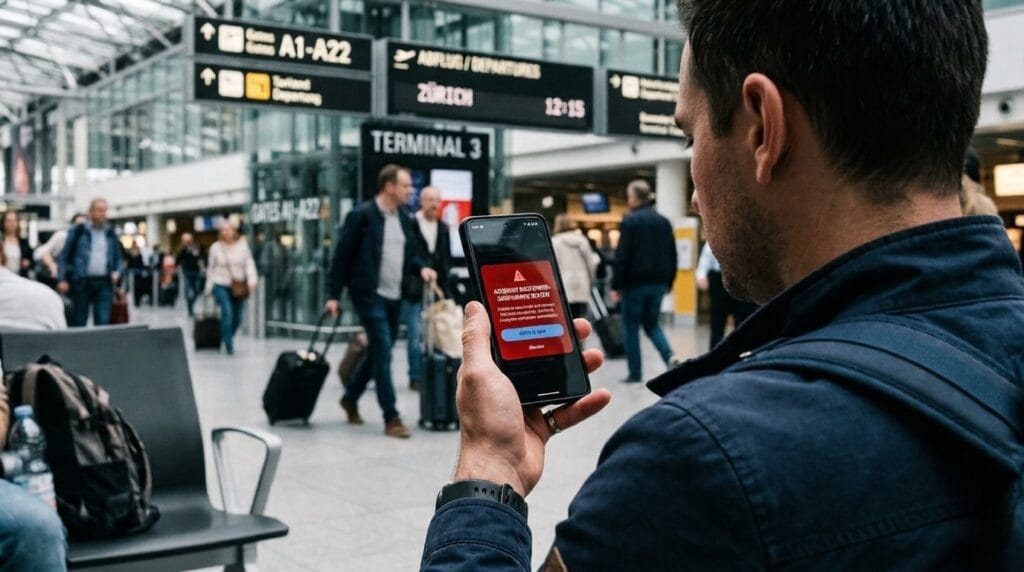

The remittance tax is live. Since 1 January 2026, the United States charges a 1 percent excise tax on money sent abroad. The catch: it applies only when the transfer is funded with cash, a money order, or a cashier’s check. Fund the same transfer from a US bank account or with a card, and the tax is zero. That single distinction, confirmed by IRS proposed regulations in April 2026, decides who pays and who never will.
A tax you can legally avoid by changing how you pay? That is not a loophole. It is the design. Yet the design has consequences beyond the Western Union counter. For anyone funding a foreign bank account, the method of moving money is now a tax question, a compliance question, and occasionally a trap. Here is what Congress built, and how to stay on the free side of it.
What the Remittance Tax Actually Covers
The legal machinery is new Internal Revenue Code Section 4475, created by the One Big Beautiful Bill Act that was signed on 4 July 2025. The remittance tax applies when a domestic sender moves money to a recipient outside the United States. The trigger is a physical funding instrument — cash, a money order, a cashier's check, or anything similar. The provider collects the 1 percent at the counter, deposits it twice a month, and reports it quarterly on Form 720.

Two details in the April 2026 proposed regulations deserve attention. First, the tax base is the full amount the sender hands over, including any promotional bonuses. Service fees and state taxes stay out. Second, the sender remains secondarily liable if the provider fails to collect. In other words, the receipt matters. Keep it.
The regulations, published in the Federal Register on 13 April 2026, closed for public comment on 12 June. Final rules are the next step. Meanwhile, the tax itself has applied since January regardless. The IRS even issued penalty relief for providers who fumble deposits during the first three quarters of 2026. That tells you how unready parts of the industry were.
The Exemption List Is Longer Than the Tax
Call it a tax on money leaving America. Actually — be more precise: it is a tax on cash leaving America. The remittance tax exempts every electronic funding path Congress could name, and the proposed regulations widened the exits further. Transfers pulled from an account at a Bank Secrecy Act-covered financial institution pay nothing. Card-funded transfers pay nothing. Where the statute said US-issued cards, the regulations now say any debit or credit card, issued anywhere, plus general-use prepaid cards.
| How the transfer is funded | 1% tax? | Why |
|---|---|---|
| Cash at a money transmitter counter | Taxed | Named directly in Section 4475 |
| Money order or cashier's check | Taxed | Treated as physical instruments, same as cash |
| Wire from a US bank account | Exempt | Account sits at a Bank Secrecy Act-covered institution |
| ACH or app transfer linked to a US account | Exempt | Same account-based exemption covers Wise, Remitly, Xoom and similar apps |
| Debit or credit card — issued anywhere | Exempt | Proposed regulations dropped the US-issuance requirement |
| General-use prepaid card | Exempt | Added by the April 2026 proposed regulations |
Read the table twice and the pattern shows itself. The taxed column is the unbanked column. Consequently, critics have a point when they call this a levy on people without accounts. A migrant worker wiring wages home in cash pays it. A private client wiring seven figures to Zurich pays nothing. And yes, the irony is thick. The people this page usually serves are precisely the ones the remittance tax was never going to touch.
Who Actually Pays — and How the Rate Shrank
The tax that passed is a shadow of the tax that was proposed. The House draft in May 2025 wanted 5 percent, aimed squarely at non-citizens. A revision cut it to 3.5 percent with citizenship carve-outs. By final passage, the rate had fallen to 1 percent and the citizenship test had vanished. The enacted version taxes a funding method, not a passport. A US citizen and a visa holder standing at the same counter with the same cash pay the same 1 percent.
So who ends up paying? Mostly cash corridors: wages wired home from in-person counters, family support sent by money order, informal-economy earnings that never touched a bank. The Joint Committee on Taxation prices the whole thing at roughly $10 billion over a decade. Real money, but small next to the corridors it touches. The detail most coverage skips is the secondary liability rule. If your provider fails to collect, the IRS can look to you. For a $200 transfer, that is theoretical. For a $50,000 cashier's check, it is not.
Why the Remittance Tax Matters When You Open a Foreign Account
It's tempting to file this under trivia for wealthy clients — wires are exempt, case closed. Don't. In our work preparing clients for Swiss and Singapore account openings, the funding method was always the quiet half of the file. The remittance tax just made it visible. Here is the overlap nobody writes about: every funding method that triggers the 1 percent tax also fails a private bank's source-of-funds review. Cash, money orders, cashier's checks — these are exactly the instruments compliance officers flag. They break the documented chain between your wealth and your deposit.

The rule we give clients is simple. Money should arrive at a new foreign account the same way it will be explained. That means an account in your name, at a regulated institution, with a paper trail matching your source-of-wealth declaration. That route was always the clean one for compliance. Now it is also the tax-free one. Conversely, a client who funds an opening deposit through a money transmitter buys two problems for the price of one. A 1 percent toll, and a question mark on the file.
For US persons the stakes stack higher. The remittance tax lands on top of an already dense reporting picture — FBAR, FATCA, Form 8938. None of that changed in 2026. What changed is that the government now also meters how money physically leaves. Planning an offshore structure as a US citizen or resident? Our guide to offshore wealth management for US persons covers the reporting side. Our comparison of non-resident bank accounts in 2026 covers where a wire can actually land.
Five Checks Before You Send Money Abroad in 2026
Run this list before any significant transfer leaves the country. It takes five minutes, and it covers both the remittance tax and the compliance side.
- Fund from an account, never from cashA wire or ACH from your US bank is exempt from the remittance tax and clean for bank compliance. Cash and cashier's checks are neither.
- Match the sender name to the account holderThird-party funding is a top-three reason foreign banks reject or freeze opening deposits.
- Keep the receipt and the funding recordSecondary liability means the IRS can come to you if a provider fails to collect. Documentation closes that door.
- Check what your app actually doesWise, Remitly and Xoom transfers linked to a US account are exempt — but confirm the funding classification in your transaction record.
- Align the transfer with your declared source of fundsThe transfer that funds a new account should tell the same story as your KYC file. If it doesn't, fix the story before the wire, not after.
Remittance Tax Questions, Answered Short
Does the remittance tax apply to bank wire transfers?
No. Transfers funded from an account at a Bank Secrecy Act-covered US financial institution are exempt under Section 4475. Standard bank wires, ACH transfers, and app transfers linked to a US account all fall on the exempt side.
Do US citizens pay the remittance tax?
Citizenship is irrelevant. The enacted version taxes the funding method, not the person. Anyone — citizen, green card holder, or visa holder — pays 1 percent on a cash-funded transfer and nothing on an account-funded one.
Is the remittance tax deductible or creditable?
It is an excise tax collected by the provider, not an income tax. There is no individual credit or deduction attached to it. The practical planning lever is the funding method, not the tax return.
Does the tax affect funding a foreign bank account opening deposit?
Only if you fund it with cash, a money order, or a cashier's check through a remittance provider. Foreign banks discourage that anyway. A wire from your own US account avoids the tax and satisfies source-of-funds review at the same time.
Disclaimer: This article is for general information only and does not constitute tax, legal, or financial advice. The Section 4475 regulations discussed here are proposed, not final, and may change. Consult a qualified US tax adviser before acting on any transfer or account-funding decision.
References: IRS — Proposed regulations on the remittance transfer tax · Federal Register — Excise Tax on Remittance Transfers (REG-114499-25) · IRS Notice 2025-55 — Deposit penalty relief · Cherry Bekaert — IRC Section 4475 explained · Greenback — Proposed regulations analysis