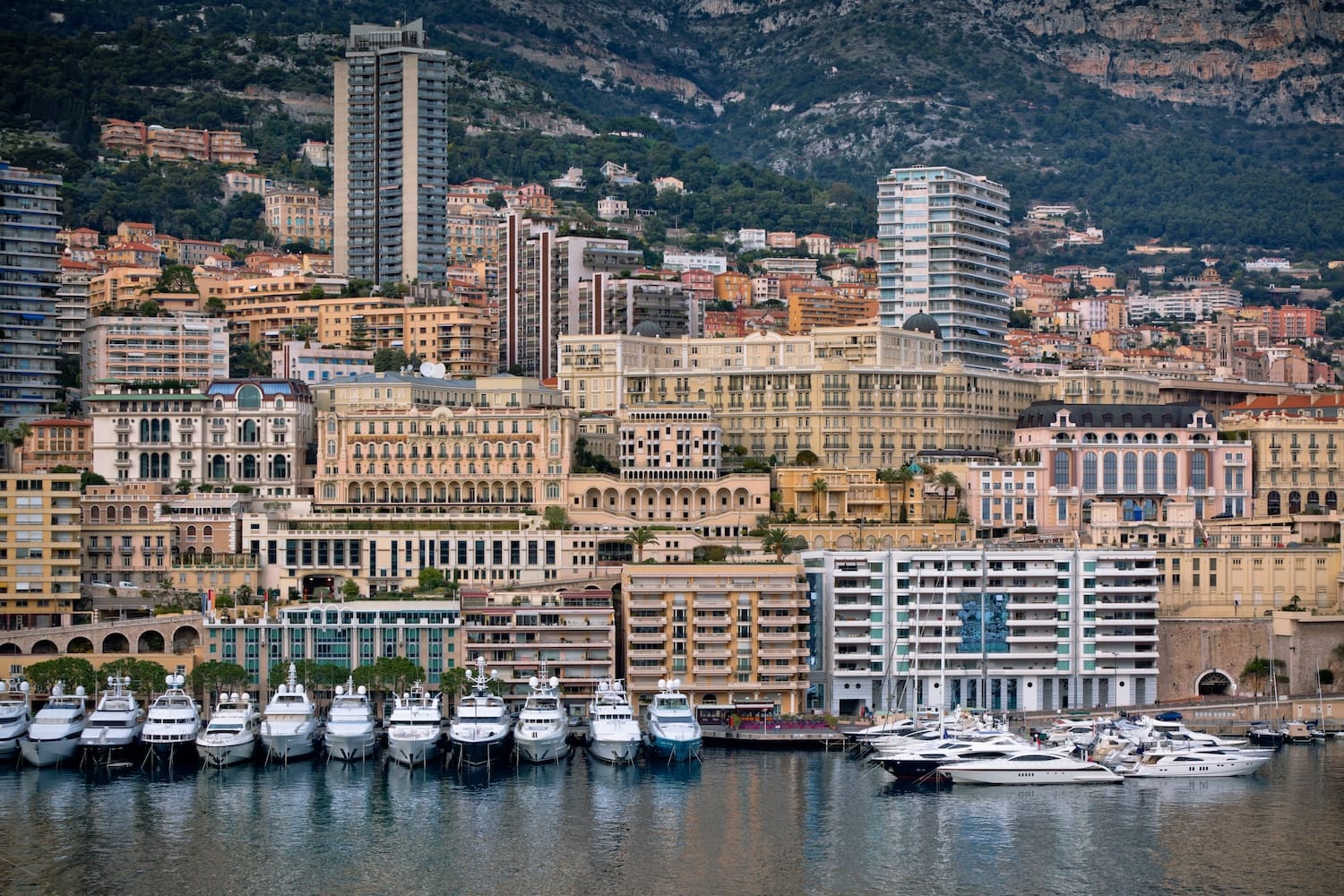
Most articles about Monaco banking are frozen in 2022. They quote €500,000 minimums, list the names of four banks, and send you on your way. What they don’t tell you is that Monaco has been on the FATF grey list since June 2024 — and as of the February 2026 FATF plenary, it’s still there, with a removal decision now expected at the June 2026 session.
That grey-list status changes everything about the onboarding process. Compliance queues are longer. Source of Wealth documentation requirements are stricter. And banks are being more selective — not less — about the profiles they accept.
This guide is written from the perspective of professionals who prepare compliance dossiers for private bank onboarding in Switzerland and who work with clients navigating Monaco’s current regulatory landscape. If you’re a UK HNWI leaving the non-dom regime, a US investor structuring an international portfolio, or a family office looking to establish a Monégasque banking relationship in 2026, this is what you actually need to know.
The 2026 Reality: Monaco’s FATF Grey List and What It Means for Your Application
Monaco was placed under FATF increased monitoring (the “grey list”) in June 2024 following its mutual evaluation report. This wasn’t a surprise — the Principality had compliance with 39 of the 40 FATF recommendations, but the gaps in operational effectiveness were real: insufficient prosecutions for money laundering, limited asset seizures abroad, and STR (Suspicious Transaction Reporting) delays.
The good news: Monaco has moved fast. By December 2024, MONEYVAL confirmed compliance with 39 of 40 recommendations. At the June 2025 joint FATF-MONEYVAL session in Strasbourg, progress was rated “largely addressed” — a rare commendation for a grey-list jurisdiction. STR reporting increased 10% between 2023 and 2025, international financial intelligence requests rose 20%, and reports to the Public Prosecutor’s Office climbed 60% since 2020. The FATF’s decision on delisting is now expected at the June 2026 Plenary.
The practical consequence for anyone opening an account in Monaco right now: banks have tightened their compliance procedures in direct response to this monitoring. What took 6–8 weeks in 2023 now takes 10–14 weeks. Source of Wealth (SoW) files that might previously have required 2 years of tax returns now routinely demand 3. Documents that weren’t explicitly requested are now standard. This is not scaremongering — it’s the operational reality we see in client dossiers every month.
Monaco FATF Grey List: Key Milestones
2022
2024
2024
2025
2026
2026
Sources: FATF February 2026 Plenary Statement; 99avocats.com; Monaco Voice
Bottom line for your application: Don’t let the grey list deter you from Monaco banking — but don’t underestimate it either. The jurisdiction is institutionally stable. The banks are not at risk. What has changed is the compliance burden on the applicant, and that burden is real in 2026.
The Minimum Deposit Myth: What €500,000 Actually Gets You
The €500,000 figure appears everywhere because it’s accurate — but only in a very narrow context. It refers to the minimum bank deposit required to support a Monaco Carte de Séjour (residence card) application. Specifically, the Monaco government requires a certificate from a Monégasque bank confirming you have at least €500,000 deposited and that it will remain there throughout your residency.
The private banking reality is different. To have a dedicated relationship manager at a tier-1 Monaco private bank, the effective entry ticket ranges from €1M to €5M depending on the institution. Some banks will accommodate €500k accounts, but the service level — access to a named banker, Lombard lending against your portfolio, discretionary portfolio management, priority onboarding — is typically reserved for clients at €2M or above.
| Bank | Best For | Min. Entry (2026) | US Persons | Lombard Lending | Physical Presence |
|---|---|---|---|---|---|
| Barclays Monaco | UK Expats, Non-Dom Transition | €2M | Yes (US Desk) | Yes | Required |
| CMB Monaco (Compagnie Monégasque de Banque) | Residency Applications, Tech Founders | €1M | Selective | Yes | Required |
| CFM Indosuez | Pan-European Wealth Structuring | €2M–€3M | No | Yes | Required |
| Julius Baer | Pure Wealth Management, Family Offices | €3M–€5M | No | Yes | Required |
| UBP Monaco | Active Investors, Multi-Booking Centre | €2M | Case-by-Case | Yes | Required |
| BNP Paribas Monaco | Residents, Employed Professionals | €250k–€500k | Limited | Limited | Required |
Minimum entry figures are indicative effective thresholds for full private banking service. Each bank applies individual risk-based criteria. “US Desk” availability subject to bank’s current FATCA compliance capacity. Data: Easy Global Banking Advisory research, May 2026.
A note on Lombard lending: this is underreported in most Monaco banking guides, but it’s central to how HNWIs actually use Monaco accounts. Rather than liquidating assets to fund a Larvotto apartment or Côte d’Azur villa purchase, clients typically deposit a securities portfolio and borrow against it at a loan-to-value ratio of 50–70%. This is standard practice at all major Monaco private banks and is one of the primary reasons clients choose Monaco over simply using a Swiss or Singapore account.
US Citizens in Monaco: The FATCA Wall — and the Two Banks That Have Climbed It
The US person problem in Monaco is not a myth. It’s not improving dramatically either. Most Monaco private banks do not have the infrastructure — specifically, the IRS-reporting compliance capacity and dedicated US desk — to accept American clients. This is not Monaco-specific hostility; it reflects the global reality that FATCA compliance is operationally expensive for institutions that don’t have the volume to justify the cost.
In 2026, the two institutions most consistently cited as having functional US desks in Monaco are Barclays Monaco and, on a selective basis, CMB Monaco. Barclays’ Monaco branch inherits its US compliance infrastructure from the broader Barclays group’s FATCA reporting systems. CMB Monaco takes US clients on a case-by-case basis, typically where the client has an existing relationship with a Monégasque counterpart or a particularly clean financial profile.
If you’re a US citizen or Green Card holder, expect two additional realities:
Longer onboarding. Add 4–6 weeks to the standard timeline for FATCA documentation review. Where a non-US applicant might complete onboarding in 10–12 weeks, US persons should budget 14–18 weeks.
A professional introduction is not optional — it’s a prerequisite. Cold-calling a Monaco bank as a US person almost universally results in the compliance officer deprioritising or declining the file. A warm introduction from a known intermediary who can vouch for your profile and pre-present your documentation is the standard pathway.
One nuance worth noting: dual nationals where the US citizenship is secondary and the client’s primary life is clearly outside the US can sometimes receive better treatment, particularly if their US tax filings are fully current and they can demonstrate FBAR compliance. But this is bank-specific and not something to assume.
🇺🇸US Citizens & Green Card Holders
- FATCA reporting required — limits bank choice
- Functional US Desks: Barclays Monaco, CMB Monaco (selective)
- Onboarding timeline: 14–18 weeks
- FBAR compliance must be current before application
- Professional introduction is a hard requirement
- Expect enhanced due diligence on all US-sourced income
🇬🇧UK/Commonwealth Non-Doms & Expats
- CRS reporting — no special onboarding barrier
- Monaco banks actively offering “Asset Relocation” packages in 2026
- Key trigger: 2025/26 UK tax reform eliminating non-dom status
- Onboarding timeline: 10–12 weeks
- Barclays Monaco is the natural first port of call for UK clients
- Lombard lending often structured around Monaco Côte d’Azur property
Source of Wealth in 2026: The Most Common Reason Files Get Rejected
The Source of Wealth (SoW) audit is where more Monaco banking applications fail than anywhere else. This is not theoretical — it’s the consistent finding across the dossiers that reach us after an initial rejection or a compliance queue that stalled. The reasons are almost always documentary, not personal: the wealth is legitimate, but the paper trail to prove it is incomplete.
Monaco banks, heightened by the FATF grey-list scrutiny, now apply a standard that closely mirrors what Swiss private banks have required for years: a narrative account of wealth origin, supported by documentation at every significant accumulation event. Here’s what that means in practice for the most common HNWI wealth sources:
Entrepreneurs and Founders (Business Sale / Liquidity Event):
The bank needs to trace your wealth back to the company’s founding, not just the exit. Expect to provide: the original Share Purchase Agreement (SPA) or merger agreement, proof of your original shareholding and when it was acquired, tax returns from the years of the business’s operation, and the wire transfer confirmation of sale proceeds. If the exit was through multiple tranches, each tranche needs documentation. If there were earnout payments, those need to be explained and documented too.
Inheritance and Gifts:
Probate documentation, the will, and ideally the inheritance tax return from the originating jurisdiction. If the estate was structured through a trust, a letter of wishes and the trust deed are typically required. The compliance officer needs to understand where the deceased’s wealth came from — which means the SoW audit effectively extends one generation back.
Property Portfolio:
Three years of rental income statements, mortgage statements showing the loan-to-value reduction over time, and purchase contracts for each significant property. Capital gains from disposals need to be supported by both the original purchase contract and the disposal agreement.
Professional Income (Senior Executives, Partners):
Three years of tax returns, payslips or income certificates, and — critically — a letter from the HR or finance team at the employer confirming your compensation structure. For law firm or consulting partners, the partnership accounts for the past 3 years are typically requested.
Source of Wealth Documentation: What Monaco Banks Now Require
One practical point that saves weeks: prepare your SoW narrative before you approach the bank, not in response to their requests. Banks are far more confident in profiles where the applicant’s intermediary presents a complete file upfront. It signals that you understand the process, that you have nothing to conceal, and that the file will not bounce back for missing documents three times over a two-month period.
The Step-by-Step Monaco Account Opening Process (2026 Version)
The process has five phases, and the order matters. Getting phase one wrong — choosing the wrong bank for your profile and approaching them cold — is the single most costly mistake. It wastes months and, more importantly, a rejection from a Monaco bank goes onto your internal compliance record. Future Monaco banks can see it.
Profile Pre-Assessment and Bank Matching
Before any contact with a bank, your profile should be evaluated against each institution’s known risk appetite, minimum thresholds, and client nationality restrictions. For US persons, this immediately narrows the field to two or three candidates. For UK non-doms, the 2026 “Asset Relocation” packages from Monaco banks make Barclays the natural first conversation. Getting this wrong costs months.
Week 1–2Compliance Dossier Preparation
Assemble the full Source of Wealth narrative, all supporting documents, certified translations, World-Check screening results, and bank references. This is not a form — it’s a professional file that tells your financial story in a way a compliance officer can approve in one sitting. Incomplete files return; complete files move forward.
Week 2–5Professional Introduction and Pre-Compliance Screen
Cold applications are not how Monaco private banking works. A warm introduction from a known intermediary presents your dossier to the right relationship manager — typically the compliance officer who will handle the application — before any formal submission. Many banks now conduct a “pre-compliance screen” before even scheduling the face-to-face meeting. This is the stage where weak or incomplete files are filtered out.
Week 5–7The Monte Carlo Meeting (Physical Presence Mandatory)
Physical presence is not negotiable at any of the major Monaco private banks. You will meet your relationship manager and, in most cases, a senior compliance representative. The meeting is partly due diligence (they’re verifying the person matches the profile) and partly relationship establishment. Come with original documents — not copies — and expect the conversation to range beyond your dossier into your future plans, your connection to Monaco, and your expected account activity.
Week 7–9Compliance Review and Account Activation
After the meeting, the file goes to the bank’s internal compliance committee. In 2026, expect 6–10 weeks for this stage — longer than the 4–6 weeks that was standard in 2023. This is a direct consequence of the FATF grey-list monitoring period: banks are running additional checks and documentation validations. Once approved, account setup and first deposit facilitation typically happens within 5–7 business days.
Week 9–18Monaco vs. Switzerland vs. Singapore: Choosing the Right Jurisdiction
Monaco is not always the right answer. For clients whose primary goal is wealth preservation, investment management, and multi-currency access — without the requirement to physically be in Monaco or establish residency there — Switzerland or Singapore may be a better first step. Here’s the honest comparison:
| Factor | Monaco | Switzerland | Singapore |
|---|---|---|---|
| FATF Status (2026) | Grey list (removal expected Jun 2026) | Clean — not on any watchlist | Clean — not on any watchlist |
| Non-Resident Minimum | €1M–€3M | CHF 500k–CHF 2M | USD 2M+ |
| US Persons | Limited (2 banks with US desks) | Improving (select Swiss banks) | Very limited |
| Physical Presence | Mandatory (no exceptions) | Required but more flexible for remote | Required in most cases |
| Onboarding Timeline | 10–18 weeks (grey list effect) | 6–12 weeks | 8–14 weeks |
| Best For | Monaco residency, Lombard lending, Côte d’Azur real estate finance | Wealth preservation, discretionary management, EU proximity | Asia-Pacific exposure, growth assets, regional diversification |
| Income Tax | None (residents) | Cantonal + Federal (residents) | 17% flat rate (residents) |
Our practical advice: for clients who don’t yet have Monaco residency and aren’t certain they will pursue it, establishing a Swiss private banking relationship first has distinct advantages. The Swiss account serves as a credible financial reference when approaching Monaco banks, demonstrates your banking track record with a top-tier institution, and keeps options open if Monaco’s FATF status creates processing friction.
The UK Non-Dom Transition: Why Monaco Banks Are Actively Competing for This Client
The abolition of the UK’s non-domicile tax regime — effective from April 2025 — has triggered one of the largest wealth migrations in recent European history. For HNWIs who had structured their affairs around the remittance basis, the new foreign income and gains (FIG) regime represents a fundamental shift in their tax position. Many are restructuring. Some are relocating.
Monaco is one of the primary beneficiaries of this migration. The Principality offers no income tax, no wealth tax, and no capital gains tax for residents. For a UK HNWI with, say, £10M in non-UK investment income per year, the annual tax saving from Monaco residency versus remaining in the UK under the new regime can exceed £4M depending on their income composition.
What this means practically: Monaco’s private banks know this demographic is moving. Several institutions — most visibly Barclays Monaco, given its UK client base — have structured “Asset Relocation” packages specifically for departing UK non-doms. These typically include: accelerated onboarding timelines where possible, coordination with the client’s UK legal advisers on the tax timing of the asset transfer, and introductions to Monaco real estate partners for the residency deposit requirement.
If you’re a UK non-dom or former non-dom and you approach Monaco banking as a commodity process — fill in a form, send your passport — you will have a poor experience. Approached correctly, with the right intermediary and the right narrative, you are currently in one of the most desirable demographic categories for Monaco private banking relationships. Use that positioning.
Planning a Monaco Banking Relationship in 2026?
Easy Global Banking is a Swiss-registered banking consultancy (BMA Business Solutions GmbH, UID CHE-422.832.034) that prepares professional compliance dossiers for private bank onboarding. Our team has direct experience with the documentation requirements Monaco banks are applying under the current FATF grey-list monitoring period.
- Profile pre-assessment against current Monaco bank risk criteria
- Professional compliance dossier preparation (Source of Wealth narrative + full document package)
- World-Check screening before any bank introduction
- Warm professional introductions to the right bank for your profile
- Guaranteed approval model: completion fee is only due when your account is open
All initial consultations are confidential. Bank-grade discretion. No cold outreach to banks on your behalf without your explicit approval.
Can Non-Residents Open a Monaco Bank Account Without Living There?
Yes — and the distinction matters. There are two categories of Monaco bank account applicant: residents (who hold or are applying for a Carte de Séjour) and non-residents (who have no intention of living in Monaco but want a Monégasque banking relationship).
Non-resident accounts are permitted, but they come with a higher financial bar. Where a prospective resident might approach CMB Monaco with the €500,000 residency deposit and get a relationship established on that basis, a non-resident without residency intent needs to demonstrate sufficient assets and a legitimate financial rationale for wanting a Monaco account specifically. Typical reasons Monaco banks accept as valid: you own real estate in Monaco or the Côte d’Azur, you have a business with Monaco connections, or you’re allocating to a multi-jurisdictional wealth structure where Monaco is one node.
“I want Monaco banking because it’s prestigious” is not a narrative that gets files approved. “I have €2.5M in a portfolio I want to use as Lombard collateral to finance a Cap d’Ail property purchase” is a narrative that gets files approved. The difference is specificity and legitimate economic rationale.
For non-residents, minimum effective thresholds at tier-1 institutions run €2M to €3M. The onboarding timeline is typically the same as for residents. Physical presence remains mandatory. The Source of Wealth documentation requirements are, if anything, more stringent — because the bank cannot rely on Monaco residency vetting as a secondary reference point.
Frequently Asked Questions: Monaco Banking in 2026
Is Monaco still on the FATF grey list in 2026?
What is the minimum deposit to open a bank account in Monaco?
Can Americans open a bank account in Monaco?
Do I have to visit Monaco in person to open an account?
How long does it take to open a Monaco private bank account in 2026?
What documents do I need to open a Monaco bank account?
What is Lombard lending and why does it matter in Monaco?
The One Thing That Separates Successful Monaco Applications From Failed Ones
It’s not about how much you’re depositing or where you’re from. We even look past the ‘tricky stuff’—like multi-country business setups or messy inheritance details. We’ve handled it all before, and we know how to make the onboarding process smooth regardless of how complex your world looks on paper.
The single differentiating factor, consistently, is preparation. Specifically: whether the compliance dossier presented to the bank tells a clear, complete, and documented story of your financial life before the compliance officer asks a single question.
Monaco banks under grey-list scrutiny are running more thorough reviews than ever. A file that generates questions bounces back and forth for weeks. A file that generates confidence — because the narrative is coherent, the documents are complete, and the intermediary presenting it is known and trusted — moves through the process on a much shorter timeline.
This is what we do. If you’re ready to begin the process, or you want to understand whether your profile is realistic for Monaco banking in 2026, start with a confidential profile review.
Disclaimer: All information in this article is for general educational purposes only and does not constitute financial, investment, or legal advice. Easy Global Banking (BMA Business Solutions GmbH) is a Swiss-registered banking consultancy, not a financial institution. We do not manage assets, provide investment recommendations, or offer regulated financial services. Minimum deposit figures, onboarding timelines, and bank-specific details are indicative and subject to each institution’s individual policies at the time of application. Always consult qualified legal and financial professionals for advice specific to your situation.
Sources:
1. FATF — Jurisdictions under Increased Monitoring, February 13, 2026: fatf-gafi.org
2. FATF — Monaco Country Page: fatf-gafi.org/Monaco
3. Monaco Government — Banking Relationships in Monaco (MGS, February 2026): mgs.mc
4. 99 Avocats — FATF/MONEYVAL Monaco Analysis (2026): 99avocats.com
5. Monaco Voice — Monaco’s Strategic Effort to Exit the FATF Grey List (July 2025): monacovoice.com