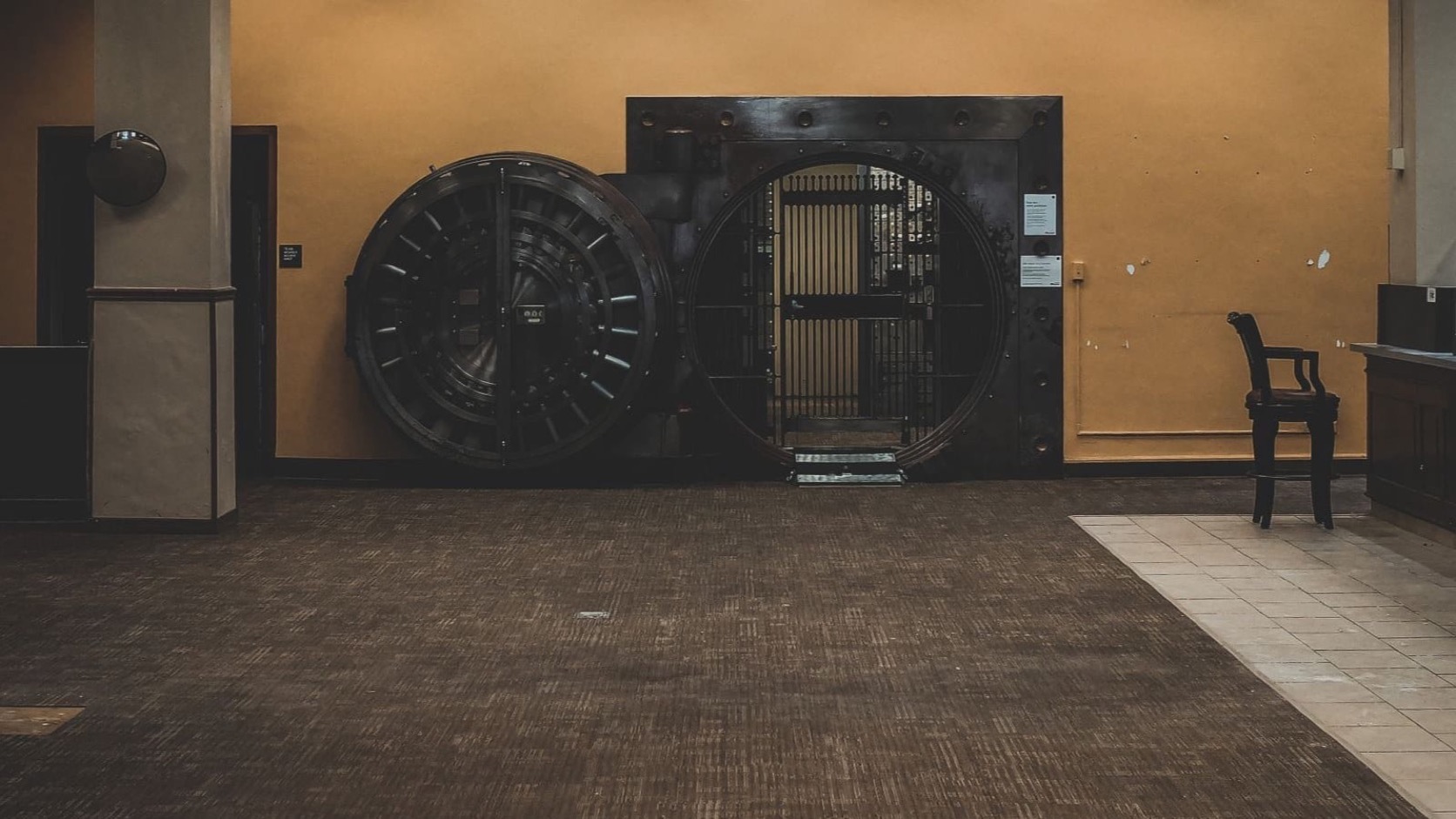
Switzerland refines between 60% and 70% of the world’s newly mined physical gold across four major LBMA-accredited refineries (Argor-Heraeus, Valcambi, PAMP, and Metalor). It also houses the densest concentration of high-security subterranean vaults, bonded freeports, and private custodial facilities in the world. As macroeconomic uncertainty, geopolitical fragmentation, and banking sector counterparty concerns accelerate, deciding to store gold in Switzerland has become a premier safe-haven strategy for international family offices and private investors.
However, storing precious metals in Switzerland is not a single uniform product. Investors must navigate three distinct institutional architectures: bank custody accounts (allocated vs unallocated metal accounts), customs freeports (such as the Geneva Freeport), and independent non-bank private vaults (located in Zurich, Lucerne, or decommissioned Alpine military bunkers). Each option carries fundamentally different legal ownership titles, insolvency protections, annual fee schedules, and tax reporting requirements.
Critical Legal Rule: In an insolvency or systemic banking crisis, the legal distinction between allocated physical gold and an unallocated precious metals account is absolute. Allocated gold with individual serialised bar lists is segregated client property that cannot be touched by bank liquidators. An unallocated metal account is an unsecured liability of the bank—subject to direct bail-in alongside cash deposits.
The Three Custody Options Compared
When selecting where to store physical bullion in Switzerland, investors should evaluate legal custody status, counterparty exposure, and access flexibility across the three primary models:
| Custodial Option | Legal Ownership Structure | Bail-In / Bank Failure Exposure | Typical Annual Cost | Best Suited For |
|---|---|---|---|---|
| 1. Bank Allocated Custodial Account (e.g. ZKB, UBS, Cantonal Banks) | Segregated custody property under Swiss Banking Act (BankG Art. 37d); specific serialised bars recorded in client’s depot. | Zero balance-sheet risk: Physical bars are segregated from bank bankruptcy estate. | 0.25% – 0.50% p.a. of gold value (plus minimum account maintenance fees) | Wealth management clients who want bullion integrated into their existing Swiss private banking portfolio and collateralised for Lombard credit. |
| 2. Independent Non-Bank Private Vault (e.g. Zurich, Uri, Gotthard, Lucerne) | Direct bailee property under Swiss Code of Obligations (Art. 472 et seq.); titled in client name outside banking system. | Completely removed: No banking licence; vault operator failure does not affect client property. | 0.30% – 0.65% p.a. of metal value (including comprehensive all-risk Lloyd’s / Swiss insurance) | Investors seeking complete independence from the global banking system, counterparty risk, and financial institution reporting perimeters. |
| 3. Customs Bonded Warehouse / Freeport (e.g. Geneva Freeport / Ports Francs) | Direct storage within an extraterritorial bonded customs facility supervised by Swiss Customs (BAZG). | Completely removed: Independent warehouse custody; goods held under bonded customs regime. | 0.40% – 0.80% p.a. (depending on vault operator, volume, and insured value) | Institutional investors and multi-asset collectors storing white precious metals (silver, platinum) where domestic Swiss VAT is legally deferred. |
Allocated Gold vs Unallocated Metal Accounts: Avoid the Bail-In Trap
One of the most dangerous and common misconceptions among private banking clients is assuming that any line item labeled ”Gold” on an electronic banking app represents physical metal sitting in a vault. In reality, Swiss banks offer two completely different precious metals structures:
1. Unallocated Precious Metals Accounts (Metalkonto)
An unallocated gold account is simply a cash-settled claim denominated in troy ounces or kilograms. You do not own a specific physical bar with a serial number. Instead, the bank holds an unsegregated pool of bullion (or financial derivatives) on its own balance sheet. Legally, you are an unsecured general creditor of the financial institution.
If the bank experiences insolvency or a regulatory resolution order from FINMA, unallocated metal accounts are not protected by Swiss deposit insurance (which covers only eligible cash deposits up to CHF 100,000) and are subject to direct creditor bail-in. For a detailed breakdown of how bail-in hierarchies operate during institutional distress, read our guide to mapping your claims before a bank fails.
2. Allocated Physical Custody (Physisches Depot)
With allocated gold storage, you purchase specific, numbered physical bars minted by an LBMA Good Delivery refiner. The bank or vault facility issues a formal Bar List and Certificate of Custody detailing:
- The exact weight and fineness (minimum 999.9/1000 for standard kilo bars or 995/1000 for 400 oz Good Delivery bars).
- The unique individual serial number stamped on each bar.
- The official hallmark of the approved refinery (e.g. Argor-Heraeus, Valcambi, PAMP, or Metalor).
- The designated segregated vault chamber or individual storage box location.
Under Article 37d of the Swiss Banking Act (Bankengesetz), allocated custody assets do not form part of a bank’s liquidation estate. In the event of a bank failure, allocated gold bars must be segregated and surrendered directly to the account holder without participating in bankruptcy proceedings.
Swiss Tax Treatment: VAT Exemption on Gold vs White Metals
Switzerland’s tax regime treats precious metals with deliberate precision. Under the Swiss Value Added Tax Act (MWSTG / LTVA, Art. 44 and Art. 107 para. 2), the following rules apply:
| Precious Metal Category | Minimum Purity Standard | Swiss VAT Rate | Bonded Freeport Advantage |
|---|---|---|---|
| Investment Gold (Bars) | Fine gold with a purity of at least 995/1000 | 0% (Exempt from Swiss VAT) | Can be held in domestic Swiss vaults or freeports without VAT liability. |
| Investment Gold (Coins) | Recognised legal tender coins of at least 900/1000 purity minted after 1800 (e.g. Vreneli, Krugerrand, Britannia, Maple Leaf) | 0% (Exempt from Swiss VAT) | Exempt from Swiss VAT across all licensed dealers and bank counters. |
| Silver (Bars & Coins) | Any purity | 8.1% Standard Swiss VAT | Storing in a bonded customs warehouse (Freeport) legally defers Swiss VAT indefinitely until physical domestic withdrawal. |
| Platinum & Palladium | Any purity | 8.1% Standard Swiss VAT | Bonded freeport storage avoids the immediate 8.1% VAT hit upon purchase and import. |
Because investment gold enjoys a complete statutory VAT exemption in Switzerland, investors storing purely gold bars or bullion coins gain no domestic tax advantage from using an expensive bonded freeport over a high-security domestic private vault in Zurich or Lucerne. Freeports become economically valuable primarily when building multi-metal portfolios that include substantial allocations to physical silver or platinum.
Reporting Reality: Does Swiss Gold Storage Trigger CRS and FATCA?
A persistent myth in online marketing claims that storing physical gold in Switzerland is ”completely invisible” to foreign tax authorities. The legal reality under the OECD Common Reporting Standard (CRS) and US FATCA requires careful distinction between financial institutions and commercial storage operators:
- Gold Held in a Swiss Bank Custodial Account: Swiss banks are Reporting Financial Institutions under both CRS and FATCA. Every bank custodial account (including allocated gold held in a securities depot) is a reportable financial account. The bank reports the year-end fair market value of your allocated gold to the Swiss Federal Tax Administration (FTA), which transmits the data annually to your tax home country under CRS or to the IRS under FATCA.
- Gold Held in an Independent Non-Bank Private Vault: Independent commercial storage operators, vault companies, and bonded freeports that provide pure warehousing logistics—and do not hold a banking licence, provide portfolio management, or operate financial accounts—are generally classified as Active Non-Financial Entities (Active NFEs) rather than Financial Institutions under OECD CRS rules. Consequently, commercial vault operators do not perform automatic CRS reporting of stored bullion balances to foreign tax authorities.
- Personal Tax Compliance Remains Mandatory: While a private vault operator may not automatically exchange data under CRS, the account holder remains legally obligated to report worldwide assets and capital gains on their domestic tax returns. For US persons, physical precious metals must be disclosed on relevant tax filings, and concealing assets abroad constitutes criminal tax evasion.
Cost Breakdown: How Much Does Swiss Gold Storage Actually Cost?
Storage pricing models in Switzerland are transparent and tier-based. Depending on whether you choose a bank custodial vault, a dedicated safe-deposit box, or a specialised high-security private vault, fees fall into predictable brackets:
| Storage Model | Fee Structure | Estimated Annual Cost (CHF 500k Gold) | Estimated Annual Cost (CHF 2M Gold) | Insurance & Audit Included |
|---|---|---|---|---|
| Bank Safe-Deposit Box (Physical locker in bank vault) | Flat annual box rental (CHF 200–CHF 1,500/yr depending on locker volume) | CHF 400 – CHF 800 | CHF 800 – CHF 1,500 (Multiple large boxes) | Basic insurance only (typically CHF 20k–50k); supplementary private insurance must be purchased separately. |
| Bank Custodial Depot (Allocated bar safekeeping) | Ad-valorem percentage (0.25% to 0.45% p.a. + VAT) | CHF 1,250 – CHF 2,250 | CHF 5,000 – CHF 9,000 | Full institutional all-risk insurance; annual custody statement; audited by bank external auditors. |
| Private High-Security Vault (Independent dedicated facility) | Ad-valorem percentage (0.35% to 0.65% p.a. tiering down with volume) | CHF 1,750 – CHF 3,000 | CHF 7,000 – CHF 11,000 | Comprehensive all-risk underwriting (Lloyd’s of London / Swiss syndicates); serialised bar auditing; independent audit reports. |
For accounts above CHF 1,000,000, private vault facilities and specialised bullion managers typically offer tiered sliding scales dropping to 0.25%–0.30% p.a., with institutional-grade auditing and physical inspection rights.
Physical Inspection, Verification and Withdrawal Logistics
Before depositing funds with any Swiss gold storage provider, verify that your custody contract guarantees four non-negotiable operational rights:
- Physical Inspection Rights: You (or an authorized attorney under power of attorney) should retain the contractual right to inspect your specific bars in person inside the vault facility upon providing reasonable advance notice (typically 24 to 48 hours).
- Independent Third-Party Auditing: The facility must undergo regular physical audits by an accredited accounting firm (such as BDO, PwC, or a specialized bullion inspection firm) matching client bar serial numbers against vault records.
- Unrestricted Physical Collection: You must have the legal right to collect your physical bullion at the vault counter, or arrange secure armored courier transportation (via established carriers like Loomis International or Brink’s) to another jurisdiction or your private residence.
- LBMA Good Delivery Chain of Custody: If you ever decide to liquidate your gold, bars that have never left an accredited professional vault system can be sold instantly at tight market spreads without requiring costly melting or assay verification.
Frequently Asked Questions
Is gold stored in a Swiss bank safe during a bank collapse?
Yes—provided it is held as allocated gold in a custody depot (körperlich verwahrt) or in an individual safe deposit box. Under Article 37d of the Swiss Banking Act, allocated property is legally segregated and must be handed over to the client. However, if your gold is held on an unallocated metal account (Metalkonto), it is an unsecured claim on the bank’s balance sheet and is subject to bail-in.
Can foreign non-residents buy and store gold in Switzerland without visiting in person?
Yes. Many institutional Swiss bullion storage providers and private banks onboard qualified international clients remotely via digital identity verification, certified documentation, and bank wire transfers. Once onboarded, clients can instruct the purchase of LBMA-accredited bars and receive audited custody certificates electronically.
Is there any limit on how much physical gold an individual can store in Switzerland?
No statutory limits exist under Swiss federal law. Individuals and institutional entities may store any quantity of physical gold, provided the capital used to purchase the metal originates from fully documented, lawful sources of wealth that pass Swiss anti-money laundering due diligence.
Can I use allocated gold stored in Switzerland as collateral for a loan?
Yes. Swiss private banks and select wealth managers routinely offer Lombard lending facilities secured against allocated physical gold depots, typically providing loan-to-value (LTV) ratios of 50% to 75% in CHF, EUR, or USD. Learn more in our guide to alternative assets and collateral in Swiss private banking.
Structure Your Swiss Wealth & Precious Metals Custody
Choosing between a Swiss cantonal bank custody account, an independent high-security vault, or an international multi-currency banking facility depends on your asset volume, geographic residency, and privacy objectives. Easy Global Banking assists private clients and family holding companies in navigating Swiss banking introductions and custodial setups.
Explore our transparent Services & Fees, learn about Swiss cantonal banks and state guarantees, or contact our team for an independent consultation.
Primary Regulatory & Industry References
- Swiss Federal Act on Value Added Tax (MWSTG / LTVA Art. 44 & 107 — Tax Exemption for Investment Gold)
- Swiss Federal Act on Banks and Savings Banks (BankG Art. 37d — Segregation of Custodial Assets in Bankruptcy)
- London Bullion Market Association (LBMA) — Good Delivery Rules & Swiss Refinery Standards
- Federal Office for Customs and Border Security (BAZG / FOCBS) — Customs Warehouses and Freeports Regulation in Switzerland
Disclaimer: Easy Global Banking (operated by BMA Business Solutions GmbH, Switzerland) is an independent financial consulting firm and not a precious metals dealer, custodian, or licensed tax adviser. This article is published for educational and informational purposes only and does not constitute investment, tax, or legal advice. Investors should verify individual storage contracts, insurance terms, and domestic tax reporting obligations with qualified professionals before purchasing bullion.