
Hong Kong licensed stablecoins are not bank-account replacements. They are regulated payment instruments with a legal right to redeem at par and reserves held apart from the issuer’s own assets. However, holders receive no Hong Kong deposit insurance, no interest, no credit line and no guarantee that a foreign bank or merchant will accept the token.
That still leaves a serious use case. When both parties can use the same regulated token, a stablecoin can move Hong Kong dollar value on a public blockchain around the clock. It may also settle a tokenised asset in the same transaction. In that narrow job, it can be a much better rail than a chain of banks, cut-off times and reconciliation files.
The mistake is treating faster movement as safer storage. So a bank account and a stablecoin answer different questions. One holds money inside a supervised deposit institution. The other carries a claim across a programmable network. The right comparison starts with the legal exit, not the transaction speed.
Hong Kong’s first two stablecoin issuer licences took effect on 10 April 2026. HKMA guidance normally requires valid redemption requests to be processed within one business day after receipt. Stablecoins receive no Deposit Protection Scheme coverage.
The licences are live, but the products are still arriving
On 10 April 2026, the Hong Kong Monetary Authority licensed The Hongkong and Shanghai Banking Corporation Limited and Anchorpoint Financial Limited. Anchorpoint is majority owned by Standard Chartered Bank (Hong Kong), with HKT and Animoca Brands as other material shareholders. The licences cover issuance. They do not prove that a token already has deep liquidity, broad merchant use or a dependable cross-border off-ramp.
For Hong Kong licensed stablecoins, that distinction matters in August 2026. HSBC has announced a Hong Kong dollar stablecoin for the second half of 2026, with planned access through PayMe and the HSBC HK App. Anchorpoint has published a detailed white paper for HKDAP, its HKD At Par token, and selected Ethereum as the first supported blockchain. Yet the same white paper still lists the public starting date as “TBA.” In other words, Hong Kong has licensed issuers before it has a mature retail market.
This is not a weakness in the regime. Actually, it is evidence that the regulator separated permission from launch. Technology tests, reserve custody, redemption operations, distributor checks and financial-crime controls still have to work together. A licence opens the door. It does not finish the plumbing.
| Feature | HSBC | Anchorpoint Financial |
|---|---|---|
| Licence date | 10 April 2026 | 10 April 2026 |
| Licence holder | The Hongkong and Shanghai Banking Corporation Limited | Anchorpoint Financial Limited |
| Announced token | HKD-denominated stablecoin; final public name not stated in the cited launch notice | HKDAP, or HKD At Par |
| Initial route | PayMe and HSBC HK App; retail payments and tokenised investments are planned | Authorised distributors, public blockchain and B2B2C access |
| Launch status in cited material | Planned for the second half of 2026 | Public start date shown as TBA |
The five-gate test for Hong Kong licensed stablecoins
Hong Kong licensed stablecoins should pass five gates before anyone treats them as usable money. First comes redemption: can the holder turn the token back into the named currency at par? Second comes reserve protection: are backing assets liquid, segregated and outside the issuer’s general estate? Third is token custody. Fourth is deposit insurance. Fifth is acceptance by the next wallet, platform, merchant or bank.
Hong Kong’s regime is strong on the first two. It cannot solve the last three by statute alone. That is why the phrase “bank-grade stablecoin” needs care. Bank-grade controls at the issuer do not convert the holder’s wallet into an insured bank account, and they do not force another institution to accept the token.
Published feature comparison
A Hong Kong bank deposit has statutory deposit insurance available, may pay interest and provides account services. A licensed stablecoin has a statutory par-redemption right, can move on a public blockchain and can support programmable on-chain settlement. Both can return value at par under normal conditions, but through different legal mechanisms.
The chart is deliberately binary. It is not a safety score. Instead, it shows that each product owns a different half of the problem. A bank account is better at storing and documenting money. A licensed stablecoin is better at moving value into an on-chain transaction. For many companies, the practical answer will be both.
Redemption is a legal right, not instant cash everywhere
The redemption right behind Hong Kong licensed stablecoins is unusually clear. Holders can redeem at par. They also receive an insolvency claim on the reserve pool and a claim against the issuer for any shortfall. Unless the Monetary Authority approves otherwise, the issuer should process a valid request within one business day after the day it receives that request. Fees cannot be unreasonable, and conditions cannot be unduly burdensome.
That sounds close to a bank withdrawal. The operational route is different. Anchorpoint’s published model requires a token to arrive from a recognised wallet, a redemption request to pass validation, the token to be burned, and fiat proceeds to move to a whitelisted bank account. An authorised distributor may stand between the holder and the issuer. Its own processing window and fees still matter.
Quick caveat: “processed within one business day” does not mean cash appears in every foreign bank account within 24 hours. The clock applies to the licensed issuer’s redemption process. A receiving bank can still screen the fiat payment, ask about the source of funds or delay credit. The November 2026 SWIFT address requirements can also affect the fiat leg after redemption if beneficiary data is poorly structured.
Redemption starts with a recognised wallet, moves through an issuer or authorised distributor, burns the token, releases Hong Kong dollars from reserves, and pays a whitelisted bank account. The receiving bank may still screen the payment.
Reserve protection is strong, but it is not deposit insurance
Hong Kong licensed stablecoins must remain fully backed. The market value of the reserve pool must stay at least equal to the par value of tokens in circulation. HKMA guidance also expects a buffer where market risk calls for it. Eligible assets include cash, bank deposits of no more than three months, short-dated high-quality public debt, certain overnight reverse-repurchase receivables and dedicated investment funds that hold those assets.
The reserve pool must be separate from the issuer’s own money and protected from other creditors. A trust can hold the assets for token holders. Qualified custodians must safeguard them, and the issuer remains accountable even after appointing a bank, trustee or investment manager. Daily reserve statements must be ready for HKMA review, while public information and independent attestations add another check.
This is meaningful protection. Still, Hong Kong licensed stablecoins use a different legal machine from the Deposit Protection Scheme. The DPS automatically covers eligible deposits up to HK$800,000 per depositor per member bank. It explicitly excludes virtual assets. Therefore, a stablecoin holder relies on segregated reserves, redemption rights and insolvency claims rather than a statutory compensation fund.
There is another trade-off that marketing pages rarely put near the top: the issuer cannot pay interest on the stablecoin. Income earned on reserve assets belongs to the issuer, not the holder. So a company that keeps HK$5 million in tokens for months is giving up deposit yield unless a separate, properly regulated product compensates it. That can be a large hidden rail fee.
| Question | Eligible Hong Kong bank deposit | Licensed stablecoin |
|---|---|---|
| What does the holder own? | A claim on the bank through an account | A token with redemption and reserve-related rights |
| Primary protection | Bank capital, liquidity, supervision and the deposit contract | Fully backed, segregated reserve pool and par redemption |
| Failure backstop | DPS compensation up to HK$800,000 for eligible deposits | Pro-rata reserve disposal plus a claim on the issuer for a shortfall |
| Interest | May be paid under the account terms | Issuer may not pay interest on the stablecoin |
| Access risk | Credentials, fraud controls and bank availability | Wallet keys, chain support, smart contract, custodian and distributor |
Custody has two layers, and most comparisons miss one
For Hong Kong licensed stablecoins, reserve custody answers who safeguards the cash and securities behind the token. Token custody answers who controls the token itself. Those are separate jobs. A licensed bank may hold the reserve assets while the user keeps the stablecoin in a self-custody wallet, at a virtual-asset platform or with another approved custodian.
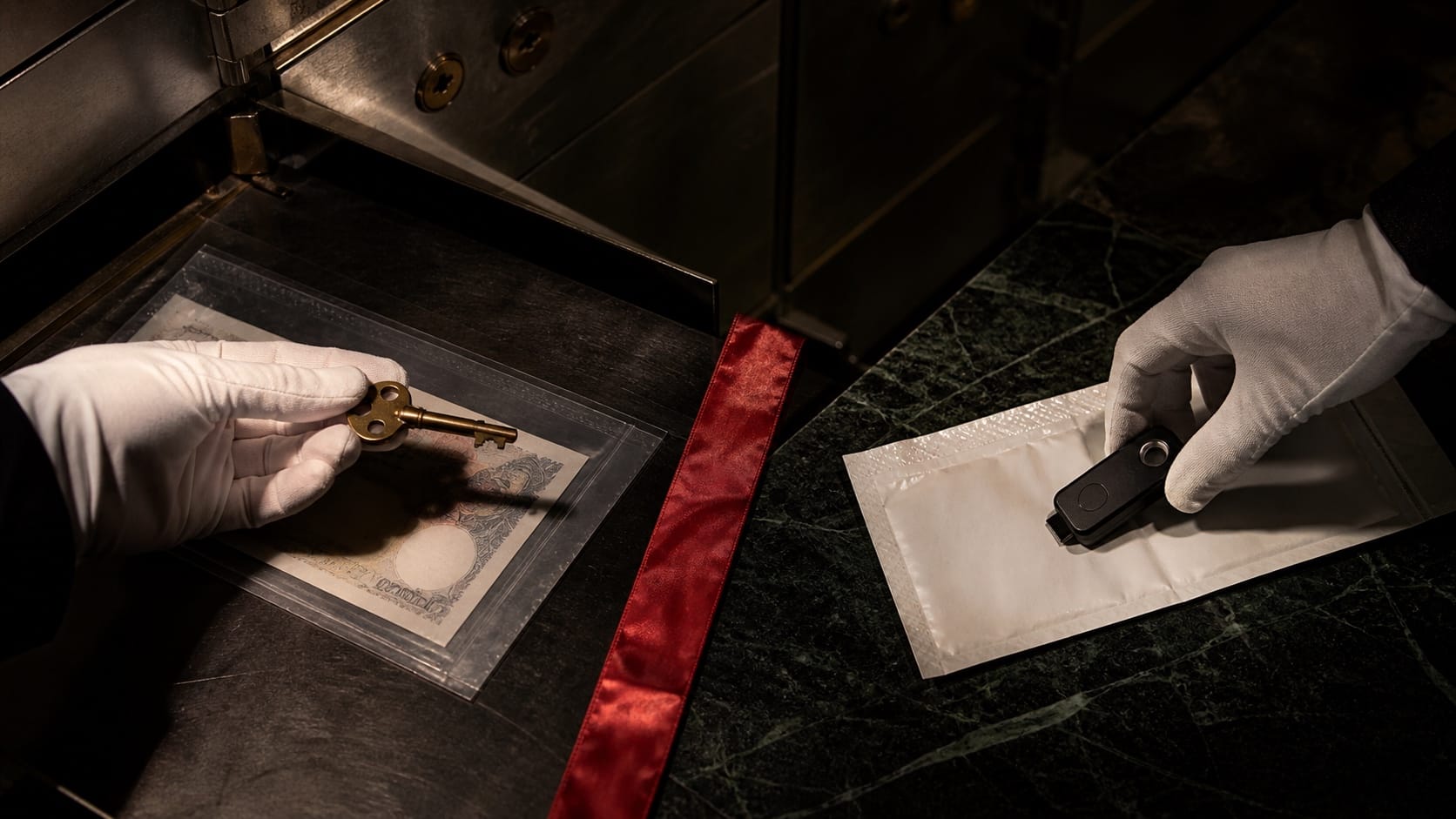
Anchorpoint’s white paper makes this unusually clear. HKDAP is described as a bearer instrument. The holder is responsible for the wallet and private keys, while the issuer does not provide custody to the holder. Lose a self-custody key and the reserve trust has not failed; the access layer has. A company can therefore own a well-backed token and still lose practical control of it.
Custodial wallets trade one risk for another. They remove the burden of private-key management, but they add platform access, insolvency, operational and withdrawal risk. The serious due-diligence question is not “Who holds the reserves?” It is “Who can sign my transfer, who can freeze it, and what happens if that service goes offline on a Sunday?”
Readers comparing this model with a specialist institution should first understand why Swiss crypto banks fall into three different operating models. A banking licence, a digital-asset custodian and a token issuer may sit in the same corporate group, but their legal obligations do not merge into one promise.
HSBC and Anchorpoint are testing two different adoption paths
HSBC appears to be starting from distribution. PayMe already has more than 3.3 million users, and the HSBC HK App gives the bank an existing identity, compliance and payment environment. Its announced first uses include peer payments, participating merchants and subscriptions to tokenised investments. That path may feel less like opening a crypto wallet and more like adding a new balance type inside familiar apps.
Anchorpoint starts from interoperability. Its HKDAP plan uses authorised distributors and a public blockchain, initially Ethereum. Standard Chartered supplies banking and reserve-management capability; HKT brings payment reach; Animoca Brands adds Web3 distribution. The model is more open, but it also puts more weight on distributors, supported wallets and the rules of each destination market.
Neither route is automatically better. The two Hong Kong licensed stablecoins are testing different trade-offs. HSBC’s controlled app path may make retail use simpler but could remain more closed. Anchorpoint’s distributor path may travel further across tokenised markets but creates more hand-offs. The real contest is not coin versus coin. It is controlled convenience versus open-chain reach.
Will Hong Kong banks accept a licensed stablecoin?
The licences behind Hong Kong licensed stablecoins do not oblige every bank to hold, trade or redeem the tokens. Banks still decide which digital-asset services they offer, which chains and custodians they support, and which customers they will onboard. A regulated stablecoin reduces reserve and issuer uncertainty. However, it does not erase each bank’s risk appetite.
There are three different meanings of “accept.” A bank may accept fiat proceeds after redemption. It may provide custody for the token. Or it may let customers pay, trade or settle with the token inside its own platform. These are separate approvals. A customer should never infer the third from the first.
This also explains why the new tokens do not make opening a Hong Kong bank account as a non-resident obsolete. Redemption still needs a bank destination in most practical models. Businesses also need statements, payroll, tax payments, cards and credit facilities. The stablecoin can improve one transaction path without replacing the account around it.
Cross-border usability depends on both ends of the corridor
Hong Kong licensed stablecoins can move on-chain without waiting for a correspondent bank’s cut-off time. That is useful for a Hong Kong importer paying a supplier that already uses the same token, or for a fund settling a tokenised asset against tokenised cash. The transfer and the asset delivery can happen together, which reduces principal risk and reconciliation work.
Still, cross-border reach for Hong Kong licensed stablecoins is not the same as cross-border permission. The issuer must obey Hong Kong law and the laws of every market where it distributes. The recipient needs a supported wallet and a lawful way to hold or convert the token. If the supplier ultimately needs euros in a local bank, the route still requires an HKD-to-EUR price, liquidity, an off-ramp and a bank willing to credit the proceeds.
Here is the uncomfortable bit: a three-second blockchain transfer can sit in front of a three-day compliance review. Names, wallet history, sanctions exposure, source of funds and economic purpose do not disappear. They move into a different screening stack. Companies that ignore this often measure network speed while leaving the slowest off-ramp untouched.
The better comparison is with the entire payment chain, not with SWIFT messaging alone. EGB’s analysis of a SWIFT payment rejected by an intermediary bank shows how route risk can stop clean money. A stablecoin may remove that intermediary from the token leg. Yet the entry and exit banks can still ask the same hard questions.
| Use case | Likely advantage | Remaining constraint | Better default |
|---|---|---|---|
| Tokenised asset settlement | Atomic or near-real-time settlement | Platform, chain and counterparty integration | Stablecoin rail |
| 24/7 treasury transfer inside one ecosystem | No bank cut-off on the token leg | Wallet controls and redemption liquidity | Stablecoin plus bank accounts |
| Long-term cash reserve | Portable on-chain balance | No interest and no DPS cover | Bank deposit or treasury instrument |
| Paying an unprepared overseas supplier | Fast transfer if accepted | Supplier may lack a wallet or lawful off-ramp | Bank transfer |
| Replacing a business current account | Faster token movement | No cards, payroll, credit or universal statements | Bank account |
Use the rail only after the counterparty is ready
A company should not adopt Hong Kong licensed stablecoins merely because a transaction is “international.” Instead, it should use the token when it removes a named bottleneck. That might be weekend settlement, delivery-versus-payment for a tokenised fund, repeated transfers within a controlled supplier network, or expensive reconciliation between digital platforms.
For private clients, the bar is higher. If the goal is simply to hold Hong Kong dollars, an eligible bank deposit is easier to explain, easier to recover and may earn interest. A stablecoin starts making sense when the holder needs on-chain use, not merely a digital-looking balance. Buying one to avoid bank KYC is especially misguided because issuance, redemption and regulated distribution all bring identity checks back into the process.
For treasury teams, run a small corridor test before moving material value. Name the issuer, chain, custodian, distributor, receiving wallet, redemption bank and fallback route. Then price the whole cycle: minting, network fees, custody, FX, distributor spread and lost interest. A fast middle can still be an expensive end-to-end payment.
Bank account, stablecoin rail, or both?
Select the requirements that apply to this specific pool of money.
For wholesale cross-border money, the competing architecture is already being tested. Project Agora’s tokenised-deposit model keeps commercial-bank money and central-bank settlement inside the regulated banking perimeter. Hong Kong’s stablecoins take a different route: a licensed issuer creates the token, but redemption and acceptance still determine whether it behaves like a useful rail.
The better payment rail still needs a bank at each edge
The first Hong Kong licensed stablecoins are best understood as regulated bridges between bank money and tokenised markets. They can make the middle of a payment faster, more programmable and easier to reconcile. However, the source funds usually begin in a bank, and redemption usually ends in one.
That is why the bank-account alternative question produces the wrong debate. The useful question is whether a specific transaction needs to leave the account layer at all. If it does, a licensed token is far safer than an anonymous promise with vague reserves. If it does not, the bank account still offers the better legal and operational package.
Hong Kong has done the hard regulatory part well: par redemption, segregated backing, qualified custody, disclosure and a narrow first group of issuers. The market now has to prove the unglamorous part. Wallet support. Distributor discipline. Bank off-ramps. Merchant acceptance. Cross-border permission. Those details, not the word “licensed,” will decide whether the rail carries real economic traffic.
Questions readers are asking about Hong Kong licensed stablecoins
Are Hong Kong licensed stablecoins covered by deposit insurance?
Can a holder redeem a licensed stablecoin directly for Hong Kong dollars?
Do the tokens pay interest?
Can non-residents use a Hong Kong licensed stablecoin?
Will a licensed stablecoin replace SWIFT?
Licensed stablecoins widen the menu without replacing a bank account. For the accounts themselves, and who can actually open them, see our offshore and non-resident banking guide.
Stablecoin rails sidestep some of this friction by design. Conventional European transfers now carry an extra check instead — the new payee name rules set out how it works.
Important: This article is general information, not legal, tax, investment or payment advice. Product terms, launch status, supported jurisdictions, fees and redemption channels can change. Confirm the current HKMA licence register, issuer documents and your receiving bank’s policy before using any stablecoin.
References
- HKMA Annual Report 2025: International Financial Centre (opens in new tab)
- HKMA Guideline on Supervision of Licensed Stablecoin Issuers (opens in new tab)
- HSBC announcement of its Hong Kong stablecoin issuer licence and planned rollout (opens in new tab)
- Anchorpoint HKDAP white paper (opens in new tab)
- Hong Kong Deposit Protection Board: coverage and exclusions (opens in new tab)