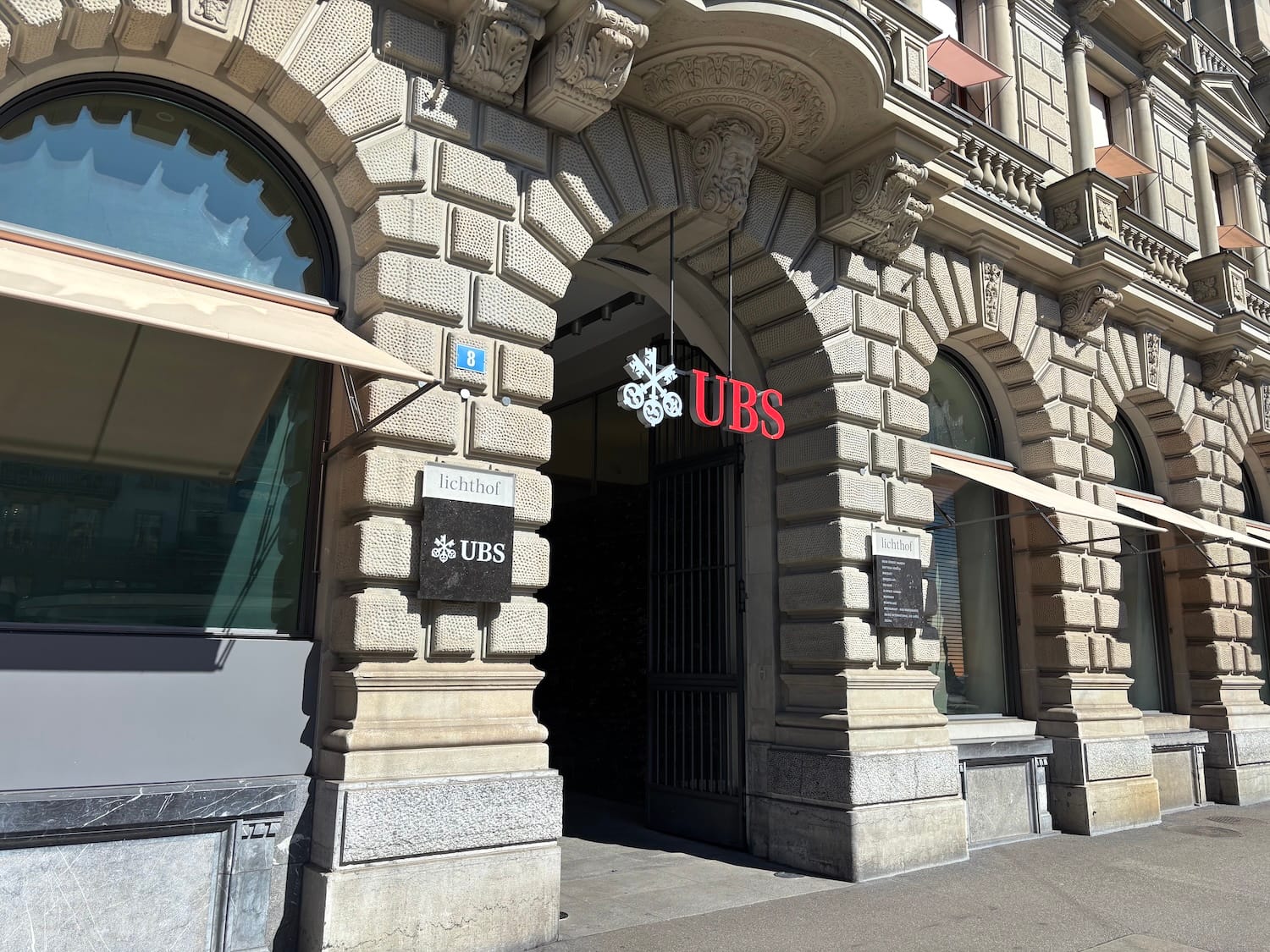
Switzerland’s wealth management industry ended 2025 at a historic high. The top 10 Swiss private banks by AUM collectively guard more than CHF 8 trillion in client assets. A decade ago, that figure would have seemed implausible. Yet behind that headline sits a surprisingly varied picture: merger-inflated giants, partnership-model stalwarts operating for over 220 years, and aggressively acquisitive mid-tier players that quietly gained market share in a single calendar year.
This ranking draws exclusively from each bank’s 2025 full-year annual report, investor presentation, or official press release. Specifically, no estimates and no composite aggregations from third-party databases were used. Where a bank reports total client assets rather than a discrete wealth management AUM figure — as is the case with ZKB — that distinction is flagged directly in the profile. Currency comparisons, moreover, carry the usual caveats. A stronger Swiss franc in 2025 erased significant dollar-denominated AUM in CHF terms for banks with large US client books. Consequently, some growth rates look muted relative to the underlying business momentum.
Three things make the 2025 vintage especially interesting. First, UBS crossed a milestone that places it in a category of its own. Second, UBP’s two SG acquisitions vaulted it into a near-tie with EFG International — a rivalry worth watching. Third, J. Safra Sarasin quietly completed its Saxo Bank majority acquisition in March 2026. That deal will redefine its digital distribution reach going forward. None of this complexity appears in a simple AUM table — which is exactly why this review goes beyond the number.
in This Edition
Invested Assets
Record AUM 2025
(Acquisition-Driven)
Why AUM Still Matters — and Where It Falls Short
Assets under management remains the industry’s primary scoreboard. A larger AUM base means more fee income. It also means more pricing leverage with technology vendors, greater capacity to hire specialist investment talent, and a stronger stability signal for prospective clients. In private banking specifically, size correlates with access to private market deals, structured products, and bespoke CIO-driven model portfolios. Smaller shops, by contrast, simply cannot replicate these at scale.
Three Distortions to Understand Before Reading the Ranking
However, AUM alone can be misleading. Three specific distortions are worth keeping in mind. First, definition differences matter enormously. UBS reports GWM “invested assets.” Julius Baer reports “assets under management.” Pictet reports “assets under management or custody.” ZKB discloses total client assets plus a sub-figure for managed assets. Notably, these categories are not interchangeable. Second, currency effects create noise. Several banks lost 3–7% of AUM in franc terms purely due to USD/CHF moves in 2025, even as their underlying businesses grew strongly. Third, acquisition inflation distorts organic performance. UBP’s 19.5% jump reflects two SG acquisitions more than organic inflows — a fundamentally different story from EFG’s 11.8% gain, which was largely organic.
With those caveats in mind, here is the definitive 2025 ranking — built from annual report data, not estimates.
The 2025 Ranking: Top 10 Swiss Private Banks by AUM
The table below provides the at-a-glance comparison. Individual profiles follow, with substantive analysis of each bank’s 2025 performance, strategic positioning, and what the numbers actually tell you.
| Rank | Bank | AUM / Client Assets (End-2025) | Currency | YoY Change | Net New Money | Net Profit | Annual Report Reference |
|---|---|---|---|---|---|---|---|
| 1 | UBS Group AG | USD 7,005bn total group invested assets / GWM ~USD 5.0trn | USD | +15.1% | USD ~130bn (GWM full year) | USD 7.77bn | Q4 2025 Report (March 2026) |
| 2 | Pictet Group | CHF 757bn (AuM or custody) | CHF | +4.5% | CHF 19bn | CHF 667m | Full-Year 2025 Results (Feb 2026) |
| 3 | Julius Baer Group Ltd. | CHF 521bn | CHF | +5.0% | CHF 14.4bn | CHF 764m (IFRS) | Full-Year 2025 Results (Feb 2026) |
| 4 | J. Safra Sarasin Group | CHF 228.5bn | CHF | +2.1% | CHF 2.8bn | CHF 522.3m | Annual Results 2025 (Apr 2026) |
| 5 | Lombard Odier Group | CHF 223bn (AuM); CHF 349bn total | CHF | +3.7% | Positive (undisclosed) | CHF 200m (+12%) | Full-Year 2025 Results (Feb 2026) |
| 6 | Edmond de Rothschild Group | CHF 198bn | CHF | +8.0% | CHF 10bn | CHF 211m op. profit (+2%) | Full-Year 2025 Results (Mar 2026) |
| 7 | EFG International | CHF 185bn | CHF | +11.8% | CHF 11.3bn (6.8%) | CHF 325m (record) | Full-Year 2025 Report (Feb 2026) |
| 8 | Union Bancaire Privée (UBP) | CHF 184.5bn | CHF | +19.5% | CHF 2.7bn organic | CHF 268.6m (+4.4%) | Annual Results 2025 (Jan 2026) |
| 9 | Vontobel | CHF 241bn total (Private Clients ~CHF 120bn est.) | CHF | +5.2% | CHF 4.2bn total (+Private: CHF 5.3bn) | CHF 280.1m (+5%) | Full-Year 2025 Results (Feb 2026) |
| 10 | Zürcher Kantonalbank (ZKB) | CHF 498.6bn managed / CHF 579bn total client assets | CHF | +9.1% (managed assets) | CHF 13.6bn | CHF 1,422m PBT | Annual Results 2025 (Feb 2026) |
Bank-by-Bank Analysis: What the 2025 Annual Reports Actually Say
UBS Group AG
There is no meaningful comparison between UBS and the rest of this list. That is not hyperbole — it is arithmetic. UBS’s total group invested assets reached USD 7,005 billion at end-2025. That represents a 15% gain from USD 6,087 billion a year earlier. Moreover, the Global Wealth Management division alone holds roughly the same invested asset base as all other banks on this list combined.
Credit Suisse Integration: On Track and Ahead of Plan
The 2025 annual report, published in March 2026, shows an institution executing well on a genuinely complex task. By end-Q4 2025, 85% of Swiss-booked client accounts had migrated onto UBS platforms. Full migration is targeted for Q1 2026. Furthermore, cumulative gross cost savings hit USD 10.7 billion by year-end — ahead of schedule against the USD 13 billion target. GWM revenues on an underlying basis grew 7.4% to USD 25.4 billion. The division posted underlying profit before tax of USD 6.3 billion.
Asia-Pacific was the standout region. APAC invested assets crossed USD 1 trillion for the first time in Q3 2025. As a result, the overall underlying cost/income ratio improved to 74.4%, down from 79.5% in 2024. Net profit attributable to shareholders reached USD 7.77 billion — more than 50% above 2024. Group targets now aim for GWM invested assets exceeding USD 5.5 trillion by 2028.
What This Means for Clients
For clients considering UBS, the platform breadth is unmatched. Specifically, investment banking connectivity, alternative investment access, and global relationship manager networks across 50+ markets are all available. Relationship minimums have risen post-merger. However, so has the product shelf. If you are exploring Swiss account opening service at the world’s largest wealth manager, expect a more involved onboarding process than at smaller private banks. The infrastructure, in return, is remarkable.
Pictet Group
Pictet is what most private bankers picture when someone says “Swiss private bank.” Founded in Geneva in 1805, it has operated as a partnership of owner-managers for 220 unbroken years. Specifically, it does not engage in investment banking, does not grant commercial loans, and has never issued a profit warning. That is a genuinely unusual track record.
2025 Results: Steady Growth Despite Franc Headwinds
The group released full-year 2025 results in February 2026. Assets under management or custody reached CHF 757 billion — a 4.5% increase from CHF 724 billion a year earlier. Net new money totalled CHF 19 billion across all business lines: Wealth Management, Asset Management, and Alternative Investments. Additionally, operating income rose 1.5% to CHF 3.21 billion. The operating result climbed 3.7% to CHF 846 million, yielding consolidated profit of CHF 667 million. Profit was essentially flat versus 2024. The group attributes this to margin compression following Swiss franc appreciation against the US dollar.
One detail stands out. By mid-2025, AuM had dipped to CHF 711 billion due to rapid CHF strengthening. It then recovered strongly in H2. Pictet disclosed this openly — noting that USD/CHF moves created significant headwinds. That transparency is exactly what the partnership model produces. Managing partners own 100% of equity and bear all downside risk personally. Accordingly, they have no incentive to spin headlines. Additionally, the total capital ratio of 21.6% at year-end sits well above FINMA’s 12% floor. The liquidity coverage ratio of 191% is among the highest in European private banking.
Client Access and Relationship Quality
For HNW clients from Russia, Central Asia, or the Middle East, Pictet’s selective intake policy means thorough due diligence. The bank is not the path of least resistance. However, once accepted, relationships at Pictet tend to be multigenerational. Relationship managers typically stay for decades. In an industry plagued by advisor churn, that continuity is consequently a meaningful differentiator.
Julius Baer Group Ltd.
Julius Baer’s 2025 was, by almost any metric, a turnaround year. The full-year results (published 2 February 2026) showed AuM at a record CHF 521 billion — up 5% from CHF 497.4 billion. Net new money of CHF 14.4 billion supported this growth. Furthermore, a 2.9% NNM growth rate is solid for a bank of this size. Geopolitical uncertainty and a strong Swiss franc both eroded dollar-denominated assets during the year, making that result more impressive in context.
Underlying Performance vs. IFRS Headline
The underlying numbers are considerably better than the IFRS headline suggests. IFRS net profit fell to CHF 764 million from CHF 1,022 million in 2024. However, the 2024 figure included a non-recurring tax provision release. The 2025 figure, in turn, absorbs CHF 99 million from selling the Brazilian business. Strip those out: underlying profit before taxes rose 17% to CHF 1,266 million. Operating income grew 6%. Operating expenses rose only 1%. As a result, the underlying cost/income ratio improved to 67.6% from 70.9%. These are genuine efficiency gains.
For context, Julius Baer entered 2025 still managing the aftermath of the Signa credit losses and the related management restructuring. A new strategic framework, presented in June 2025, set clear financial targets for 2026–2028. The bank also completed the sale of its Brazilian business in 2025. The CHF 8 billion AuM deconsolidation partly explains why the headline 5% growth understates organic momentum. Asian flows — particularly from Hong Kong, India, Singapore, and Thailand — were strong. The CET1 ratio improved to 17.4%. For Latin American clients, that Swiss stability is a hedge in itself, as our guide to shielding wealth from LatAm capital controls explains.
Why Julius Baer Suits International HNW Clients
Julius Baer remains the logical choice for HNW clients seeking a listed, regulated, pure-play wealth manager of meaningful scale. Its dedicated focus on private clients — without universal banking or investment banking cross-contamination — is a genuine competitive advantage. Entry minimums are typically CHF 1–3 million, depending on domicile and source of wealth. Julius Baer’s global footprint (around 25 countries, 60 locations) makes it one of the most accessible option for foreign clients looking for Swiss banking options
J. Safra Sarasin Group
J. Safra Sarasin is arguably the most under-discussed institution in Swiss banking guide relative to its actual financial strength. The Basel-based group reported 2025 net profit of CHF 522.3 million — up 3.5%. Assets under management reached CHF 228.5 billion. Furthermore, net new money of CHF 2.8 billion was substantially higher than the CHF 750 million of 2024. That improvement reflects renewed client confidence following a period of deliberate portfolio consolidation. Operating income grew 2.4% to more than CHF 1.7 billion.
An Exceptionally Strong Balance Sheet
What makes J. Safra Sarasin genuinely distinctive is its balance sheet. A CET1 ratio of 34.5% places it among the most conservatively capitalised private banks in Europe. That is more than four times the regulatory minimum. Shareholders’ equity stood at CHF 5.5 billion against total assets of just CHF 42.2 billion. Furthermore, the group has no investment banking arm, no proprietary trading book, and no significant legacy credit exposure. In conversations about Swiss banking stability, this institution therefore deserves more attention than it typically receives.
The Saxo Bank Acquisition: A Strategic Pivot
The big strategic news came in early 2026. J. Safra Sarasin completed its majority acquisition of Saxo Bank in March 2026, acquiring approximately 71% of shares. That integration is not yet visible in the 2025 annual figures. However, it signals a clear intent to reach digitally-oriented wealth clients. Chairman Jacob J. Safra described it as “an important milestone underscoring our strategic commitment to reshaping the client experience.” The group operates in over 30 locations worldwide. Its sustainable investment focus — in place since the 1990s — resonates strongly with European and Middle Eastern institutional clients subject to ESG mandate requirements.
Lombard Odier Group
Lombard Odier marked 2025 with two milestones that will define its next decade. First, the group opened its new Geneva headquarters — a Herzog & de Meuron-designed building in the Bellevue district — uniting over 2,000 employees previously scattered across several historic locations. Second, it recorded a new AuM high of CHF 223 billion, up from CHF 215 billion a year earlier. Both solid net new money and top-quartile investment performance drove that growth.
H1 2026 update: Lombard Odier subsequently reached CHF 239 billion in AUM and CHF 367 billion in total client assets. Our Lombard Odier 2026 results analysis separates the recurring commission base from the trading income that produced most of the latest revenue increase.
Financial Results: Profit, Capital, and Income
Full-year operating income rose 4% to CHF 1,394 million. This increase was driven by a strong rebound in fees and commissions. Net profit grew 12% to CHF 200 million. The balance sheet remains among the strongest in Swiss private banking. Specifically, the CET1 ratio of 33% is more than double the regulatory requirement. Fitch reaffirmed the AA- credit rating in October 2025 — the highest possible for a bank of this size. Total client assets, including custody, reached CHF 349 billion.
The Mid-Year Dip: Understanding the FX Effect
One nuance worth noting: AuM dipped to CHF 211 billion at end-June 2025. That was 2% below year-end 2024 levels. The primary cause was the rapid decline of the US dollar against the Swiss franc in H1. Consequently, H2 recovery was strong — roughly CHF 12 billion gained in six months. This reflected both organic inflows and a partial FX reversal. This H1-soft, H2-strong pattern characterised several banks on this list. It reflects the outsized role that dollar-denominated portfolios play in CHF-reported AuM figures.
Edmond de Rothschild Group
The Edmond de Rothschild Group posted its strongest ever asset base in 2025 — CHF 198 billion at year-end, an 8% gain from CHF 184 billion. Net inflows of CHF 10 billion came equally from private banking and asset management. Private banking inflows were driven by all geographies. Asset management flows were led by fixed income strategies and real estate and infrastructure debt. Operating profit reached CHF 211 million, up 2%, despite strong franc headwinds.
Conviction Investing as a Client Acquisition Strategy
The group’s strategy centres on conviction investing — concentrated portfolios rather than benchmark-hugging diversification. This approach attracts a specific type of client: those who want their private bank to have genuine views and implement them. In 2025’s volatile macro environment, that model proved more resilient than expected. Clients valued clarity and decisiveness from their wealth managers. As a result, Edmond de Rothschild saw inflows across all regions rather than just the usual high-growth markets.
Technology Modernisation: Avaloq Migration Complete
On the infrastructure side, Edmond de Rothschild completed the migration of its France operations to the Avaloq core banking platform in early 2025. Switzerland and Luxembourg had migrated in prior years. Consequently, the group now runs a single technology stack across all main booking centres. That took nearly a decade to execute — a significant operational milestone. Additionally, the new Geneva headquarters in the Etang eco-district consolidated 700 employees. Together, these moves signal long-term investment rather than short-term cost management.
EFG International AG
EFG International had a genuinely outstanding 2025. The Zurich-based bank’s full-year results (published 18 February 2026) showed AuM at CHF 185 billion — a record. Net new assets of CHF 11.3 billion contributed a 6.8% annualised growth rate. Additionally, three acquisitions in the preceding 12 months added CHF 12 billion in AuM. The most significant of these were Cité Gestion and Investment Services Group (ISG). Moreover, IFRS net profit reached a record CHF 325 million. The cost/income ratio improved below 70% for the first time — a key strategic target the bank had pursued for several years.
The CRO Model: How EFG Grows Differently
EFG’s growth model differs meaningfully from most peers. Rather than centralised CIO-driven management, EFG operates through Client Relationship Officers (CROs) with considerable autonomy. The bank deliberately recruits senior bankers from larger institutions going through restructuring, then backs them with global infrastructure. This model generates higher NNA growth rates than the industry average. However, it also creates dependency on individual talent retention — a risk that warrants monitoring.
The 2025 results showed 763 CROs at year-end, up 8.5% year-on-year. CRO productivity increased 4%. Switzerland and Italy were standout growth markets. New locations in Gstaad and St. Moritz extended the network. Capital generation exceeded 500 basis points during the year. The board proposed a record dividend of CHF 0.65 per share. A share buyback programme of up to 9 million shares was also announced for 2026–2027.
One Caution: Synergy Delivery in 2026
One caution remains. A CHF 59 million provision for a legacy litigation case, plus acquisition integration costs, created a CHF 14 million drag on the P&L. Synergies from Cité Gestion and ISG are expected to materialise in 2026. Consequently, investors and clients should track whether those synergies land on schedule. Acquisition-fuelled growth without synergy realisation eventually becomes a cost problem.
Union Bancaire Privée (UBP)
UBP’s 19.5% jump in client assets is the most dramatic headline of the 2025 cycle. However, it demands disaggregation. The lion’s share of that CHF 30 billion gain came from two completed acquisitions: Societe Generale Private Banking (Suisse) SA and SG Kleinwort Hambros in the UK. Both transactions finalised during 2025. The organic inflow of CHF 2.7 billion is respectable, but unspectacular. Nevertheless, the total income line rose 12.5% to CHF 1.51 billion — reflecting that acquired assets are now generating real fee revenue.
Integration Costs and Margin Compression
The annual results (published 23 January 2026) were candid about the challenge of rapid scaling. Total operating expenses rose 15.7%. That absorbed restructuring costs from two integrations, plus ongoing investments in compliance and technology. Group profit of CHF 268.6 million rose only 4.4% despite the headline asset surge. This margin compression reflects the integration burden directly. CEO Guy de Picciotto acknowledged it plainly: “Scaling up means showing greater agility and discipline.”
Capital Strength and Geographic Expansion
The capital position, however, is among the strongest on this list. The liquidity coverage ratio of 276% is more than twice the regulatory requirement. The Tier 1 capital ratio of 23.1% is similarly robust. Furthermore, Moody’s rates UBP at Aa2 — one of the highest deposit ratings for a private bank globally. UBP is also one of very few family-owned global private banks at this scale. Edgar de Picciotto founded it in 1969. The family remains in control under chairman Daniel de Picciotto. In late 2025, the bank opened a Riyadh office, signalling genuine ambitions in the Gulf’s expanding family office market.
The near-tie between UBP (CHF 184.5bn) and EFG (CHF 185bn) creates the closest pairing in the ranking. Both banks are acquisitive. Both have strong NNA momentum in Asia and the Middle East. Consequently, both are racing toward the CHF 200 billion threshold. This rivalry is worth tracking closely over the next 12–18 months.
Vontobel
Vontobel sits at rank nine on total AuM. However, that figure requires a footnote. The CHF 241 billion (at December 31, 2025) covers both Private Clients and Institutional Clients. Based on the H1 2025 investor presentation, Private Clients represented approximately 50% of total AuM — suggesting a private banking book of roughly CHF 118–125 billion. In terms of pure private wealth, therefore, Vontobel ranks below banks 4 through 8. Nevertheless, it sits ahead of smaller Swiss peers like LGT.
Solid Financial Results Across Both Segments
Vontobel’s 2025 results were genuinely solid. Full-year results (published 6 February 2026) showed net profit of CHF 280.1 million — up 5% — on operating income of CHF 1,431.5 million. The Private Clients segment was the standout. It attracted CHF 5.3 billion in net new money, a 5% annualised growth rate. That sits comfortably within the group’s through-the-cycle target of 4–6%. Moreover, the IHAG Privatbank client book acquisition (completed January 2025) added approximately CHF 3 billion. It strengthened the DACH market position significantly.
Efficiency Programme and 2026 Plans
The CHF 100 million efficiency programme is running ahead of schedule. By year-end 2025, 84% of targeted savings were realised. Additionally, the CET1 ratio of 19.7% demonstrates strong capital generation — well above the 12% target. Plans for 2026 include a new Los Angeles office for Vontobel SFA, further Asian expansion, and continued active ETF investment following a US market debut in 2025. Furthermore, a new Chief Risk Officer (Thomas Hirschi) joined in March 2026, reinforcing the governance framework.
Zürcher Kantonalbank (ZKB)
ZKB’s position at the foot of this ranking requires the clearest caveat of all. This is not a private bank in the conventional sense. It is a cantonal (state-owned) universal bank — Switzerland’s largest. Total client assets reached CHF 579 billion at December 31, 2025. Of that, CHF 498.6 billion is classified as “managed assets.” Notably, there is no separately disclosed private banking AUM figure. That is because private banking is one segment of a broader institution — one that also provides mortgage finance to nearly half of Zurich’s population and manages Swisscanto, Switzerland’s second-largest fund provider.
Why It Appears on This Ranking
Why include it at all, given it is primarily a domestic bank? Two reasons. First, for Swiss residents — particularly high earners domiciled in the Canton of Zurich — ZKB is genuinely competitive at the private banking level. The AAA credit rating (held by only a handful of institutions globally) is a meaningful safety argument. Second, CHF 498.6 billion in managed assets means ZKB shapes the Swiss capital market in ways that affect every institution on this list. It is therefore impossible to understand Swiss private banking without acknowledging ZKB’s structural role. However, international clients should be realistic. ZKB’s statutory mandate focuses on the Canton of Zurich and its residents. Consequently, the bank is not optimised for cross-border wealth management in the way that Julius Baer, EFG, or UBP are.
2025 Results: Record Profit, Lower Inflows
The 2025 full-year results (published 6 February 2026) showed consolidated profit before taxes of CHF 1,422 million — a 10.3% increase over 2024. Net profit reached CHF 1,240 million. Additionally, operating income grew 4.0% to CHF 3,213 million. Net new money of CHF 13.6 billion was significantly lower than the CHF 29.8 billion of 2024. That decline partly reflects the sale of its Austrian subsidiary to Liechtensteinische Landesbank in January 2025. Trading income, however, jumped 21.2% to CHF 427 million — reflecting high client activity during 2025’s volatile markets.
The Honest Assessment for Foreign Clients
For foreign clients, the honest assessment is direct: ZKB is not the right starting point. Its statutory mandate, branch network, product priorities, and compliance framework are all built around serving Swiss residents. That is a design feature, not a flaw. It makes ZKB exceptionally good at what it does. However, it means international clients seeking asset protection or cross-border wealth structuring will find more suitable partners among the institutions ranked 1 through 9 above. The recently restructured Private Banking unit (with a new CIO from January 2026) shows investment intent — but ZKB’s core identity remains resolutely domestic.
AUM Growth Performance: Net New Money Compared
Raw AUM growth contains a significant noise component — market performance, acquisitions, and currency effects all move the number independently of how well the bank is actually serving clients. Net new money (NNM) is a much better signal of genuine client trust. The chart below compares the five institutions with the most meaningful disclosed NNM figures for 2025.
NNM as % of AUM (2025, where disclosed)
EFG’s 6.8% organic growth rate is exceptional for a bank of its size. Most large private banks target 3–4% through the cycle. Similarly, Edmond de Rothschild’s 5.5% rate reflects the strength of its conviction model. Clients seeking active management over passive allocation are consequently drawn to it. Pictet’s 2.6% and Julius Baer’s 2.9% are healthy at their respective scale levels — generating CHF 19 billion and CHF 14.4 billion in absolute new money respectively. J. Safra Sarasin’s 1.2% is below the peer group trend. However, it was substantially better than 2024, when organic NNM was negligible. Moreover, the Saxo Bank integration beginning in 2026 will shift its distribution model significantly.
What Changed in 2025: Key Structural Shifts
Beyond the headline AUM numbers, three structural shifts in the 2025 results deserve attention. Each one affects how clients should evaluate these institutions over the long term.
1. The UBS Integration Is Entering Its Final Stretch
The Credit Suisse merger is approaching completion. By end-2025, 85% of Swiss accounts had migrated. Full completion is targeted for Q1 2026. This matters practically. The residual Credit Suisse client book has been in transition for two years. Relationship continuity — or the lack of it — during migration has measurably affected net outflows. Once complete, UBS faces the clean challenge of retaining migrated clients on its own value proposition. The USD 13 billion cost savings target is 82% realised. As a result, those savings will gradually feed through to improved margins.
2. Acquisitions Have Become the Dominant Growth Model
UBP, EFG, and Vontobel all completed acquisitions in 2025. Three different strategies, but the same underlying logic: organic growth alone cannot absorb rising compliance, technology, and regulatory costs. The EFG model — recurring acquisitions of CRO teams and small private banks — is the most systematic. UBP’s approach of absorbing established brand-name books (SG’s Swiss and UK private banking) is higher-risk but faster. In contrast, Vontobel’s IHAG acquisition was a regional depth play in the DACH market.
3. Digital Transformation Is No Longer Optional
ZKB Banking gained 13,000 new clients in H1 2025 alone through its digital account offering. Vontobel launched active ETFs in the US. J. Safra Sarasin’s Saxo Bank acquisition is a direct bet on digital distribution infrastructure. Meanwhile, banks still running legacy core banking systems face structural cost disadvantages. Edmond de Rothschild’s Avaloq migration — completed in 2025 — illustrates the investment required to modernise. Moreover, this technology gap will take years to close for those who have delayed.
For clients navigating this landscape — particularly non-residents seeking a reliable Swiss bank account as a non-resident — institutional stability and technology investment are not separate concerns. A bank on outdated infrastructure is slower to onboard and more prone to operational errors. These are due diligence questions worth asking directly.
Choosing Your Swiss Private Bank: A Practical Framework
Reading ten bank profiles is useful. Knowing how to apply them to a specific situation is more useful still. The table below outlines which banks suit different client profiles — based on minimum assets, geography focus, and what each institution genuinely excels at. One important note on minimums: across the mid-tier private banks in this ranking (Julius Baer, EFG, UBP, Vontobel, J. Safra Sarasin, Edmond de Rothschild), the practical entry threshold is consistently CHF 1–3 million in investable assets. The exact figure within that range depends on domicile. Clients from certain countries require more intensive onboarding and are therefore expected to bring larger initial deposits to justify the compliance overhead.
| Client Profile | Best-Fit Banks | Why | Typical Entry Minimum |
|---|---|---|---|
| UHNW (USD 30m+), global family office | UBS, Pictet, Lombard Odier | Investment platform breadth, private markets access, long-term relationship models | USD 5–25m (varies by domicile) |
| HNW (USD 1–5m), CIS/MENA origin | Julius Baer, J. Safra Sarasin, EFG | International booking, strong compliance track record, established relationship manager networks | CHF 1–3m depending on domicile |
| Entrepreneur, active wealth management mandate | Edmond de Rothschild, EFG, Vontobel | Conviction investment approach, active management, bespoke portfolio construction | CHF 1–3m depending on domicile |
| Safety-first, Swiss resident (domestic), broad banking needs | ZKB, UBS (P&C), Julius Baer | AAA rating, state guarantee (ZKB for Swiss residents), full-service domestic Swiss banking, mortgage access — ZKB is primarily designed for Canton of Zurich residents and Swiss domiciled clients | No formal minimum at ZKB (domestic clients); Julius Baer from CHF 1–3m |
| Mid-market HNW (CHF 1–5m), active trading | UBP, Vontobel, EFG | Strong transaction capabilities, institutional trading infrastructure for private clients | CHF 1–3m depending on domicile and client profile |
| Sustainable / ESG-focused mandate | J. Safra Sarasin, Lombard Odier, Pictet | Long-established ESG frameworks, dedicated sustainable investment products, thematic expertise | CHF 1–3m depending on domicile |
This framework is a starting point, not a verdict. Account minimums, onboarding requirements, and specific country acceptance policies change frequently. Consequently, they should always be verified directly. If you are working through an independent intermediary or consulting a Swiss banking specialist, the introduction will typically include an assessment of which institutions are most likely to accept your profile based on source of wealth, domicile, and asset structure.
Related reading:
Frequently Asked Questions
UBS Group AG is by far the largest, with total group invested assets of USD 7,005 billion at December 31, 2025. Its Global Wealth Management division alone manages approximately USD 5 trillion. Second-ranked Pictet Group has CHF 757 billion — less than one-eighth of UBS’s scale. The gap between #1 and #2 in Swiss private banking is simply unlike any other ranking in global finance.
The core order (UBS, Pictet, Julius Baer) is unchanged at the top. The most notable change, however, is in the middle of the ranking. UBP nearly tripled its growth rate via two SG acquisitions. EFG (now #7) and UBP (now #8) are essentially tied at CHF 185bn and CHF 184.5bn respectively — a reversal of their relative standing versus end-2024. ZKB’s formal private banking AUM still isn’t separately disclosed. Nevertheless, its managed assets of CHF 498.6 billion make it the institution with the most structurally ambiguous placement. J. Safra Sarasin at #4, meanwhile, maintained its position with notably stronger NNM than 2024.
Entry thresholds for the banks on this list are more uniform than often reported. For Julius Baer, EFG International, J. Safra Sarasin, UBP, Vontobel, and Edmond de Rothschild, the practical minimum is typically CHF 1–3 million in investable assets. Where that range falls, however, depends heavily on domicile. Non-residents from CIS countries, parts of Southeast Asia, and select MENA markets are typically expected to start at the higher end of that range. The reason is the additional compliance resource their onboarding requires.
UBS GWM and Pictet occupy a higher tier, typically expecting USD 5–25 million for meaningful private banking engagement. ZKB has no formal minimum for Swiss domestic clients, but is primarily geared toward Canton of Zurich residents and is therefore not a standard route for international clients. For non-residents, Swiss bank account requirements for non-residents always include enhanced due diligence regardless of asset level. Working with an experienced introducer materially improves acceptance rates and onboarding speed.
These terms are used differently by different banks. “Invested assets” (UBS’s terminology) typically includes all assets where the bank has an investment relationship — advisory assets, discretionary mandates, and some deposits. “Assets under management” at Julius Baer and EFG, by contrast, refers specifically to assets where the bank provides active investment services. “Assets under management or custody” at Pictet adds custodied assets not actively managed. None of these definitions is objectively better or worse. However, they mean a straight comparison of two banks’ headline AUM can be misleading. The key question is always: how much of this is genuinely managed by the bank versus simply held in custody?
Switzerland remains the world’s largest offshore wealth management centre, managing approximately 25% of global cross-border private wealth. The regulatory framework — FINMA oversight, strict AML/KYC requirements, and the Swiss banking act — is among the most rigorous globally. Additionally, the Swiss franc’s safe-haven status provides a structural asset protection benefit that few other jurisdictions can replicate. That said, “safest” depends on what risks you are protecting against. For political risk, currency risk, and creditor protection, Switzerland remains first-tier. For secrecy in the historical sense, however, that is no longer the Swiss offering. Automatic exchange of information under CRS applies, and FINMA enforcement is active. You can read more about Switzerland’s banking laws and regulations for a comprehensive overview of the current framework.
J. Safra Sarasin completed its majority (approximately 71%) acquisition of Saxo Bank in March 2026, acquiring shares from Geely Financials Denmark, Mandatum Group, and other minority investors. The co-founder Kim Fournais retains approximately 28%. This acquisition is not yet reflected in the 2025 AUM figures. However, Saxo Bank brings a sophisticated digital trading and investment platform with strong retail and professional client reach across Europe and Asia. For J. Safra Sarasin, it consequently represents a direct route into digitally-served HNW segments that traditional private banking channels cannot efficiently access. The combined entity will therefore be a significantly different institution — strategically — from the conservative Swiss private bank that reported CHF 228.5 billion in AuM for 2025.
A Note on Methodology and Data Sources
Source Verification
Every AuM figure in this ranking is sourced from the relevant institution’s 2025 full-year annual report, investor presentation, or official press release. All documents were published between January and April 2026. All cover the financial year ending 31 December 2025. Where discrepancies exist between disclosure categories — for example, UBS discloses both total group invested assets and GWM-specific invested assets — we have noted both and explained the distinction.
Understanding Currency Effects
Currency effects are significant. The Swiss franc appreciated materially against the US dollar in 2025. As a result, banks with large dollar-denominated client books show lower CHF-denominated AuM growth than the underlying business would suggest. Banks with primarily European client books were less affected. No single comparison table can fully adjust for this distortion. Consequently, net new money in percentage terms is a more useful organic growth metric than total AuM change alone.
Readers seeking deeper analysis or assistance with account opening are welcome to reach out directly. The team at Easy Global Banking works with a curated panel of Swiss private banks. Consequently, they can often facilitate introductions that simplify the onboarding process, particularly for non-resident and CIS-origin clients.
References — 2025 Annual Reports
- UBS Group AG — Fourth Quarter and Full-Year 2025 Report (March 2026)
- Julius Baer Group Ltd. — Full-Year 2025 Financial Results Presentation (February 2, 2026)
- Pictet Group — Release of Full-Year 2025 Figures (February 11, 2026)
- Union Bancaire Privée (UBP) — Annual Results 2025 Press Release (January 23, 2026)
- Zürcher Kantonalbank — Financial Result 2025 Media Release (February 6, 2026)
- Lombard Odier Group — Full-Year 2025 Results (February 19, 2026)
- EFG International AG — Full-Year 2025 Annual Report (February 18, 2026)
- Vontobel Holding AG — Full-Year 2025 Results (February 6, 2026)