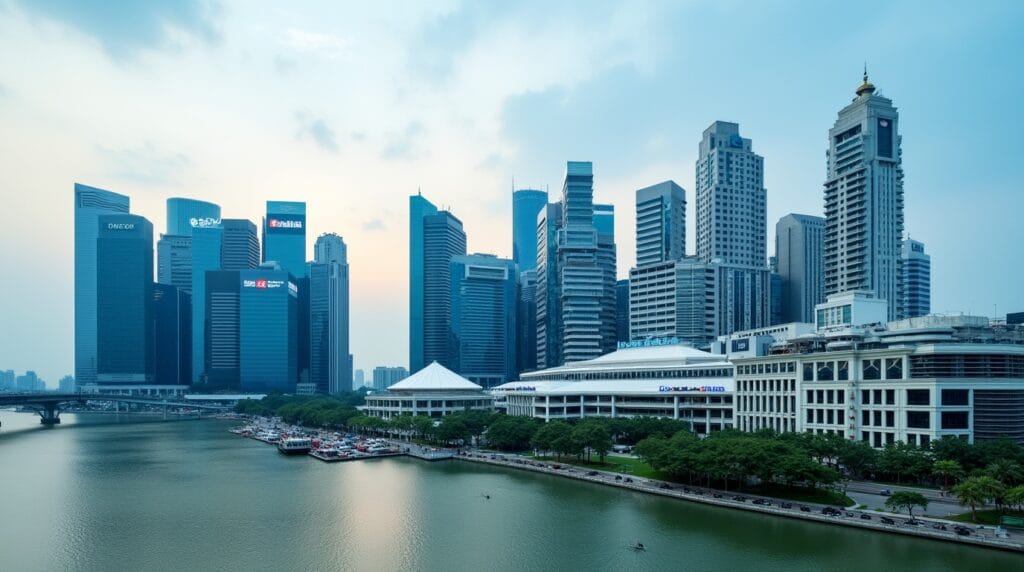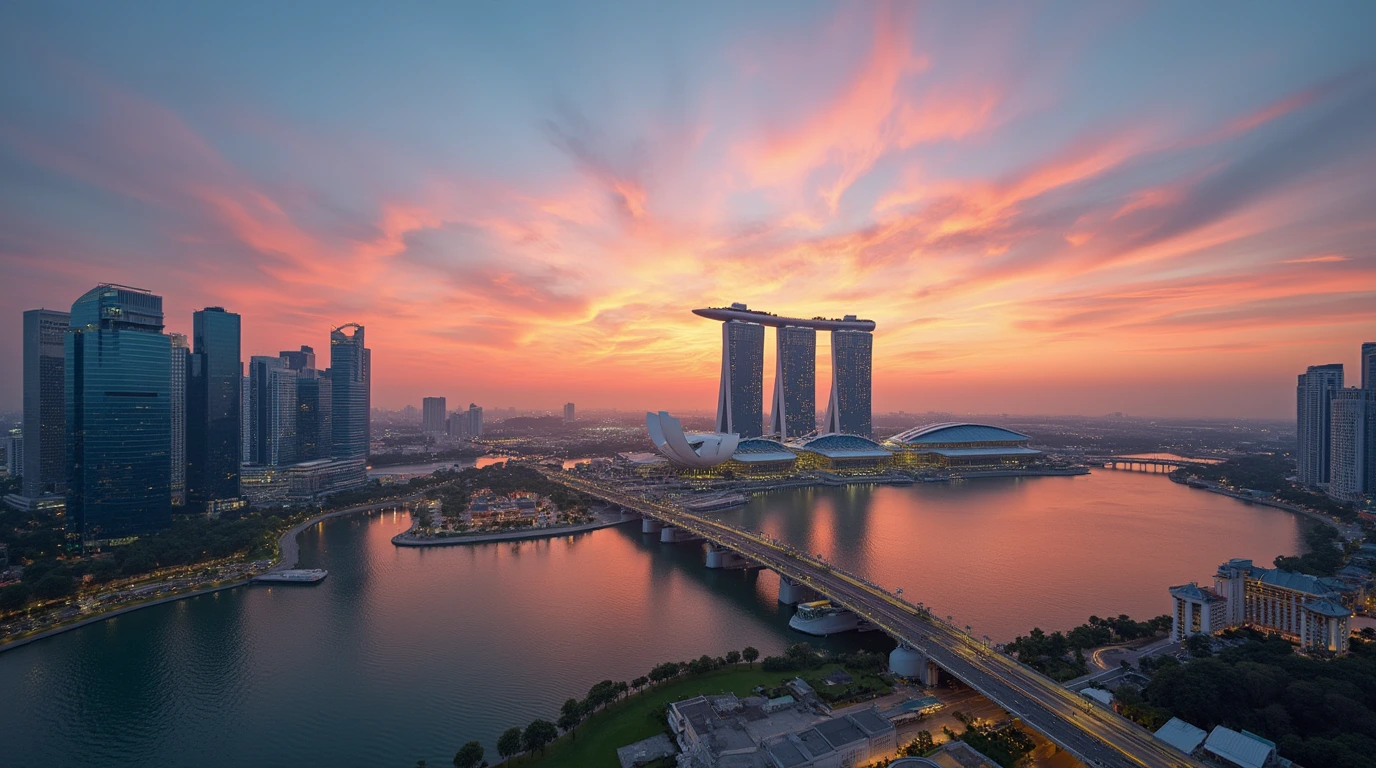
Asia's private banking sector hit another record in 2025: combined AUM at the region's top 10 private banks surpassed $2.5 trillion, a 22.5% jump over 2024, according to the finews.asia 2025 Private Banking AUM League Table published March 31, 2026. That's three consecutive years of expansion, and the pace is accelerating. Singapore sits at the center of that growth — not as a peripheral beneficiary, but as the primary offshore booking hub for the region's wealthiest families.
This ranking of private banks in Singapore by AUM draws on 2025 year-end figures from the finews.asia league table (the most authoritative annual source for Asia), supplemented by individual bank disclosures, Euromoney research, and Hubbis reporting from early 2026. AUM figures reflect Asia-Pacific books, since Singapore functions as a primary booking center rather than just a domestic deposit market. Where 2025 full-year data is confirmed, it's stated as such; where estimates are used, those are clearly marked.
Why Singapore Dominates Asia's Private Banking Map
The numbers above don't appear by accident. Singapore's rise as a private wealth hub follows a deliberate, decades-long policy track. The Monetary Authority of Singapore (MAS) has built a regulatory environment that gives HNW clients exactly what they want: political predictability, robust asset protection laws, and a comprehensive ecosystem covering wealth managers, family office specialists, trust structures, and alternative investment vehicles.
What accelerated the story recently was the family office explosion. Singapore's single family office count grew from roughly 400 in 2020 to over 2,000 by end-2024 — a tenfold surge in just four years, according to MAS data reported by Reuters in January 2025. That's not a demographic shift; it's a structural migration of capital. Prominent families — from Google co-founder Sergey Brin's Bayshore Global Management to Ray Dalio's Dalio Family Office — have anchored operations here. Each arrival pulls in chains of advisors, custodians, and relationship managers. The broader trends reshaping Singapore banking point firmly in one direction: more assets, more players, more sophisticated demand.
Singapore's total wealth management AUM — covering all managers, not just private banks — reached USD 5.41 trillion in the most recently published MAS data, representing 10% growth over the prior year. Eighty-eight percent of those assets are deployed outside Singapore, which is why the city functions more like a global booking center than a domestic savings pool.
Size does not tell you how a bank will process your file. Singapore's 2026 industry initiative targets a one-month opening time for most private-bank clients while preserving risk-proportionate source-of-wealth checks; our Singapore vs Hong Kong private banking 2026 analysis shows what the timing target changes and what it does not.
Private Banks in Singapore by AUM (2025) — Full Rankings
The ten institutions below represent the dominant private banking operations active in Singapore, ranked by their Asia-Pacific AUM based on the finews.asia 2025 League Table (2025 year-end) published March 31, 2026. This is the most current comprehensive ranking available. DBS Wealth Management figures are cited from Euromoney 2026 research and use a broader wealth continuum methodology, as noted.
Source: finews.asia 2025 Private Banking AUM League Table (published 31 March 2026) for UBS, HSBC, J.P. Morgan, Morgan Stanley, Julius Baer, Bank of Singapore, BNP Paribas, LGT. DBS: Euromoney World's Best Private Bank 2026 research; estimate. Goldman Sachs: estimate based on 2024 baseline and 2025 market conditions. Asia-Pacific AUM in USD billions.
| Rank | Bank | Asia AUM (2025) | YoY Growth | Min. Entry | Key Strength |
|---|---|---|---|---|---|
| 1 | UBS Global Wealth Management | $795bn ✓ | +19.5% | ~$2M | Scale; $62.5bn net new assets in 2025 |
| 2 | HSBC Global Private Banking | $302bn ✓ | +moderate | $2M | Onshore/offshore Asia breadth; 51.9% Asia share |
| 3 | J.P. Morgan Private Bank | $299bn ✓ | +39.1% | $10M | Fastest-growing; UHNW; IB deal flow access |
| 4 | DBS Wealth Management | ~$225bn est. | +strong | $200K | World's best private bank 2026 (Euromoney); digital leader |
| 5 | Morgan Stanley Wealth Management | ~$220bn ✓ | +25.7% | $5M | US equity strength; tech-sector coverage |
| 6 | Julius Baer | ~$200bn est. | +~15% | $1M | Pure-play Swiss; boutique discretionary model |
| 7 | Bank of Singapore | ~$160bn est. | +~20% | $1M | Asia-native; targets top-5 Asia within 5 yrs |
| 8 | Goldman Sachs Private Wealth | ~$145bn est. | +moderate | $100M | Ultra-exclusive; highest AUM per RM in region |
| 9 | BNP Paribas Wealth Management | ~$115bn ✓ | +22.3% | $3M | European network; alternatives expertise |
| 10 | LGT Bank | ~$97bn ✓ | +24.2% | $1M | Liechtenstein royal backing; multigenerational planning |
✓ = finews.asia confirmed figure. est. = estimate based on available data. Growth rates from finews.asia 2025 League Table where stated.
The Bank-by-Bank Breakdown
Rankings tell you where a bank sits. What they don't tell you is why — or which institution actually fits your profile. Here's the fuller picture on each player, drawing on the latest 2025 and early 2026 disclosures.
1. UBS Global Wealth Management — $795 Billion
UBS holds the top position by a margin no competitor is closing this decade. After the Credit Suisse acquisition in 2023, UBS spent two years integrating the franchise — and 2025 was the year that integration finally unlocked growth. The bank added a record $130 billion in invested assets in Asia, including $62.5 billion in net new assets — compared to just $2.9 billion in net new assets in 2024. That shift signals client confidence returning after the initial disruption of the merger.
UBS has set a target for Asia-Pacific to account for 20% of its global AUM within five years. The 2025 numbers suggest it's ahead of schedule. For UHNW clients, the real edge is depth: cross-border trust structures, Singapore VCC vehicles, US estate planning, European family governance — few institutions can match UBS on breadth of cross-jurisdictional capability.
2. HSBC Global Private Banking — $302 Billion
Asia now accounts for 51.9% of HSBC's total global private banking AUM — above half for the first time. HSBC's 2025 full-year results, reported in February 2026, showed the bank's wealth division delivering strong performance across Hong Kong, Singapore, and its onshore businesses in mainland China, Taiwan, and India. HSBC CEO Georges Elhedery described 2025 as a year of "decisive action and swift execution," with the wealth division among the standout performers.
The genuinely distinctive thing about HSBC in Asia is its onshore China capability. Most foreign private banks can only serve mainland Chinese clients offshore. HSBC does both — which gives it a structural advantage for families with assets and business interests spanning the strait.
3. J.P. Morgan Private Bank — $299 Billion
J.P. Morgan serves almost exclusively UHNW clients — the entry threshold sits around $10 million, and the bank's real target client holds substantially more. AUM per relationship manager is consistently among the highest in Asia, which means genuinely bespoke, resource-intensive service rather than scaled advice. For clients who want access to IPO allocations, private credit co-investments, and structured solutions that pure-play private banks genuinely cannot replicate, J.P. Morgan has no equal in Singapore.
4. DBS Wealth Management — ~$225 Billion (Estimated)
DBS occupies a special category in this ranking. It is not a pure-play private bank — it's Singapore's largest domestic universal bank, and its wealth management book spans a broader client continuum than the others here. But it also received one of the most significant endorsements possible in early 2026: Euromoney named DBS the World's Best Private Bank 2026. By June 2025, DBS had delivered SGD 23.3 billion ($18.2 billion) in net new money, achieved 37% annualized growth in wealth-related fees, and maintained a 46% cost-to-income ratio — among the most efficient in developed markets. DBS has doubled its AUM in five years.
Where DBS leads the field is digital infrastructure: DBS Digital Exchange (DDEx) processed more than SGD 3.1 billion in cryptocurrency and crypto-linked instrument trades in H1 2025 alone, while its AI-driven relationship manager co-pilots have set the benchmark for personalized client engagement in Asia. For HNW individuals exploring banking in Singapore, DBS offers a combination of digital capability, institutional strength (AA-rated), and genuine Singapore-jurisdiction anchor that imported institutions struggle to match.
5. Morgan Stanley Private Wealth Management — ~$220 Billion
Morgan Stanley grew Asia AUM by 25.7% in 2025 — the third-fastest growth rate in the top 10 — taking its book to approximately $220 billion. Much of that growth reflected its strong exposure to US equity markets, which delivered solid returns in 2025 (albeit more volatile than the exceptional 2024 rally). The bank's coverage of technology-sector entrepreneurs and institutional family wealth across Singapore and Hong Kong remains its competitive edge, along with a consistently high AUM-per-relationship-manager metric that signals it's attracting the right clients rather than simply scaling headcount.
6. Julius Baer — ~$200 Billion (Estimated)
Julius Baer's post-Signa recovery continued firmly through 2025. After a 23.6% rebound in 2024, the bank maintained solid momentum, with estimated Asia AUM reaching approximately $200 billion. New group CEO Stefan Bollinger's Asia-first strategic priority showed results: the bank continued hiring aggressively across Singapore, Hong Kong, and India, with dedicated relationship manager teams targeting Indian tech entrepreneurs, Southeast Asian family offices, and CIS clients restructuring wealth through Singapore.
The appeal for clients — particularly those from CIS, Middle East, or Southeast Asia — is the pure-play positioning. Julius Baer runs no retail bank, no investment bank, and no corporate book alongside its private banking operation. What you get is focused, relationship-driven service with Swiss regulatory backstop and genuine discretion. For clients working through the source-of-wealth documentation process, the bank's extensive experience with complex profiles is a practical advantage. If you need help structuring a banking introduction that matches your wealth profile, an independent pre-clearance assessment before approaching Julius Baer or other Swiss institutions often significantly improves outcome quality.
7. Bank of Singapore — ~$160 Billion (Estimated)
Bank of Singapore is the most interesting story in this ranking. It's the only Singapore-headquartered, Asia-native pure-play private bank among the top 10 — and its growth trajectory is the most aggressive of any player in the table. The bank reported AUM exceeding $145 billion by Q3 2025, a nearly 20% rise since early 2023, and is widely expected to have ended 2025 above $155–160 billion. Its Hong Kong office already surpassed a 50% AUM growth target set for the 2024–2026 window — ahead of schedule.
CEO Jason Moo has been explicit: he wants Bank of Singapore to become one of Asia's top five private banks within five years. The bank employs around 500 relationship managers globally (up from 400 in 2023), and its ultra-HNWI segment grew nearly 20% in the first three quarters of 2025. It also holds third position among private banks in Dubai — giving it genuine multi-hub coverage. For clients looking at the full list of Singapore-based banking options, Bank of Singapore deserves particular attention as the home-ground champion with genuine regional ambitions. clients interested in setting up a bank account in Singapore will find that Bank of Singapore offers tailored services designed to meet their unique financial needs. With a deep understanding of the local market, the bank provides competitive rates and personalized support, ensuring a smooth and efficient onboarding process for new clients. Furthermore, its extensive network across Asia allows clients to seamlessly manage their wealth across multiple jurisdictions.
8. Goldman Sachs Private Wealth Management — ~$145 Billion (Estimated)
Goldman Sachs sets the exclusivity bar at $100 million minimum — meaning most HNW clients don't qualify, full stop. But for those who do, it offers something structurally unavailable elsewhere: access to Goldman's proprietary investment banking deal flow. Clients participate in IPO allocations, private equity co-investments, and bespoke structured solutions that no pure private bank can replicate. Asia AUM is estimated at approximately $145 billion for 2025, reflecting growth from the $122 billion 2024 baseline, though Goldman does not separately disclose its Asia private wealth figures.
9. BNP Paribas Wealth Management — ~$115 Billion
BNP Paribas was among the faster-growing institutions in 2025, adding approximately 22.3% to reach an estimated $115 billion in Asia AUM. The growth reflected net new asset inflows across Asia and strong transaction fee performance globally. With a $3 million minimum entry threshold, BNP Paribas sits comfortably in the HNW tier without targeting the ultra-exclusive UHNW-only positioning. The genuine advantage is European structured products expertise and a network spanning 68 countries — particularly relevant for clients with exposure to European real estate, bonds, or regulatory environments that US-centric banks underserve.
10. LGT Bank — ~$97 Billion
LGT delivered 24.2% AUM growth in 2025 — the fourth-fastest rate in the top 10 — taking its Asia book to an estimated $97 billion. That's a remarkable trajectory for an institution this size. LGT is owned by the Princely House of Liechtenstein, and that fact isn't marketing positioning — it's a structural reality. The principal shareholders invest their own family wealth alongside clients, creating a genuinely long-term orientation that differs fundamentally from publicly listed banks managing to quarterly earnings. For multigenerational wealth planning — succession, family governance, impact investing with a 50–100 year horizon — LGT's model is unusually authentic. The alignment of interests is real.
Which Banks Grew Fastest? 2025 AUM Growth Rates
The 2025 growth rates tell a story the absolute figures partially obscure. J.P. Morgan led for the second consecutive year, but the field was far more competitive than in 2024. Eight of the top 10 private banks grew faster in 2025 than they did in 2024 — a rising tide driven by continued positive market performance, accelerating family office formation, and deepening Asian domestic wealth accumulation.
The Four Forces Behind Three Consecutive Years of Growth
Four structural forces are doing the heavy lifting behind these numbers — and understanding them matters as much as the rankings themselves.
The generational wealth transfer wave. Asia's first generation of entrepreneur-billionaires, who built fortunes from the 1980s through the 2010s, is now actively transferring wealth to the next generation. Trillions of dollars will move between generations in Asia over the next decade — and virtually all of it requires professional structuring. Bank of Singapore reported its family office client base grew 30% in a single recent year. Julius Baer's Family Barometer 2025 found that 74% of Asia's family office clients have chosen the single-family office model, creating intense demand for bespoke succession and governance services.
Institutionalisation of family offices. The surge past 2,000 single family offices in Singapore by end-2024 means private banks now compete as much for institutional family mandates as for individual accounts. Family offices bring larger, stickier AUM, multi-service needs (governance, philanthropy, alternative investments, trust administration), and longer relationship horizons. Banks have responded accordingly: Bank of Singapore supports roughly one-third of Singapore's single-family offices; Julius Baer has created dedicated Family Office Solutions infrastructure across Asia. Navigating the CRS reporting and tax transparency requirements that come with Singapore family office structures is now a core advisory capability for every serious private bank.
Asian domestic wealth accumulation. HNWI wealth in Asia-Pacific grew 4.8% in 2024, second only to North America globally, according to Capgemini's World Wealth Report. Singapore captures a disproportionate share as an offshore booking center — not just from its ASEAN neighbors, but from India, Greater China, the Gulf states, and increasingly from Europe and the Americas. HSBC's Asia private banking head specifically named mainland China, Taiwan, and India alongside Singapore as key net new money sources. That geographic breadth makes Singapore's private banking market unusually resilient to any single regional economic cycle.
Digital infrastructure advantage. DBS's Euromoney recognition as World's Best Private Bank 2026 wasn't awarded for traditional private banking excellence alone — it reflected the bank's integration of AI relationship manager tools, blockchain-based digital asset custody, and a genuinely digitally-native client experience. Singapore's banks are ahead of the global private banking field on digital infrastructure, which attracts clients (particularly from tech-sector backgrounds) who expect institutional-grade digital engagement as a baseline expectation, not a premium feature.
What the Right Bank Looks Like for an HNW Client
Here's something most AUM-ranking articles skip entirely: the ranking by scale doesn't tell you which bank is right for you. That depends almost entirely on your wealth tier, geography, and what you actually need the institution to do.
For the three local groups, our DBS vs OCBC vs UOB 2026 comparison adds current earnings, asset-quality and ASEAN operating data to the scale ranking.
Clients with $1–5 million in investable assets should generally look at Julius Baer, Bank of Singapore, or LGT — all of which provide genuinely personalized service at that tier without being overwhelmed by UHNW-only minimums. Clients with $5–30 million who need US equity access, alternatives, and multi-market coverage should evaluate Morgan Stanley and HSBC alongside the boutique options. For the UHNW tier — $30 million and above — J.P. Morgan, Goldman Sachs (if you meet the $100 million threshold), and UBS each offer capabilities that smaller banks structurally cannot match: deal flow access, global trust networks, and bespoke mandate design at scale.
Geography adds another layer. If your wealth sits primarily in Southeast Asia or India, Bank of Singapore and HSBC have the deepest regional expertise. If you run a European-linked structure, BNP Paribas brings coverage that American banks don't. For clients from CIS or Middle East backgrounds structuring wealth through Singapore — an increasingly common profile — Julius Baer and LGT have extensive experience with complex source-of-wealth documentation and politically exposed person frameworks. Approaching banks through an independent intermediary familiar with their current acceptance criteria typically produces significantly better outcomes than cold outreach. If you'd like to understand your profile before approaching banks, the Singapore banking onboarding process benefits considerably from advance preparation.
Singapore vs. Hong Kong: The Gap Has Widened
One question worth addressing directly: why Singapore over Hong Kong? Both cities compete for the same ultra-wealthy clients, and both have world-class banking infrastructure, common law systems, and favorable tax regimes. The gap has widened since 2020, however, for reasons that are structural rather than cyclical.
Hong Kong remains irreplaceable as an onshore China booking center and retains decisive advantages for clients whose primary business interests sit in mainland China. But for families seeking political neutrality, for wealth originating in Southeast Asia, India, or further afield, and for clients prioritizing regulatory predictability without geopolitical complexity, Singapore has decisively pulled ahead. The 2,000+ single family offices clustered here by end-2024 reflect capital making that judgment with real money. Accenture projects Asian wealth management firms will aim to double their combined AUM to $260 trillion by 2026 — and Singapore's position as the region's neutral offshore center of choice means it captures an outsized portion of every dollar in that expansion.
Common Questions on Singapore Private Banking
Minimums vary considerably across institutions. DBS Private Bank starts around SGD 350,000 (China, Hong Kong, India, Indonesia, Malaysia, Philippines, Taiwan, Thailand, and Vietnam.) for its wealth management tier — the most accessible on this list, for other non resdient clients minimum is 20 mln usd. Julius Baer and Bank of Singapore both require approximately USD 5 million in investable assets. HSBC and Morgan Stanley typically require USD 2–5 million for full private banking access and dedicated relationship manager coverage. At the ultra-exclusive end, Goldman Sachs sets its threshold at USD 100 million. For most HNW clients seeking international diversification through Singapore, the USD 3–5 million range gives access to strong private banking services from several competitive institutions.
AUM (assets under management) refers to the total value of client assets that the bank actively manages or advises on — including discretionary portfolios, advisory mandates, and in some cases custody assets. Total bank assets on the balance sheet include lending books, the bank's own investments, and capital reserves. For comparing private banks, AUM is the more meaningful metric because it directly reflects the scale of the wealth management business. Note that methodology varies significantly: some banks include assets under custody and advisory assets alongside discretionary mandates, which can inflate the apparent figure. The finews.asia annual league table applies the most consistent year-on-year methodology available for Asia.
Yes — all banks operating in Singapore, including private banking divisions, are regulated by the Monetary Authority of Singapore (MAS) under the Banking Act and the Securities and Futures Act. MAS is widely regarded as one of Asia's most rigorous and transparent financial regulators. It imposes strict AML/CFT requirements, regular stress testing, and prudential supervision. Singapore participates fully in the Common Reporting Standard (CRS) and FATCA, meaning banking activity is reported to relevant tax authorities globally. This regulatory robustness is a key reason HNW clients choose Singapore — they want a jurisdiction where the rules are real and consistently enforced. Personal banking options in Singapore are diverse, catering to the unique needs of both local and expatriate clients. Many banks offer customized solutions, from investment management to tailored savings accounts. This flexibility ensures that clients can find the financial products that best suit their lifestyles and goals.
Source-of-wealth (SOW) and source-of-funds (SOF) documentation is one of the most consequential parts of onboarding at any reputable Singapore private bank. Banks require documentation tracing the origin of investable assets — business sale agreements, audited company financials, inheritance records, or similar instruments. For entrepreneurs and business owners, this typically means audited financials for the past two to three years, corporate structure charts, and evidence of business activities. Clients with complex structures — multiple jurisdictions, family trusts, or business interests in higher-risk countries — should expect a more intensive KYC process and longer onboarding timelines. Working with an intermediary who has relationships with compliance teams at target banks often reduces the onboarding period substantially and improves the probability of acceptance.
No universal answer exists, but several institutions stand out for family office mandates. Bank of Singapore supports approximately one-third of Singapore's single-family offices and offers proprietary governance, succession, and ESG assessment tools. Julius Baer has built a dedicated Family Office Solutions team across Asia with a track record in Swiss multigenerational estate planning. UBS — given its scale — provides the broadest coverage of complex, multi-jurisdictional structures. LGT is particularly well-regarded for families focused on long-term wealth preservation and impact investing, given the principal shareholders' own 100-year investment horizon. DBS has emerged as the leading digital family office platform for tech-forward families. The right choice ultimately depends on your family's asset composition, geographic footprint, governance priorities, and the succession timeline you're working toward.
References
- finews.asia 2025 Private Banking AUM League Table — Asia top 10 surpass $2.5 trillion (March 2026)
- Euromoney — World's Best Private Bank 2026: DBS Private Bank (March 2026)
- Bank of Singapore Targets Asia's Top Five Private Banks with USD 145 Billion AUM — Hubbis (February 2026)
- MAS Speech: Family Offices in Singapore's Flourishing Wealth Management Landscape — Deputy Chairman Chee Hong Tat (September 2024)
- Julius Baer Family Barometer 2025 — The Strategic Ascent of Family Offices in Asia
Related reading:
- The Top 10 Swiss Private Banks by AUM: 2025 Power List
- Top Private Banks by AUM 2025: Updated Global Rankings & Data
- Switzerland's Most Digital Banks in 2026: UBS Leads, But the Mobile Revolution Changes Everything