Introduction: Why Georgia Is Still on My Radar
My name is Asel Mamytova. Before I founded Easy Global Banking, I spent years advising wealthy clients at a FINMA-regulated asset management firm in Switzerland. I reviewed thousands of KYC files, structured banking relationships across more than 30 countries, and learned exactly why some clients get approved — and why others don’t.
Georgia keeps coming up in conversations with my clients. And honestly, I understand why.
If you want to open a bank account in Georgia as a non-resident, the opportunity is still very real in 2026. However, the process has changed. Georgian banks have tightened their compliance rules significantly, and walking in with just a passport no longer works. The good news? A well-prepared applicant still gets through — often faster than in many Western countries.
In this guide, I’ll show you which banks to choose, what documents to bring, and how to position your application so it succeeds on the first attempt.
Why Georgia Remains a Top Banking Destination in 2026
Georgia still offers something that most jurisdictions simply cannot match at this price point: real, functional multi-currency banking for non-residents at very low cost.
Here is what makes it stand out:
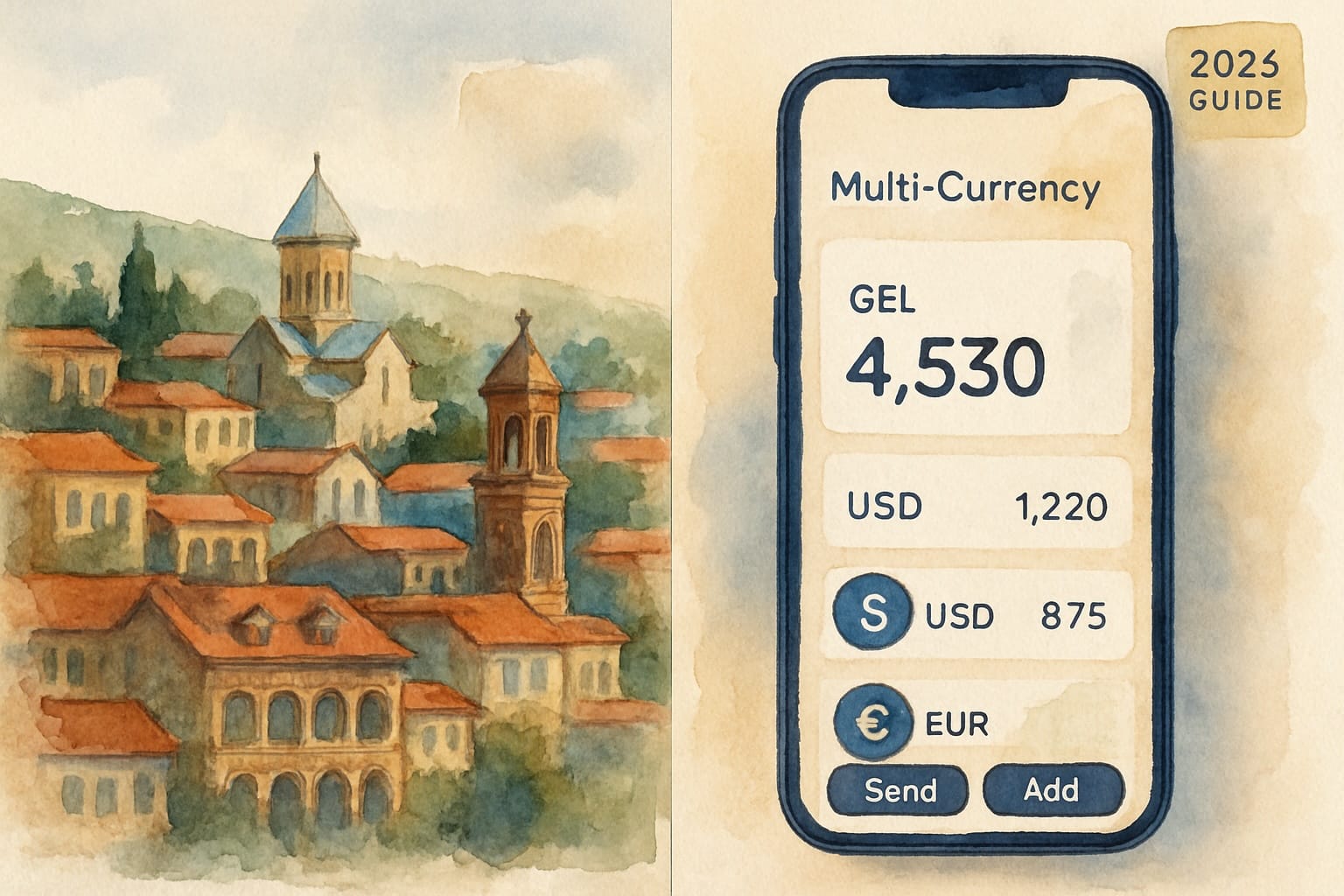
- Multi-currency accounts hold GEL, USD, EUR, and GBP simultaneously — with instant in-app conversion at competitive rates
- Deposit interest rates are exceptional. GEL term deposits currently sit around 10–11% annually, and USD deposits yield 4–5% — numbers that make Swiss or UK savings rates look very modest
- Mobile banking apps — TBC Mobile and Bank of Georgia’s mBank — are genuinely world-class. You can open term deposits, send SWIFT transfers, convert currencies, and manage cards entirely in English, from anywhere in the world
- Account fees are low. Basic personal accounts start from under $1 per month. Even premium banking in Georgia costs a fraction of what banks in Switzerland or Singapore charge
For digital nomads and entrepreneurs managing income across multiple currencies and time zones, Georgia solves a real problem affordably and reliably.
Can You Still Open a Bank Account in Georgia as a Foreigner?
Yes — but the process is stricter in 2026 than most older guides suggest.
A few years ago, many foreigners simply walked into a Tbilisi branch, handed over a passport, and left with an account the same day. That era is over. Georgia has overhauled its AML framework to align with FATF standards, and the National Bank of Georgia now requires financial institutions to properly assess each client’s risk before opening an account.
So what does this mean for you as someone seeking a bank account in Georgia as a foreigner?
- You will answer questions about your income and source of wealth. This is not optional — it is a legal requirement.
- Vague answers trigger rejections. Saying “I do business” without supporting documents is not enough.
- Nationals from sanctioned or high-risk countries (including Syria, Iran, and North Korea) face automatic refusal.
- Crypto as a primary income source is a red flag for most Georgian banks. If you earn from crypto, bring additional income documentation alongside it.
- Since March 2026, foreign nationals registering as Individual Entrepreneurs must hold a labour permit — and banks processing business accounts are already asking for proof.
None of this should discourage you. It simply means you must prepare properly — just like you would for any quality bank in Europe or Asia.
The Best Banks: TBC Bank vs. Bank of Georgia
Georgia has 15 licensed commercial banks. However, for non-residents, the realistic choice comes down to two institutions that together hold about 75% of the country’s banking assets. Both are listed on the London Stock Exchange, regularly audited internationally, and technologically excellent.
Here is how they compare on the things that matter most:
| Feature | Bank of Georgia | TBC Bank |
|---|---|---|
| Non-resident access | Branch visit required | Online pre-registration available |
| Account activation time | 2–3 weeks after signing | Often within the same week |
| Premium programme | SOLO (Premium & International) | TBC Concept |
| Multi-currency | GEL, USD, EUR, GBP | GEL, USD, EUR, GBP |
| SWIFT outgoing fee | 0.2–0.3% (SOLO: flat $35) | 0.15–0.25% |
| Mobile app quality | Excellent — mBank | Excellent — TBC Mobile (slightly more modern) |
| Apple / Google Pay | Yes | Yes |
| Best suited for | Large international transfers, premium banking | Digital-first users, subscription flexibility |
If one bank declines your application, try the other. Results vary between institutions — and even between individual branches.
Getting a TBC Bank Account
A TBC Bank account is usually the better starting point for digital nomads and tech-savvy non-residents. Unlike Bank of Georgia, TBC offers an online pre-registration option for foreign nationals. You submit your basic details digitally before visiting a branch, which speeds up the in-person process considerably.
TBC operates on a subscription model. Current tiers for personal banking include:
- Gamarjobah Plan — approximately 2 GEL/month (~$0.70) — covers basic daily banking and a standard debit card
- Universal Plan — approximately 4.9 GEL/month — adds wider ATM access and more features
- Status Plan — approximately 15.9 GEL/month — unlocks higher limits and premium card options
Worth noting: non-residents are often placed on higher-tier subscriptions by default, as TBC aligns plan access with client activity and risk profile. Ask your branch advisor to clarify exactly which plan applies to you before signing.
For non-residents who only need a card for local use during a stay in Georgia, TBC also issues a non-resident debit card for domestic transactions — a lightweight option if you don’t need full international banking.
TBC’s premium tier, TBC Concept, offers Visa Platinum or Mastercard World Elite, elevated withdrawal limits, and priority service. If you move serious transaction volumes, it is worth exploring at the branch.
Opening a Bank of Georgia Non-Resident Account
A Bank of Georgia non-resident account follows a more structured, compliance-first timeline. In return, you gain access to one of the best-value premium banking products in the entire region.
Unlike TBC, Bank of Georgia requires every non-resident to visit a branch in person — there is no remote opening option for personal accounts. After you sign at the branch, account activation typically takes 2–3 weeks as the bank completes its internal compliance review. During that period, they may contact you for additional documents.
This timeline surprises many clients. Build it into your schedule if you plan to rely on the account for business payments.
Where Bank of Georgia truly excels is its SOLO premium programme, available in two tiers:
SOLO Premium (~$105/year):
- Visa Platinum + Mastercard World Elite
- 2 free airport lounge visits per year
- Personal banker with 24/7 access
- Flat-fee SWIFT transfers: $35 USD or €45 EUR regardless of transfer size
- 50,000 GEL (~$17,500) daily withdrawal limit
- Free mobile data roaming in 120+ countries (3 GB)
SOLO International (~$260/year):
- Everything in SOLO Premium, plus:
- 9 free airport lounge visits per year
- 0% fee on foreign ATM withdrawals worldwide
- 100,000 GEL (~$35,000) daily withdrawal limit
- 24/7 worldwide concierge service
The flat SWIFT fee structure makes the biggest practical difference. A client sending $200,000 at a standard 0.3% fee pays $600. Under SOLO Premium, they pay $35. The $105 annual membership pays for itself on the first large wire.
Step-by-Step: How to Open a Bank Account in Georgia as a Non-Resident
Follow these steps carefully. Clients who skip any one of them are the ones who leave the branch empty-handed.
Step 1: Get a Georgian SIM Card First
Before you do anything else, buy a SIM card from Magti, Beeline, or Geocell. Find them at any mobile shop or supermarket in Tbilisi — cost is approximately 5 GEL (~$2). Banks require a Georgian mobile number to send SMS verification codes during the application. A foreign number does not work.
Step 2: Pre-Register Online (TBC Only)
If you choose TBC Bank, complete their online non-resident pre-registration before visiting a branch. This pre-screens your basic details and noticeably speeds up the in-branch process. If you choose Bank of Georgia, skip this step and go directly to Step 3.
Step 3: Prepare Your Full Document Package
Officially, a passport is the minimum. In practice, arriving with only a passport in 2026 is a reliable path to rejection. Bring all of the following:
- ✅ Original valid passport — no photocopies, no expired documents
- ✅ Georgian phone number (from Step 1)
- ✅ Bank statements from the last 6–12 months — from your home country bank, in English or another major language
- ✅ Proof of income — employment contract, client invoices, payslips, or a letter from your accountant
- ✅ Local address evidence — a rental contract, Airbnb booking confirmation, or hotel reservation
- ✅ A brief written purpose statement — one paragraph explaining exactly what you’ll use the account for (salary deposits, local rent payments, business invoicing, etc.)
- ✅ For business accounts: company registration documents, client contracts, and — since March 2026 — a labour permit if you are registering as an Individual Entrepreneur
Step 4: Go to the Right Branch
Always visit a central Tbilisi branch. Branches with English-speaking staff and daily experience handling foreign clients include Bank of Georgia’s Pushkin Street location and TBC’s Marjanishvili branch. Large mall branches (Galleria, East Point) also work well and offer extended hours.
Avoid small neighbourhood branches. Staff there rarely encounter foreign applicants and sometimes invent requirements or decline out of caution.
Best timing: Tuesday to Thursday, early afternoon. Avoid Mondays and the first or last working days of the month.
Step 5: Answer Compliance Questions Clearly and Specifically
When you sit down with a banking advisor, they will ask questions like:
- What do you do for work?
- Where does your income come from?
- Which countries will you transact with?
- What will you use this Georgian account for?
Give clear, specific answers. “I am a remote UX designer working for a German agency. I’ll use this account to pay rent and utility bills while I live in Tbilisi” is a strong answer. “I do various business activities” will raise concerns and may trigger a rejection.
Step 6: Request an Instant-Issue Card
Many central branches issue a debit card on the spot — ask for this option directly. Otherwise, standard card delivery takes 3–7 business days. You can access online banking and the mobile app immediately while you wait for the physical card.
Step 7: Use Power of Attorney If You Cannot Visit In Person
Both TBC and Bank of Georgia accept account opening via a notarised Power of Attorney, allowing a local lawyer or registered service provider to open the account on your behalf. The PoA must be notarised and apostilled. This route takes longer and typically involves a service fee of 50–200 GEL, but it is fully legitimate and widely used — especially for business accounts where the company director is based abroad.
Navigating KYC and AML: A Swiss Compliance Expert’s View
I want to address something directly, because I see it create unnecessary anxiety for non-residents: Georgian banks are not trying to reject you when they ask about your source of funds. They are legally required to ask.
“From my years working inside a FINMA-regulated Swiss asset management firm, I can tell you that the questions Georgian banks ask in 2026 are structurally identical to what Zurich’s most respected private banks have required for over a decade. Source of Wealth. Source of Funds. Purpose of Account. Intended Transaction Profile. This is global AML standard practice — it is not a barrier designed to exclude you. It is a compliance framework designed to protect the system.”
— Asel Mamytova
Georgia’s updated AML legislation specifically requires banks to assess client risk before onboarding and to document both the source of funds and source of wealth for clients whose accounts may show significant transaction activity. The National Bank of Georgia has aligned its supervision with FATF recommendations, which moves Georgian compliance closer to Swiss standards than most people realise.
Here is what these two terms actually mean — and why the distinction matters:
Source of Funds refers to the money that will flow through the account. This includes your salary, client invoices, rental income, or proceeds from a sale. Banks want to see a paper trail that matches your stated transaction profile.
Source of Wealth refers to how you built your overall net worth. This could be a professional career, business ownership, inheritance, or long-term investment returns. For most applicants, it is straightforward to demonstrate with employment history, tax returns, or company documents.
My practical advice: Write a one-page financial biography before your branch visit. Outline your professional background, explain how you earn income, note the countries involved, and describe what you plan to do with the Georgian account. Banks respond well to clients who can articulate their financial story clearly — not because it removes the compliance requirement, but because it satisfies it efficiently.
Additionally, if crypto represents a significant part of your income or wealth, do not lead with it. Present your other demonstrable income sources first. If crypto is unavoidable in your profile, a professional pre-compliance review before your application is a smart investment.
Conclusion & Next Steps
Georgia in 2026 is still one of the world’s most compelling banking destinations for non-residents. Multi-currency accounts, high deposit yields, genuinely excellent mobile banking, and a regulatory environment that has grown up without becoming inaccessible — the fundamentals are strong.
But preparation is now non-negotiable. The clients who succeed are the ones who arrive with the right documents, clear answers, and a financial story that hangs together.
To summarise what sets a successful application apart:
- ✅ Visit a central Tbilisi branch of TBC or Bank of Georgia
- ✅ Bring a complete document package — passport, bank statements, proof of income, rental agreement
- ✅ Prepare specific, honest answers for every source-of-funds question
- ✅ Get a Georgian SIM card before your branch visit
- ✅ Seriously consider SOLO Premium if you plan to send international wire transfers — the flat $35 SWIFT fee makes it a no-brainer
- ✅ Use a Power of Attorney service if you cannot travel to Tbilisi
Looking for Expert Banking Guidance Beyond Georgia?
At Easy Global Banking, I specialise in helping non-residents, HNWIs, and global entrepreneurs open accounts in the world’s most trusted private banking jurisdictions: Switzerland, Singapore, Monaco, Puerto Rico and United Arab Emirates.
These four jurisdictions offer a level of asset protection, privacy, investment access, and institutional stability that Georgia — for all its practical advantages — simply does not provide. If your goal is to build a serious, long-term international banking structure, this is where we focus.
My team handles the full process — from pre-compliance document review to bank selection, application preparation, and relationship management — so your application succeeds the first time, every time.