
On a cold Monday morning in Zurich, I once watched a seasoned private banker do something I had never seen before.
He opened his inbox, scrolled through overnight news, and quietly said:
“If this decision goes the wrong way, half my book will be gone in a year.”
He was not talking about investment performance. He was talking about jurisdictional risk. That moment stayed with me, because most wealthy families still behave as if “Switzerland is forever.” They design trusts, holding companies, and banking relationships around the assumption that Swiss private banking is an immutable law of nature.
It is not. So let’s pressure-test that assumption.
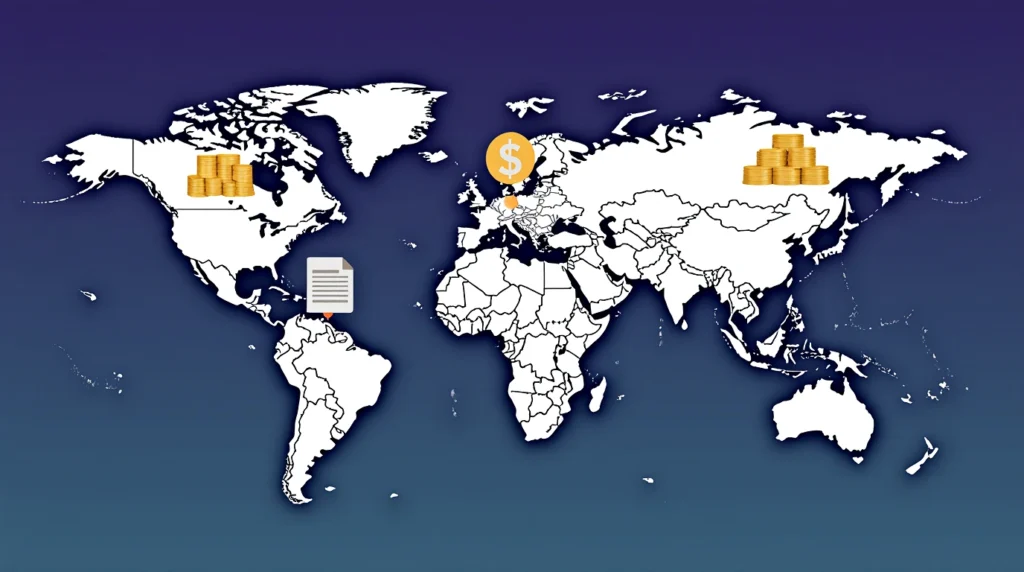
Thought experiment: What if Switzerland’s private banking industry disappeared tomorrow?
In four acts, I walk through what would happen to global wealth flows, who would lose the most, how “safe haven” psychology would shatter, and—most importantly—how a rational HNWI should structure wealth if Switzerland is not eternal.
Meanwhile, if you already plan to open a foreign bank account in a top‑tier hub, this lens will change how you think about jurisdictions, diversification, and legal robustness.
Act I – The Day the Alps Go Quiet
First, grasp the scale of the shock.
According to Deloitte’s 2024 International Wealth Management Centre Ranking, Switzerland remains the largest international wealth management center globally, managing around USD 2.2 trillion of international assets—roughly 21% of global cross-border wealth. The UK and US trail closely behind at similar market shares, while Singapore, Hong Kong, and the UAE continue their rapid ascent.
Now picture a fictional trigger—a sudden policy U-turn, systemic crisis, or political mandate—forces Swiss banks to exit cross-border private banking overnight. No more foreign HNWI accounts. No more international trusts. No more “Swiss account” as the gold standard of safety.
Your portfolio does not evaporate. But within 48 hours, your relationship manager sends that email every HNWI dreads:
“We must transfer your assets. Here are your options.”
From experience guiding clients through real jurisdictional pivots, capital rarely repatriates during these moments. Instead, it reroutes methodically to the next credible homes—Singapore, Dubai, London, New York, Hong Kong. Speed becomes the only currency.
Act II – The Great Redistribution: Where Does the Money Flow?
Switzerland does not operate in isolation. It competes in a multi-polar world where hubs battle for the same cross-border mandates.
When it vanishes from our scenario, money does not scatter randomly. Each successor hub captures specific client flows based on geography, tax profiles, and political comfort:
| Jurisdiction | Role in Post-Switzerland World | Ex-Swiss Client Magnet | Biggest Friction |
|---|---|---|---|
| Singapore | Conservative global/Asia HNWI safe haven | MAS stability, rule of law, private bank depth | European distance, strict AML |
| Dubai/UAE | Entrepreneurial tax/lifestyle play | 0% income tax, family office speed | Maturing legal predictability |
| UK (London) | European/Commonwealth legal fortress | English law, City infrastructure | Tax/political volatility |
| US (NY/Miami) | Dollar/capital markets powerhouse | Markets depth, legal robustness | Tax complexity, scrutiny |
| Hong Kong | China/North Asia gateway | Mainland proximity, bank network | Political convergence risks |
Singapore and Dubai emerge as clear winners. They already target Switzerland’s client base aggressively while climbing global rankings. London and New York absorb institutional-grade mandates. Hong Kong locks in Asia-Pacific flows.
That said, no single hub inherits the crown. The world fragments into a five-way redistribution, with family offices triaging based on residency, business footprint, and risk tolerance.
Act III – Who Bleeds the Most?
Pain does not distribute evenly. Switzerland serves distinct roles that replacements struggle to replicate.
Old Europe Industrial Families
German, Italian, or French entrepreneurs park diversified portfolios in Zurich alongside EU operating companies and scattered real estate. Switzerland becomes their neutral anchor—discreet, stable, emotionally reassuring.
London or Luxembourg can handle the technical transfer. But nothing replaces that Alpine sense of permanence. These families lose a psychological pillar first.
Volatile Region Entrepreneurs
Middle East, Latin America, CIS, and African HNWIs treat Switzerland as political risk insurance—Western legal standards at a safe distance from local regimes.
Now they choose: culturally closer Singapore/Dubai (with emerging risks) or legally robust US/UK (with tax headaches). Switzerland’s unique neutrality leaves a void no single hub fills perfectly.
Secrecy Myth Believers
A stubborn minority still imagines Swiss accounts = secrecy. Reality check: post-AEOI Switzerland shares tax data routinely while leading cross-border rankings.
Their scenario forces clarity: compliant hubs only, or dangerous fringes. The “Swiss secrecy” fantasy dies for good.
Act IV – Shattering the Eternal Haven Myth
Switzerland’s brand thrives on continuity. Even post-Credit Suisse and secrecy erosion, it commands USD 2.2 trillion in international AUM under FINMA’s rigorous oversight.
But imagine it gone. Three truths emerge:
- No jurisdiction proves sacred. Switzerland’s fall proves any hub remains vulnerable to politics or crisis.
- Transparency rules. AEOI/CRS/FATCA means regulators track you regardless of flag.
- Safety = architecture. Resilience flows from multi-hub redundancy, not one perfect country.
Sophisticated families shift instantly: from “pick the best haven” to “build an antifragile system.”
Act V – Structure Wealth for a World Without Eternal Havens
You gain nothing waiting for disaster. Assume Switzerland could vanish, then design accordingly.
1. Deploy Multi-Hub Booking
Spread liquid wealth across 2-3 complementary centers:
- Switzerland: Conservative preservation, European access
- Singapore: Asia growth, MAS protection
- Dubai: Tax efficiency, entrepreneurial energy
No hub exceeds 40-50% of portable assets.
2. Layer Risks Deliberately
Separate:
- Residency (where you live/tax)
- Operations (business footprint)
- Safekeeping (portfolio booking)
Mix hubs intelligently. Operate in Dubai, book in Singapore, hold reserves in Switzerland.
3. Choose Legal Muscle Over Privacy
FINMA and MAS attract capital through supervision and protection, not opacity. Prioritize:
- Battle-tested courts
- Predictable enforcement
- Clean SoW/SoF trails
Regulators audit you eventually. Design for their approval from day one.
4. Diversify Governing Law
Geography matters less than legal jurisdiction. Blend:
- Swiss law (foundations)
- English law (trusts)
- Singapore law (Asia structures)
One legal system’s shock leaves others intact.
5. Forge Ironclad Governance
Multi-hub fails without:
- Unified family charter
- Aligned trust/shareholder deeds
- Single-page global structure map
Test it brutally: “If Switzerland vanished tomorrow, does this still function?”
Use Switzerland—But Never Blindly
Switzerland remains world #1 for cross-border wealth. Use it for stability and execution excellence.
But complement it. Document ruthlessly. Build redundancy.
If any hub—from Zurich to Singapore—falters, you pivot seamlessly.
Ready to Open Swiss Bank Account relationships within a resilient architecture? My team stress-tests client structures against exactly these scenarios. The right multi-hub plan starts with one honest mapping session.
References
- Deloitte Switzerland. International Wealth Management Centre Ranking 2024: Switzerland is still leading the field. 2024.
https://www.deloitte.com/ch/en/about/press-room/international-wealth-management.html - Statista / Boston Consulting Group. Where the Rich Park Their Money: Private offshore wealth by booking center. 2020.
https://www.statista.com/chart/14320/countries-holding-the-highest-value-of-private-offshore-wealth/ - HSBC Private Banking. Global Wealth Hubs: Drivers of diversification. 2025.
https://www.privatebanking.hsbc.com/content/dam/privatebanking/gpb/entrepreneurs/gewr/HSBC%20Global%20Wealth%20Hubs%20Report.pdf - Swiss Federal Department of Finance (SIF). Swiss financial sector – Key figures 2025.
https://www.sif.admin.ch/dam/en/sd-web/iwKtRqzjc946/kennzahlen-sif-2025-en.pdf