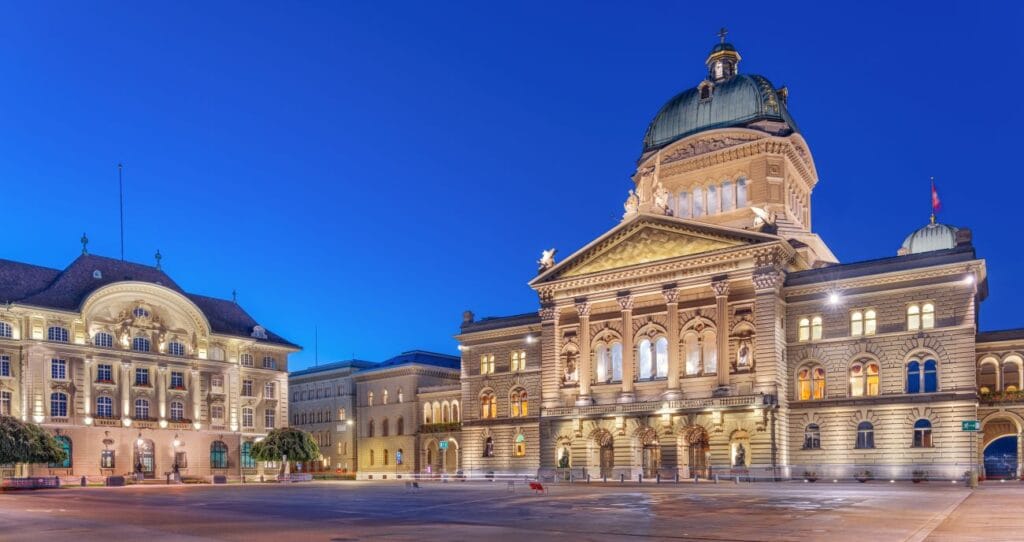
Geopolitical shocks have historically triggered rapid shifts in global capital. Today, a similar dynamic appears to be unfolding in the Middle East. Escalating tensions involving Iran and several Gulf states are prompting wealthy families, investors, and institutions to reconsider where their assets are held.
Bankers and wealth advisors in Switzerland say the result could be a substantial inflow of capital into the Alpine financial hub—potentially amounting to tens of billions of dollars over the coming years.
For Switzerland’s banking sector, the moment reinforces a longstanding reality: in times of geopolitical uncertainty, investors often seek jurisdictions known for stability, neutrality, and robust financial infrastructure.
Rising Geopolitical Risks Are Reshaping Capital Flows
The Gulf region has spent the past two decades positioning itself as a major global financial hub. Cities such as Dubai, Abu Dhabi, and Manama attracted thousands of international investors, entrepreneurs, and wealthy families.
However, the latest escalation involving Iran has introduced a new level of uncertainty. Missile and drone strikes reported near key urban centers have raised security concerns and disrupted economic activity across parts of the region.
Air travel interruptions, declining investor confidence, and volatile financial markets are all contributing to a reassessment among high-net-worth individuals and family offices.
For investors whose wealth preservation strategies depend on geographic diversification, this reassessment often translates into a familiar question:
Where can assets be stored safely during geopolitical instability?
Increasingly, the answer appears to be Switzerland.
Switzerland’s Enduring Safe-Haven Status
Switzerland’s financial reputation has been built over more than a century. Investors often cite three core strengths:
- Political neutrality and stability
- Strong legal protections for assets
- A globally trusted banking system
During periods of global uncertainty, these attributes tend to attract capital seeking protection from volatility.
The Swiss franc—frequently considered a safe-haven currency—has also strengthened recently, reflecting growing demand for assets denominated in the currency.
Gulf Wealth Already Flowing Into Switzerland
Financial advisors report that asset transfers from Gulf investors into Swiss accounts have been steadily increasing in recent years. The latest geopolitical developments appear to be accelerating that trend.
Growth of Swiss Assets Held by UAE Clients
| Year | Estimated Assets Held in Switzerland | Growth |
|---|---|---|
| 2022 | $72 billion | — |
| 2023 | $88 billion | +22% |
| 2024 | $96 billion | +9% |
| 2025 | $101 billion | +5% |
Approximate total increase (3 years): ~40%
Growth of Swiss Assets Held by UAE Clients
The surge reflects both diversification strategies and the perception that Switzerland provides a reliable financial anchor during uncertain times.
How Conflict Impacts Financial Hubs
The Gulf’s financial centers have expanded rapidly in the past decade. Dubai, in particular, became a magnet for global wealth.
By 2025:
- Nearly 10,000 millionaires relocated to Dubai
- These individuals collectively moved over $60 billion in wealth
- The UAE aimed to manage close to $1 trillion in cross-border assets by 2029
Yet geopolitical risk can quickly alter financial trajectories.
Immediate Economic Signals
| Indicator | Recent Impact |
|---|---|
| Air traffic | Tens of thousands of flights disrupted |
| Tourism | Sharp decline in international arrivals |
| Equity markets | Regional stock indices experiencing volatility |
| Investor sentiment | Increased demand for offshore diversification |
For wealthy investors whose portfolios are heavily exposed to the region, relocating part of their assets abroad becomes a defensive move rather than a speculative one.
Potential Capital Inflows to Switzerland
Swiss wealth managers suggest that the current situation could result in tens of billions of dollars flowing into Swiss banks over time.
However, capital movements rarely happen all at once.
Typically, the process unfolds in phases:
- Liquidity transfers – investors move cash or deposits first.
- Portfolio restructuring – funds are later allocated into securities such as equities or bonds.
- Long-term structuring – trusts, family offices, or multi-jurisdictional wealth planning strategies are established.
This gradual approach allows investors to react to geopolitical developments while maintaining flexibility.
Sovereign Wealth Funds Also Reassessing Strategies
The Gulf states collectively control some of the world’s largest sovereign wealth funds. These institutions manage trillions of dollars globally and are increasingly reviewing how to diversify investments in response to regional instability.
Key priorities include:
- Strengthening global asset allocation
- Reducing concentration risk
- Expanding investments in politically stable jurisdictions
Switzerland’s financial ecosystem—home to many private banks, asset managers, and family-office services—positions the country as a natural partner in this diversification process.
The Broader Trend: Wealth Seeking Stability
History repeatedly shows that capital gravitates toward stability during times of geopolitical stress.
From European conflicts to global financial crises, Switzerland has consistently attracted international wealth seeking security and professional asset management.
Today’s developments in the Middle East appear to be reinforcing that same pattern.
While the ultimate scale of capital migration will depend on how the geopolitical situation evolves, one reality is already clear:
Demand for secure financial jurisdictions is rising again.
Typical Capital Flight During Geopolitical Crises
Final Thoughts
Financial markets rarely move in isolation from geopolitics. When uncertainty rises, capital often travels quickly across borders in search of stability.
For wealthy individuals and international investors, Switzerland continues to represent one of the world’s most trusted financial destinations.
Swiss Banking Support
If you are considering opening a Swiss bank account or relocating assets to Switzerland, our team at Easy Global Banking can guide you through the process.
We assist international clients with:
- Swiss bank account introductions
- Wealth structuring solutions
- Compliance and documentation preparation
- Secure cross-border financial arrangements
Switzerland remains one of the world’s premier financial centers — and we are ready to help you access it.
References: