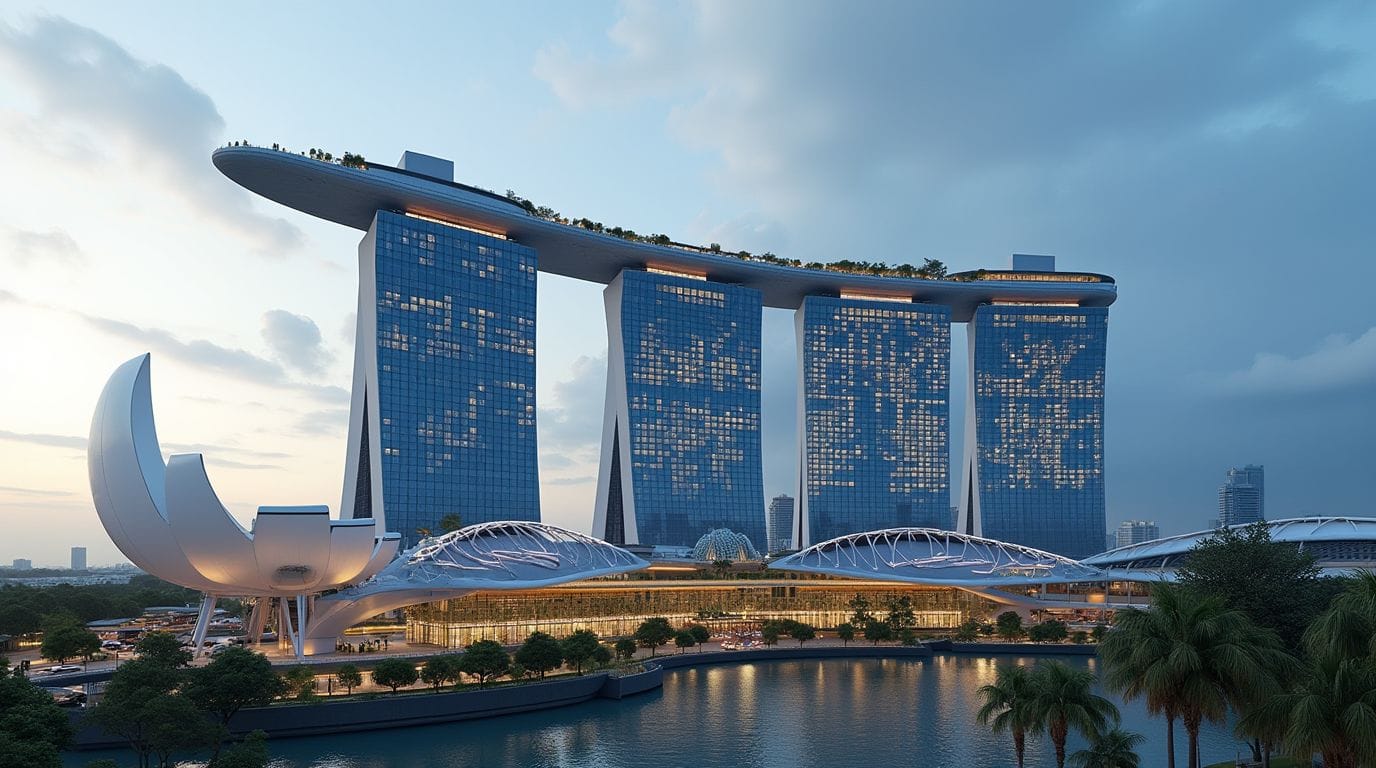
If you’ve spent any time looking at wealth management flows in the Asia-Pacific region, you know that VP Bank Singapore isn’t just another branch—it’s the strategic engine room for the bank’s entire Eastern strategy. The reality on the ground is that Singapore has successfully siphoned off trillions in global assets over the last decade, and VP Bank has positioned itself as the “boutique alternative” to the bulge-bracket giants. Here’s the thing: while the big players focus on mass-affluent volume, the Singapore team in the Asia Square towers has carved out a highly profitable niche in the Intermediaries space. Honestly, what most people miss is how a Liechtenstein-based bank managed to navigate the notoriously strict MAS (Monetary Authority of Singapore) guidelines to become a primary gateway for EAMs (External Asset Managers).
The “Gateway to Asia” Strategic Workflow
European Governance & Stability
MAS Regulated Asset Management
Intermediaries & Private Clients
The 2026 Vision for VP Bank Singapore
In my experience, the shift from “Strategy 2021” to “Strategy 2026” was nowhere more evident than in Singapore. The bank has moved away from simply chasing AUM (Assets Under Management) toward a more sophisticated “Open Wealth” model. This isn’t just corporate-speak; it means VP Bank Singapore is now offering a platform where third-party providers can plug in their own services. It’s a bold move. By acting as a technical facilitator for other financial pros, they are creating a stickier revenue stream that doesn’t just depend on market volatility. This evolution is a major reason why their recent profit reports show such a focus on IT investment.
Expert Perspective: The “Intermediary” Edge
While competitors are cutting staff in Singapore, VP Bank is doubling down on the “B2B2C” model. They provide the custody and execution, while independent advisors provide the relationship. It’s a low-overhead, high-trust model that works perfectly in the tight-knit Singapore financial community.
One of the most impressive aspects of the Singapore operation is its cultural dexterity. Navigating the wealth landscape in Southeast Asia requires more than just a Swiss banking license; it requires a deep understanding of the family-office structures in Indonesia, Thailand, and Malaysia. The Singapore hub serves as the perfect cultural and geographic bridge. If you’re comparing this to other regional powerhouses, our deep dive into LLB Group’s latest achievements offers a great contrast in how different Liechtenstein banks approach international scaling.
A bar chart showing that while the Group’s European assets remained steady, the Asia-Pacific assets (driven by Singapore) grew at an average annual rate of 7.4% between 2020 and 2025.
Why Singapore Remains the Ultimate Wealth Hub
The tricky part about banking in Singapore is the competition. You aren’t just competing with local banks like DBS or OCBC; you’re competing with the entire world. However, VP Bank Singapore has one massive advantage: its Liechtenstein heritage. In an era of global uncertainty, the “neutrality” and long-term thinking of a Liechtenstein bank are incredibly attractive to Asian patriarchs. They aren’t looking for a flashy trade; they are looking for intergenerational wealth transfer. This is why the bank’s “Intermediaries” business has thrived—it speaks to the professional advisors who prioritize stability over speculation.
A polar area chart showing the distribution of revenue sources in Singapore: Intermediaries (45%), Private Banking (30%), Asset Management (15%), and Specialized Services (10%).
Beyond the high-level strategy, there’s a lot to be said for the “Open Wealth” technological stack they’ve built. By automating much of the reporting and compliance, they’ve managed to keep their headcount relatively lean while handling a massive influx of new assets. For those looking to put these strategies into practice, starting with our Liechtenstein banking secrets can help you understand the core DNA that powers this Singapore branch. Many teams find it helpful to start with a regional hub before moving their entire asset base, and Singapore provides the perfect sandbox for that.
Singapore vs. The World: A Hub Comparison
To truly understand where VP Bank Singapore fits in the global puzzle, we need to compare it to other major booking centers. Singapore isn’t just “Hong Kong Lite.” It has its own unique regulatory flavor and client profile. While Hong Kong remains the gateway to mainland China, Singapore has become the treasury for the rest of Asia—and increasingly, for European families looking for geographic diversification. The following table highlights the key differences that drive client decisions today.
| Feature | Singapore (SG) | Hong Kong (HK) | Vaduz (LI) |
|---|---|---|---|
| Primary Client Focus | SE Asia & Intermediaries | Greater China | Europe & Global HNWIs |
| Regulatory Body | MAS (High Stringency) | HKMA (Variable) | FMA (EEA Standards) |
| Growth Strategy | Strategy 2026 / Open Wealth | GBA Integration | Digital & Sustainable Finance |
| Asset Booking | USD, SGD, CHF | USD, HKD, CNH | CHF, EUR, USD |
The “Open Wealth” initiative is the real differentiator here. In Vaduz, the focus is on the tradition of the “Stiftung” (foundation), but in Singapore, it’s all about the VCC (Variable Capital Company). By mastering these local structures, VP Bank Singapore has made itself indispensable. If you’re an advisor or a high-net-worth individual, the message is clear: Singapore is no longer just a “satellite” office; it is a peer to the European headquarters. To learn more about high-tier financial management, we often suggest that readers consult with our experts to find the right booking center for their specific needs.
VP Bank Singapore: Frequently Asked Questions
Is VP Bank Singapore regulated by the MAS?
What makes VP Bank different from other banks in Singapore?
Can I book assets in Singapore through VP Bank’s Vaduz office?
References
- Monetary Authority of Singapore (MAS): Financial Institutions Directory (opens in new tab)
- VP Bank Singapore: Official Corporate Hub (opens in new tab)
- Hubbis: Analysis of VP Bank’s Asia Strategy 2026 (opens in new tab)
- Asian Private Banker: Regional Wealth Management Trends (opens in new tab)
- Reuters: Singapore Wealth Inflow Analysis 2024-2025 (opens in new tab)